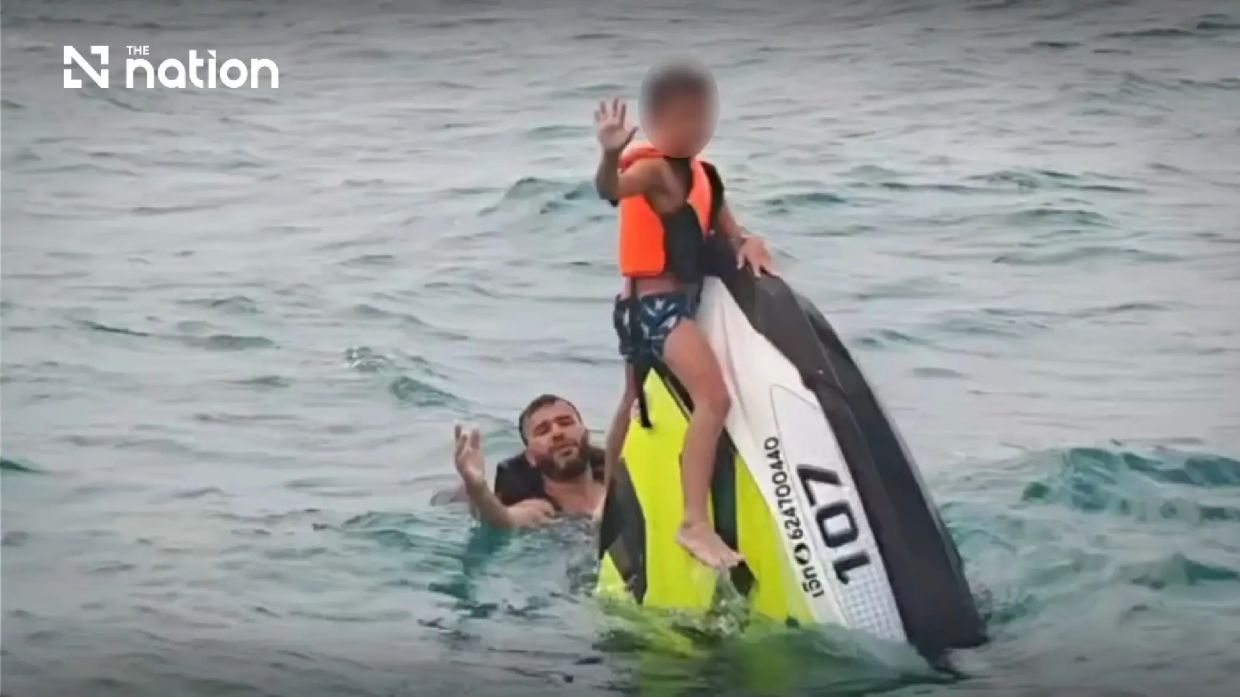
A harrowing overnight ordeal unfolded in the waters off Koh Samui when a French family became stranded at sea after their rented jet ski capsized on Thursday evening. The 50-year-old father and his two sons, aged five and seven, remained afloat for more than 16 hours before being recovered by rescue teams on Friday morning, according to local government official Amorn Chomchoey.
The incident began around 5pm on Thursday when the father rented a jet ski from an operator on the island. The recreational watercraft operated for just over 15 minutes before overturning, forcing the family into an unexpected fight for survival in the Gulf of Thailand. The dramatic duration of their exposure to the elements highlighted both the dangers of marine activities and the vulnerabilities of young children in unpredictable maritime situations.
When rescue personnel finally located the family at approximately 10am on Friday, visible signs of physical distress were apparent. Amorn described the trio as thoroughly exhausted and showing symptoms of significant seawater ingestion. The two young boys were particularly concerning, displaying pallor that suggested shock and dehydration from their prolonged exposure. Despite the severity of their condition, all three were transported to a local hospital for medical evaluation and monitoring.
The family's ordeal came to light when the jet ski rental operator grew concerned about their non-return at the scheduled time. Following established safety protocols, the operator promptly alerted local rescue authorities and provincial officials, triggering a coordinated search effort across the coastal waters. This swift reporting mechanism proved crucial in locating the family before their condition deteriorated further, underscoring the importance of jet ski operators maintaining vigilant oversight of their rentals.
Recovery footage captured and released by the Koh Samui district office provided stark documentation of the rescue scene. The jet ski was nearly fully submerged, with only its triangular bow section remaining visible above the waterline. The father was observed floating nearby while one of his sons remained positioned atop the partially submerged vessel, both fortunately equipped with life jackets. Rescuers could be heard issuing reassuring commands, urging the frightened family to remain calm whilst working methodically to bring them aboard a rescue boat and provide immediate hydration.
Investigations into the capsizing focused on determining the precise cause of the accident, particularly given its occurrence after such a brief operational period. Authorities examined whether mechanical failure, operator error, or environmental conditions contributed to the incident. The father maintained that he possessed considerable jet ski experience, yet questions emerged regarding whether the family had ventured beyond the designated operating zone specified in their rental agreement, a detail the jet ski operator mentioned to local media.
The distinction between the official narrative and the operator's account raised important questions about liability, accountability, and adherence to safety protocols in Thailand's recreational water sports sector. Rental operators bear significant responsibility for ensuring that customers remain within prescribed areas where conditions are monitored and rescue capabilities are readily available. Any deviation into unvetted waters substantially increases risk exposure, particularly when young children are involved and operational expertise may not translate across different water conditions or vessel limitations.
Koh Samui maintains its reputation as one of Thailand's premier family destination islands, drawing millions of international visitors annually who are attracted by its relatively sheltered waters, sophisticated resort infrastructure, and extensive recreational offerings. The island's calm seas have historically marketed as an advantage for families with young children, contrasting with more exposed coastal areas where rough conditions pose obvious hazards. This incident serves as a sobering reminder that even ostensibly safe environments require vigilant risk management and strict adherence to safety protocols.
Following their medical clearance and discharge from hospital, the French family elected to remain in Thailand and continue their holiday, a decision reflecting either remarkable resilience or perhaps underestimation of their narrow escape from potential tragedy. Their experience underscores critical safety considerations for families planning water sports activities in Southeast Asia, where variations in equipment maintenance standards, operator licensing protocols, and rescue infrastructure differ substantially from many Western markets. For Malaysian travelers frequenting Thai resorts, the incident provides valuable perspective on the importance of selecting reputable operators, verifying equipment condition, understanding restricted areas, and ensuring proper life jacket provision and fit for all family members, particularly children.

