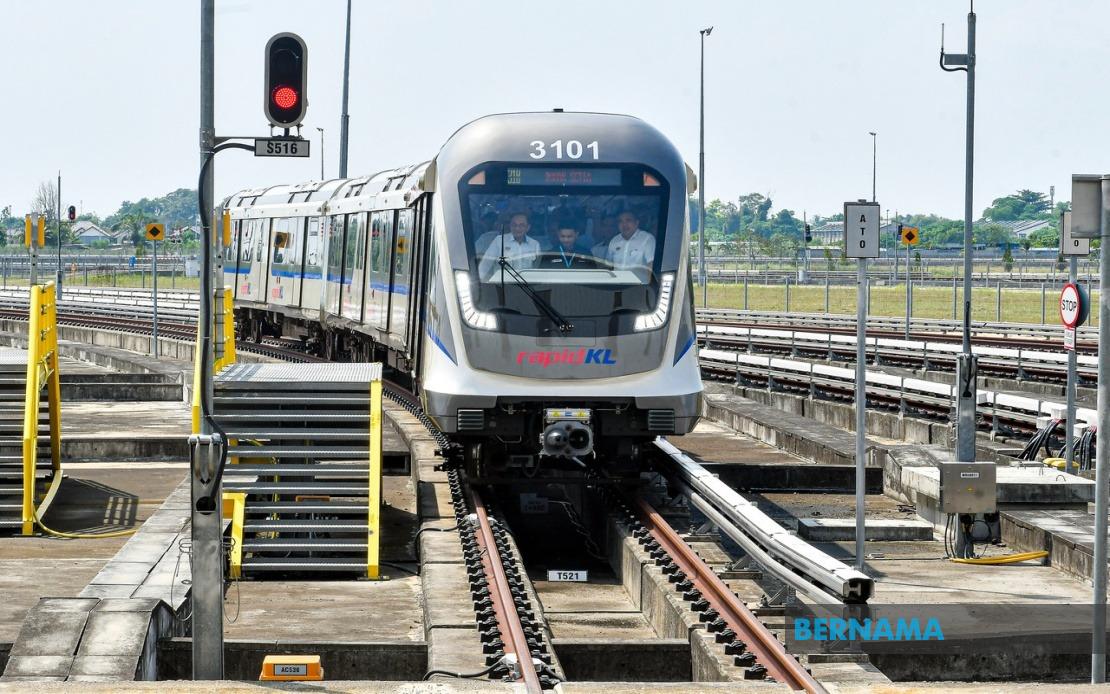
Prime Minister Datuk Seri Anwar Ibrahim has announced a month-long zero-fare period for the LRT3 Shah Alam Line beginning June 29 through July 31, with the initiative also covering Prasarana-operated feeder bus services. The promotional scheme has already gained considerable traction among the travelling public, particularly among student communities and working professionals who commute within the Klang Valley metropolitan region.
The timing and scope of this initiative reflect the government's wider strategy to integrate rapid transit infrastructure into the daily lives of ordinary Malaysians while simultaneously building public confidence in the newly opened line. By removing the financial barrier to trial usage, authorities are effectively converting the first month into an extended test drive that could translate into sustained ridership patterns once paid fares commence. This approach aligns with successful transit adoption models elsewhere in Asia, where temporary fare reductions have historically preceded significant mode-shift decisions among commuters.
Students represent a particularly significant constituency likely to benefit from this arrangement. Arissa Ahmad Khairul, a 22-year-old journalism student at Universiti Teknologi MARA (UiTM), articulated the profound impact this free period holds for those previously dependent on either ride-hailing platforms or parental financial support. The affordability dimension proves especially acute for Malaysia's student population, where transport expenses often constitute a substantial monthly outlay for those studying away from their family homes. The newer train facilities accompanying the LRT3 service promise both reliability and comfort improvements over existing alternatives, factors that extend beyond mere cost considerations.
For off-campus residents, the Shah Alam Line addresses a genuine connectivity gap within the greater Kuala Lumpur metropolitan area. Arissa's specific journey from Kepong through Bandar Utama to the UiTM campus exemplifies how the new corridor eliminates time-consuming transfers and indirect routing previously required on conventional bus networks. Her assessment that the initiative will reduce transport costs whilst saving considerable daily commute time captures the dual advantage driving enthusiasm among student commuters.
Yamin Ahmad, a media professional aged 25, framed the free fare period as a progressive policy initiative that removes psychological and financial obstacles to public transit experimentation. She emphasised that this structured exposure period allows ordinary Malaysians to directly experience the operational advantages of rail-based public transport, including systematic scheduling, reduced journey variability, and demonstrable savings compared to private vehicle ownership when accounting for parking, fuel, and maintenance costs. Her observation reflects a broader recognition that transport mode choices remain heavily influenced by familiarity and established behavioural patterns, making intentional trial periods analytically valuable for both policymakers and transit operators.
The institutional perspective from student leadership reinforces the broader socioeconomic implications of enhanced transit accessibility. Mohamad Adib Hazim Mohamad Razali, president of the UiTM Students' Representative Council, highlighted that approximately 42,000 students attend the institution, with only around 13,500 residing in campus accommodation. The remaining 28,500 constitute a substantial commuter population split between Kuala Lumpur and Subang Jaya, both now substantially closer to UiTM Shah Alam via the new LRT station. This demographic calculus demonstrates how a single transit infrastructure addition generates tangible accessibility improvements for tens of thousands of daily travellers.
The inclusion of Prasarana feeder bus services within the free-fare umbrella extends the initiative's reach beyond the main LRT corridor itself. Last-mile connectivity remains a persistent challenge within Malaysia's public transport architecture, with insufficient connections between rapid transit hubs and residential areas frequently deterring potential users. By bundling the feeder network into the promotional period, the government creates a more comprehensive experiential package that reflects real-world commuting patterns and multimodal journey requirements.
Fromthe perspective of transport policy development, this free-fare strategy serves multiple concurrent objectives. It generates substantial usage data during the trial month that will inform demand forecasting, capacity planning, and service scheduling decisions for the operational phase. Simultaneously, it functions as a public relations intervention designed to counter scepticism about a newly launched service and to build institutional momentum for future transit expansion projects. In Malaysian context, where automobile culture remains deeply entrenched despite chronic urban congestion, normalising rail transit usage among younger demographics during their formative commuting years potentially creates long-term behavioural changes that extend well beyond the free-fare period.
The Shah Alam Line itself represents a significant expansion of the Klang Valley's rapid transit network, addressing connectivity gaps that have constrained mobility options for residents within secondary urban centres. The corridor's geometric integration with existing UiTM facilities and major commercial nodes along its route positions it to serve as more than merely a supplementary transport option. Rather, the line potentially functions as a structural catalyst enabling housing development, commercial expansion, and economic activity redistribution across the metropolitan region.
For Malaysian commuters accustomed to volatile ride-hailing pricing and unpredictable traffic congestion, the predictable scheduling and fixed routes offered by rail-based transit represent a qualitative departure from existing mobility experiences. The free-fare period directly addresses one common objection to public transport adoption—the perceived cost burden—while simultaneously providing objective evidence regarding time savings and service quality. This data-driven exposure period effectively transforms potential barriers into concrete comparative benchmarks that individual commuters can evaluate against their existing travel practices.
Looking beyond the immediate one-month promotional window, the success of this initiative will substantially influence broader attitudes toward public transport investment and expansion within Malaysia. Demonstrable ridership during the free period, coupled with positive commuter sentiment, strengthens the political case for subsequent transit expansion proposals. Conversely, unexpectedly low usage would raise questions about whether infrastructure gaps, service design issues, or persistent cultural preferences for private vehicles require more fundamental attention. The stakes surrounding this month-long experiment thus extend considerably beyond the immediate Shah Alam corridor into broader questions about Malaysia's urban mobility trajectory.
The strategic deployment of a free-fare period reflects sophisticated understanding of adoption psychology and the particular challenges facing public transit systems in middle-income Southeast Asian contexts. Rather than relying solely on top-down mandates or incremental pricing strategies, this approach prioritises direct user experience as the primary persuasion mechanism. For Malaysia's ongoing urbanisation challenges and escalating congestion within metropolitan areas, transforming even a modest percentage of regular commuters from private vehicle use to rail transit carries meaningful implications for traffic flow, air quality, and urban livability more broadly.

