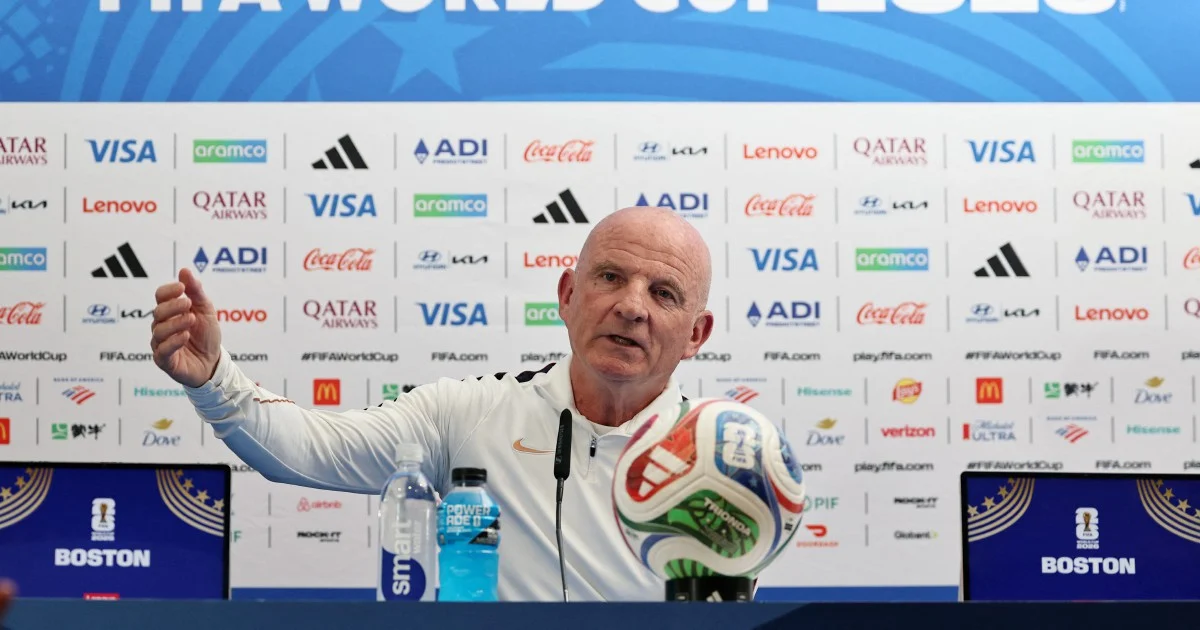
France will pursue first place in their World Cup Group I when they meet Norway on Friday, with assistant coach Guy Stephan emphasising that securing the group's top position carries significant logistical advantages beyond mere sporting prestige. Speaking in place of manager Didier Deschamps, who returned to France for his mother's funeral, Stephan outlined how the group-stage outcome would fundamentally shape the team's operational footprint throughout the knockout phase of the tournament.
The strategic importance of finishing ahead of Norway extends far beyond the pitch. Topping the group guarantees that France, the 2018 World Cup champions, can maintain their base in the Boston area through to the quarter-finals, allowing them to remain in the northeastern United States and avoid the substantial travel demands that befell second-placed teams. Should they slip to second position, the French squad would face the prospect of journeying across the continental United States to cities including Dallas, Miami and Atlanta—a logistical ordeal that compounds the physical and mental fatigue inherent in tournament football. "The travel times to different cities would be a lot longer if we finish second," Stephan told reporters on Thursday. "And there's the issue of the temperatures too. First place is best."
Beyond mere distance calculations, the temperature variations between Boston and the southern US cities present a practical concern for tournament preparation. Teams performing in the humid heat of Miami and Dallas face different hydration and recovery protocols than those based in the relatively cooler Northeast. For a squad already managing player fitness concerns, environmental consistency provides measurable advantages in maintaining performance levels as the tournament intensifies.
France enter Friday's fixture in a commanding position, having accumulated six points from their opening two matches. Stephan noted the relative rarity of securing maximum points so early in a World Cup group stage, underlining the team's strong position. More significantly, France need only a draw against Norway to secure first place, thanks to their superior goal difference—a mathematical advantage that transforms the final group encounter from a must-win scenario into a game where caution and control may reasonably factor into tactical calculations.
Norway present a competitive obstacle despite their own position as one of the tournament's in-form sides. The Scandinavian nation has likewise secured qualification through winning both opening matches, and Friday's encounter at the home of the New England Patriots NFL team represents a genuine competitive test rather than a formality. Both teams arrive with identical credentials in terms of points and qualification status, ensuring that the fixture will demand full commitment and tactical sophistication.
France's squad does face some personnel challenges heading into the match. Central defender William Saliba will be unavailable, removing a key component of the defensive line. Additionally, striker Marcus Thuram is managing calf pain, which may necessitate careful management of his playing time or potentially his absence from the starting eleven. These injury concerns add complexity to Stephan's preparation during a period already complicated by Deschamps' absence.
The situation surrounding Deschamps' temporary departure reflects the personal circumstances that can intrude upon professional football operations at the highest level. While Stephan is managing day-to-day affairs, he maintains regular telephone contact with the World Cup-winning manager to ensure continuity in strategic direction and decision-making. However, Stephan acknowledged that Friday itself, the day of Deschamps' mother's funeral, would see minimal communication between the coaching staff and their absent leader, a dignified acknowledgment of the personal priorities that supersede even the demands of international tournament football.
For Malaysian and Southeast Asian observers, the France-Norway fixture underscores how tournament structure and geographical logistics fundamentally shape team preparation and performance trajectories. As football tournaments increasingly span vast continents, the seemingly mundane matter of location and travel distances acquires tactical significance. Teams must balance sporting ambitions against the physical toll of intercontinental movement, recovery time constraints, and the psychological impact of unfamiliar environments.
The broader implications extend beyond France's immediate interests. The tournament's format means that group-stage positioning determines not merely progression, but the subsequent tournament path. A team finishing second faces not only longer distances but potentially less favourable quarter-final matchups depending on how other groups conclude. Deschamps' established philosophy, as articulated through Stephan, prioritises controlling what can be controlled—and securing first place represents an achievable objective with tangible downstream benefits.
France's approach reflects the sophisticated modern understanding that tournament success depends on multiple variables extending well beyond eleven players on the pitch. Fatigue management, environmental adaptation, and logistical efficiency all contribute to the probability of sustained performance through multiple knockout rounds. Against this backdrop, Friday's fixture against Norway carries significance that transcends the immediate encounter, with both teams recognising that group-stage positioning shapes the entire trajectory of their World Cup campaigns.
Norway's strength cannot be underestimated merely because France require only a draw. Scandinavian football has demonstrated consistent competitive quality at major tournaments, and the home crowd advantage of a US-based venue does not necessarily favour the French despite their European heritage. The fixture promises genuine competitive intensity, with both nations seeking to affirm their group-stage dominance while managing their respective player fitness concerns and tactical preparations for the knockout phase.

