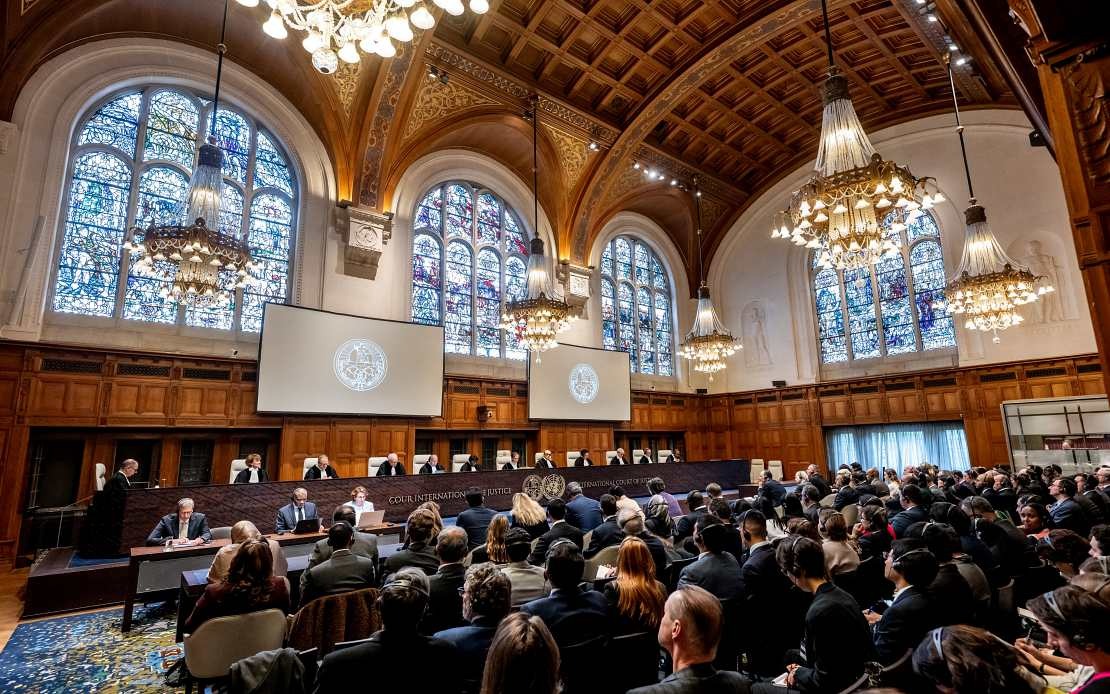
France has reaffirmed its unwavering commitment to the International Criminal Court on Thursday, directly countering assertions from the United States that the institution fundamentally undermines state sovereignty. Through Foreign Ministry spokesman Pascal Confavreux, Paris made clear that its support for the court remains resolute, despite intensifying pressure from Washington to distance itself from the tribunal.
Confavreux articulated a central distinction that underpins France's position: the ICC prosecutes individuals accused of humanity's gravest offences, not governments themselves. This fundamental characteristic, according to the French position, renders arguments about sovereign threats conceptually flawed. The court operates as a mechanism for personal accountability, targeting those responsible for genocide, war crimes, crimes against humanity and aggression—categories of conduct that transcend normal criminal justice and carry implications for international peace and security.
The French government explicitly rejected the framing that ICC activity constitutes a challenge to state authority. Confavreux reiterated that France's backing for the court's institutional resilience and its mission to combat impunity remains unchanged by external criticism. This positioning reflects a fundamentally different worldview from that espoused by the Trump administration, which has consistently viewed multilateral institutions with suspicion.
Paris also issued a sharp rebuke regarding the treatment of court personnel and officials. Confavreux characterised any attacks or threats directed at ICC staff members as unacceptable, signalling French awareness of security challenges facing the institution and its personnel. This comment suggests deeper concerns about the international environment in which the court operates, particularly given recent geopolitical tensions.
The French statement emerged in direct response to escalating American pressure. US Secretary of State Marco Rubio has publicly criticised the court, arguing that it poses risks to American interests and sovereignty. Beyond rhetorical opposition, Rubio has announced that Washington intends to actively lobby other nations to withdraw their memberships from the tribunal. This represents a strategic shift toward weaponising international pressure against the institution.
The State Department has gone further, initiating a formal policy drive designed to curtail what officials describe as the court's capacity to challenge American interests. This multifaceted approach reflects the depth of American hostility toward the ICC framework, combining diplomatic persuasion with institutional constraint mechanisms. The campaign represents one of the most serious coordinated challenges the court has faced since its establishment.
The International Criminal Court, headquartered in The Hague, was founded in 2002 with a specific mandate to address crimes of unprecedented magnitude and seriousness. Its creation followed decades of advocacy for a permanent institution capable of prosecuting perpetrators of mass atrocities, particularly in contexts where national courts lacked capacity or will. The court has since investigated and prosecuted cases across multiple continents, though its record remains contested and its effectiveness debated among legal scholars and policymakers.
A critical factor in this diplomatic dispute is America's unique international status: the United States has never ratified the Rome Statute that established the ICC and remains outside the court's formal membership structure. This outsider position paradoxically grants Washington considerable freedom to criticise the institution without facing immediate consequences, yet simultaneously creates anxiety among American policymakers that the court might pursue cases involving US citizens, military personnel or officials. This concern, though theoretical in most scenarios, has proven politically potent in Washington.
France's position contrasts sharply with American scepticism. As a founding supporter and active member, France has invested diplomatic capital in the court's work and legitimacy. The French government views the ICC as essential infrastructure for international justice and a bulwark against impunity for the world's gravest crimes. This commitment reflects broader European perspectives on international law and multilateralism that diverge substantially from contemporary American policy preferences.
For Southeast Asian observers, this transatlantic dispute carries significant implications. Several regional nations, including Cambodia, have engaged with ICC processes, and others maintain varying relationships with the institution. The outcome of American pressure on the court could reshape the landscape for international accountability mechanisms throughout Asia. If major Western powers succeed in constraining the ICC, it may diminish prospects for addressing mass atrocities through this particular institutional avenue, potentially affecting regional actors and their potential exposure to international prosecution.
The broader context involves fundamental disagreements about global governance architecture. France and other ICC supporters argue that individual accountability for mass crimes serves universal values that supersede narrow national interests. The American position, by contrast, prioritises state prerogatives and views international courts with inherent distrust. These competing visions will likely shape international justice debates for years ahead, with implications extending well beyond current disputes over the ICC itself.

