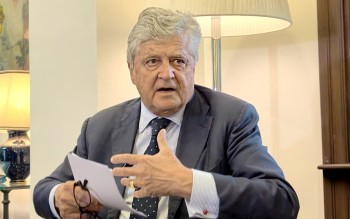
France has signalled its willingness to support Malaysia's potential entry into civil nuclear energy, with French Minister Delegate for Foreign Trade and Economic Attractiveness Nicolas Forissier making the offer during an official visit to Kuala Lumpur. The overture arrives as Malaysian policymakers weigh various pathways to decarbonise the country's power generation and meet international climate commitments, but Forissier emphasised that the decision to embrace nuclear technology must emanate from Malaysia's own strategic evaluation rather than external pressure.
Forissier's visit, which commenced on July 8, represents France's expanding engagement with Malaysia across multiple sectors beyond energy. He arrived leading a delegation comprising representatives from more than 20 French enterprises, underscoring the breadth of commercial interest in deepening bilateral economic ties. This business-focused mission reflects broader recognition in Paris that Malaysia represents a significant market opportunity within Southeast Asia, particularly as the region navigates its transition toward cleaner energy systems.
The French minister acknowledged during his press conference that nuclear power remains contentious in public discourse, explaining that domestic debate in Malaysia serves an essential function in evaluating whether atomic energy aligns with national priorities and public acceptance. He indicated that French officials had engaged substantively with Malaysian government representatives, finding them receptive to exploring all viable decarbonisation technologies. This measured approach contrasts with more aggressive promotion campaigns, instead positioning France as a patient partner awaiting Malaysia's independent conclusions.
France's credentials in nuclear energy are formidable. The country derives approximately 60 per cent of its electricity from nuclear power stations, complemented by renewable sources including solar and wind installations. This diversified portfolio demonstrates how nuclear generation can coexist with renewable energy sources rather than replacing them entirely, a nuance that matters for policymakers in Malaysia considering how different technologies might integrate into the national grid. France's operational expertise spans reactor management, safety protocols, waste disposal frameworks, and regulatory oversight—dimensions that would be critical for any Malaysian nuclear programme.
The longevity of nuclear partnerships constitutes a central theme in Forissier's messaging. Nuclear energy requires sustained commitment extending five to eight decades, involving decades of construction, operation, maintenance, and eventual decommissioning. This extended timeline demands investor confidence, technical capacity building, and institutional frameworks that endure through multiple governmental cycles. France's offer of long-term partnership tacitly acknowledges that Malaysia would require ongoing French involvement throughout the lifecycle of any nuclear infrastructure, from initial planning through to eventual site remediation.
Malaysia's energy landscape faces mounting pressures that make the nuclear conversation timely. The country depends substantially on natural gas and coal for electricity generation, both of which produce greenhouse gas emissions incompatible with Malaysia's climate commitments under the Paris Agreement and domestic sustainability targets. Solar and wind resources, whilst expanding, cannot independently meet projected electricity demand increases as industrialisation and consumption patterns evolve. Nuclear energy, by contrast, provides baseload power with minimal carbon emissions, potentially addressing capacity constraints whilst meeting decarbonisation objectives.
The timing of this initiative aligns with elevated diplomatic momentum between France and Malaysia. Prime Minister Datuk Seri Anwar Ibrahim visited France on July 3 and 4, 2025, signalling heightened political engagement at the highest level. Prior to this, Malaysia's Defence Minister travelled to the French aircraft carrier in March 2025, indicating deepening defence and security partnerships. These high-level exchanges provide political scaffolding upon which economic and technological cooperation can flourish, suggesting that French overtures regarding nuclear energy occur within a broader context of strengthening bilateral relations.
For Malaysian policymakers, France's proposal warrants serious analytical consideration despite legitimate public concerns about nuclear technology. Beyond electricity generation, nuclear expertise carries applications in medical diagnostics, industrial processes, and research—sectors where Malaysian institutions might benefit from French collaboration. Furthermore, engaging with European nuclear specialists could facilitate knowledge transfer applicable to broader industrial upgrading and technological sophistication.
However, Malaysia's nuclear deliberations must contend with several contextual factors. The country possesses no existing civil nuclear programme, meaning infrastructure, regulatory capacity, and skilled workforce would require substantial development. Public acceptance remains uncertain; surveys suggest divided opinion regarding nuclear technology, with safety concerns predominating in some communities. Additionally, economic viability depends on sustained electricity demand forecasts and competitive comparisons with alternative technologies, particularly as renewable energy costs continue declining globally.
The French initiative also reflects European strategic thinking regarding energy security and technological influence. As European nations navigate transitions away from fossil fuels, positioning themselves as preferred partners in clean energy solutions enhances geopolitical influence whilst creating markets for European technology and services. France's nuclear sector, which remains globally competitive despite smaller-scale operations than some other nations, seeks export opportunities in middle-income developing countries where electricity demand is rising.
Forissier's emphasis on Malaysia's autonomous decision-making, whilst rhetorically important, should not obscure the implicit incentives structuring France's approach. Securing Malaysian adoption of French nuclear technology would strengthen France's position within Southeast Asia, create long-term commercial opportunities, and establish a reference point influencing other regional countries' energy policies. Yet these strategic considerations need not preclude genuine benefits to Malaysia should nuclear energy prove compatible with Malaysia's technical, economic, and social circumstances.
Moving forward, Malaysia's evaluation process should encompass comprehensive assessments of reactor technologies suited to tropical climates, detailed financial modelling accounting for construction timelines and operational costs, examination of waste management solutions appropriate for the Malaysian context, and structured public consultation ensuring that whatever decisions emerge reflect informed societal consensus. France's expertise can inform these deliberations, but Malaysia must ensure that any nuclear programme ultimately reflects Malaysian strategic imperatives and public preferences rather than external commercial interests.

