France is advancing a strategic initiative to establish Syria as an alternative conduit for oil shipments, seeking to mitigate risks posed by ongoing tensions in the Strait of Hormuz. Foreign Minister Jean-Noel Barrot outlined this vision in remarks to TF1 television on Thursday, articulating a broader European concern about energy security in an increasingly volatile geopolitical landscape.
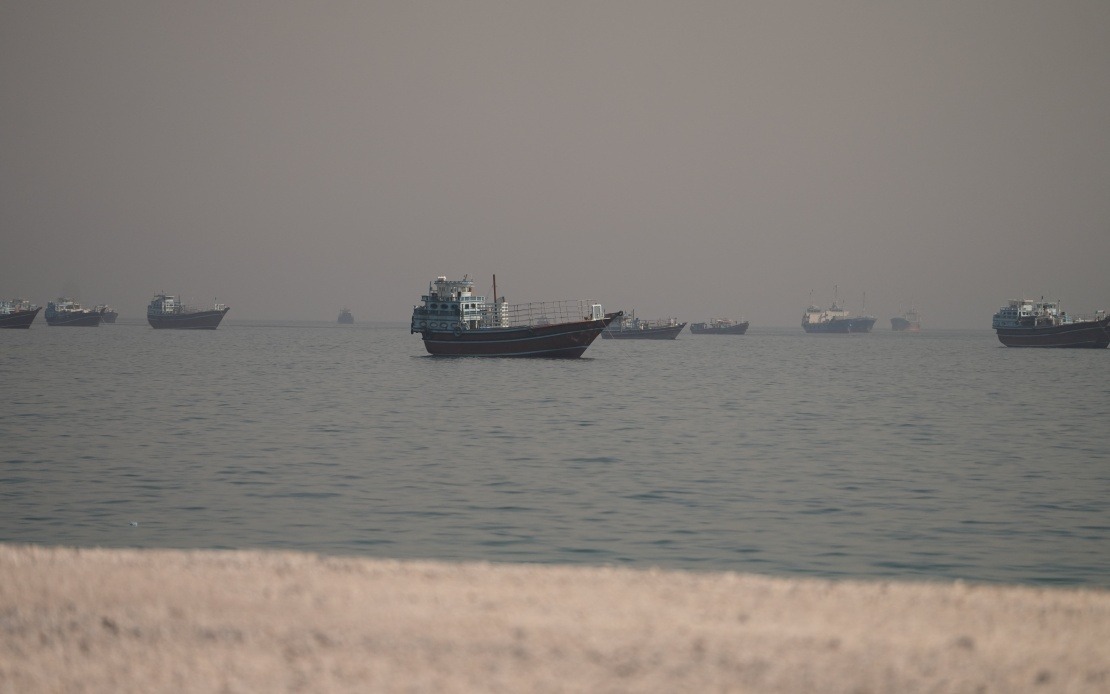
The Strait of Hormuz, through which approximately one-third of global seaborne oil transits, has become a focal point of international anxiety. Escalating friction between the United States and Iran, coupled with periodic threats of blockade, has exposed the vulnerability of existing supply corridors. Barrot's comments reflect a recognition that Europe and other energy-dependent economies cannot afford to rely exclusively on established routes, particularly given the unpredictability of regional dynamics.
Barrot's proposal reflects France's evolving perspective on Syria's geopolitical role following the overthrow of Bashar al-Assad approximately eighteen months ago. Rather than remaining isolated, France envisions a reconstructed Syria transitioning into a stabilising force within the Middle Eastern energy landscape. This framing represents a significant diplomatic recalibration, positioning the country not as a source of regional instability but as a potential nexus for international economic cooperation.
The Foreign Minister accompanied President Emmanuel Macron during a visit to Damascus on Tuesday, a journey that underscored France's commitment to engaging directly with Syria's transitional leadership. The mission signalled France's willingness to provide political and economic support to the Syrian reconstruction process, contingent upon demonstrated commitment to national unity and sovereign governance.
For Malaysia and other Southeast Asian economies, this European manoeuvre carries substantive implications. Asia's energy-hungry nations have historically depended on Middle Eastern oil supplies routed through chokepoints like the Strait of Hormuz. Any disruption to these passages directly threatens regional economies and supply chain stability. Consequently, the emergence of alternative conduits—whether through Syria, overland pipelines, or maritime routes bypassing traditional straits—potentially reshapes the competitive landscape for energy procurement across Asia.
France's strategic emphasis on diversifying energy corridors reflects a broader European principle gaining traction globally: reducing singular-point dependency in critical infrastructure. This principle resonates particularly within Southeast Asia, where economies like Malaysia, Singapore, and Thailand maintain substantial exposure to energy supply disruptions. The Syrian route, if successfully operationalised, could theoretically offer buyers in Asia competitive alternatives and enhanced negotiating leverage in energy markets.
Barrot articulated that expanded cooperation with Damascus would extend across multiple domains beyond energy. France intends to strengthen economic and trade connections, thereby positioning itself within Syria's post-conflict reconstruction framework. This multifaceted engagement strategy resembles development and diplomacy models that Southeast Asian nations have increasingly adopted with regional partners, combining infrastructure investment with political recognition.
However, Syria's transformation from conflict state to reliable energy partner remains contingent on sustained stability and institutional development. The country's security apparatus, governance structures, and international relationships continue evolving. France's confidence in Syria's trajectory—described as "reunifying and strengthening"—carries implicit assumptions about the durability of current political arrangements and the absence of renewed destabilisation.
The timing of France's pivot toward Syria coincides with broader European anxiety about energy independence from Russia following sanctions regimes. While distinct from Hormuz-related concerns, this European energy recalibration demonstrates how geopolitical fragmentation is prompting established powers to reconsider supply relationships and geographical dependencies. Southeast Asian observers should recognise that European energy strategy decisions ripple through global commodity markets, potentially affecting regional pricing and availability.
For Malaysia specifically, which maintains significant regional diplomatic influence and energy interests across the Middle East, the French initiative presents both opportunities and monitoring requirements. Should Syria emerge as a credible alternative energy corridor, Malaysian enterprises engaged in energy trading, shipping, and logistics could position themselves advantageously. Simultaneously, Malaysia's role as a stabilising regional voice in Middle Eastern affairs positions it to benefit from economic partnerships during Syria's reconstruction phase.
Barrot's characterisation of Syria as a "new regional hub" suggests a longer-term vision extending beyond energy into transportation, finance, and trade facilitation. This concept echoes the hub-and-spoke models that have proven successful in Southeast Asia, where cities like Singapore have leveraged geographic position and institutional development into regional economic dominance. Syria's potential trajectory, should stabilisation deepen, could reconfigure Middle Eastern economic geography in ways that indirectly affect Asian supply chains and trade patterns.
The Foreign Minister's emphasis on Syrian sovereignty and reunification appears designed to address international scepticism about the country's stability and legitimacy. By framing engagement as support for national integrity rather than great-power competition, France attempts to position itself as a constructive partner rather than a rival exploiting Syrian resources. This diplomatic positioning contrasts with historical patterns of external intervention in Syrian affairs and may signal a genuine reorientation toward respect-based partnership models.

