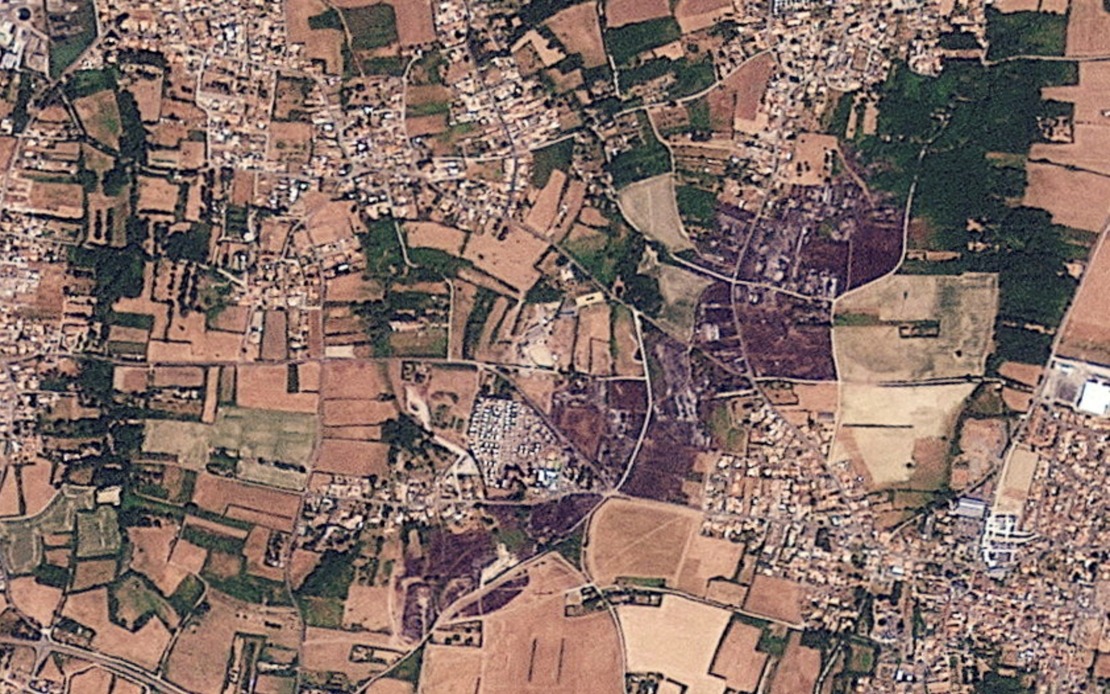
France is battling a serious wildfire crisis as two separate blazes ravage the Fontainebleau forest, collectively destroying approximately 1,920 hectares of forestland while emergency responders mobilise hundreds of personnel to contain the spread. The twin fires represent part of a broader pattern of wildfires affecting multiple regions across the country, stretching resources and raising serious questions about arson and fire prevention measures as summer heat intensifies the danger.
The initial fire, which ignited on Sunday, has consumed around 1,500 hectares, whilst a second blaze has destroyed between 300 and 400 hectares in the same forest zone. Despite overnight containment efforts, the fires continued spreading, forcing authorities to maintain approximately 600 firefighters at the scene. The sheer scale of the Fontainebleau incident underscores the vulnerability of France's natural heritage during the peak summer season when conditions are most conducive to rapid fire propagation.
Criminal investigators have made significant headway in the investigation, arresting two individuals suspected of deliberately starting the initial fire. This development has triggered sharp political reactions, with French Transport Minister Philippe Tabarot demanding substantially harsher judicial consequences for those found guilty of deliberately igniting wildfires. His comments reflect growing frustration within government circles over what authorities perceive as a troubling trend of deliberate fire-setting that endangers lives and destroys valuable natural resources.
Minister Tabarot's position extends beyond simple punishment, however. He advocated for a more nuanced approach that distinguishes between calculated arsonists and individuals suffering from pyromania, a psychological disorder characterised by compulsive fire-setting. Under his framework, those with confirmed arson intent would face severe criminal penalties, whilst individuals with documented pyromania would receive mandatory medical intervention and psychiatric treatment. This distinction reflects emerging understanding of fire-related crimes as spanning both criminal and mental health domains.
The broader scope of the problem became evident when national authorities disclosed that 59 individuals have been arrested across France since the commencement of the fire season on suspicion of deliberately starting wildfires. This figure suggests a systemic issue rather than isolated incidents, raising alarms about the efficacy of existing deterrent mechanisms and the adequacy of current enforcement capabilities. The pattern indicates that improved surveillance, community reporting mechanisms, and swift prosecution may be necessary components of any comprehensive strategy to reduce deliberately-caused fires.
The wildfire problem extends well beyond the Fontainebleau region, with multiple other locations experiencing significant blazes simultaneously. In the southern Pyrenees-Orientales region, the Trevillach wildfire that erupted earlier this month inflicted substantial damage on critical infrastructure, particularly the railway network serving the Perpignan-Villefranche-Vernet-les-Bains corridor. This incident demonstrates how wildfires generate cascading economic and logistical consequences that extend far beyond immediate environmental damage.
Railway operator SNCF has suspended train services between Ille-sur-Tet and Villefranche-Vernet-les-Bains until at least July 20, disrupting regional connectivity and commercial transport. The damage to railway infrastructure illustrates how climate-related disasters increasingly intersect with essential services, creating ripple effects throughout broader economic systems. For travellers and freight operators dependent on this crucial route through the Pyrenees, the disruption represents significant inconvenience and potential financial loss.
Western regions have also suffered notable fire activity, with Brittany's Côtes-d'Armor department experiencing a serious heath fire near Cap Fréhel that forced the evacuation of more than 100 residents. The blaze consumed approximately 38 hectares before firefighters gained control. Simultaneously, the Lozère region reported approximately 107 hectares of burnt terrain, indicating that fire activity is geographically dispersed across multiple departments rather than concentrated in isolated zones.
For Southeast Asian observers, including Malaysian policymakers, the French wildfire situation offers instructive lessons regarding the challenges of managing natural disasters in an era of climate volatility. Malaysia's own experiences with transboundary haze and regional fire management underscore the importance of early warning systems, coordinated regional responses, and the capacity to distinguish between natural fire phenomena and deliberately-set blazes. The French government's emphasis on prosecuting arsonists whilst simultaneously addressing mental health dimensions of fire-setting reflects a sophisticated understanding of fire causation that Malaysian authorities might consider within their own fire management frameworks.
The concentration of multiple simultaneous fires across different regions suggests that high ambient temperatures and dry conditions have created conditions where any spark—whether accidental or intentional—can rapidly escalate into major conflagrations. This environmental backdrop makes the alleged arson cases particularly serious, as they involve deliberately igniting fires during precisely the window when natural conditions are most conducive to uncontrollable spread. The timing and deliberation involved therefore multiply the culpability of those accused.
As France manages this ongoing crisis, the combination of large-scale resource deployment, criminal investigation, and policy discussion indicates a multifaceted response to what authorities increasingly view as a complex problem requiring simultaneous attention to law enforcement, mental health services, and environmental management. The coming weeks will test whether these comprehensive measures can contain existing fires whilst reducing the incidence of future fire-setting incidents.

