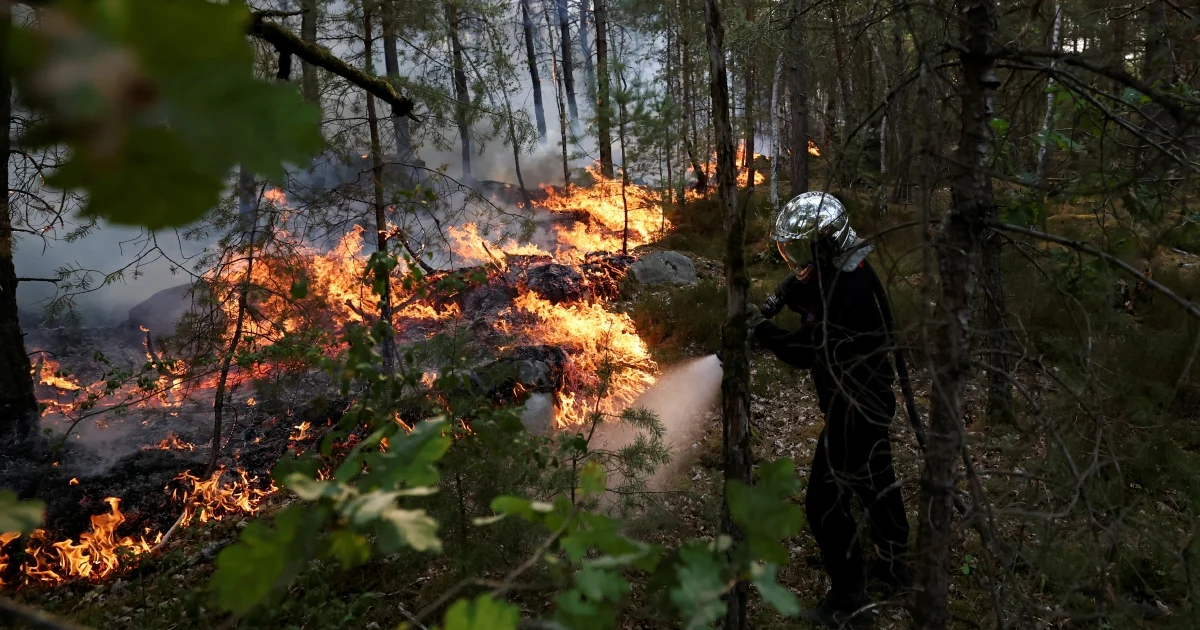
The French emergency services faced a critical challenge on Monday as two significant fires tore through forests south of Paris, destroying vegetation across an area exceeding 1,300 hectares. The twin blazes, one of which was located near Arbonne-la-Foret, forced authorities to mobilize extensive firefighting resources and triggered a criminal investigation. The rapid spread of both fires raised immediate concerns about the possibility of deliberate ignition, leading law enforcement to make two arrests on suspicion of arson.
This incident underscores a troubling pattern affecting forested regions across continental Europe as summer heat intensifies wildfire conditions. The Mediterranean climate of southern France, combined with drier seasonal patterns, creates ideal conditions for rapid fire propagation. The forests in this region, while historically resilient, face mounting pressure from climate change and human activity. France has invested heavily in wildfire prevention infrastructure and rapid-response protocols over the past decade, yet these efforts continue to be tested by the scale and frequency of modern fire events.
The arrest of two individuals suspected of arson adds a concerning dimension to the incident, suggesting that natural conditions alone may not be responsible for these destructive blazes. Criminal fire-setting has become an increasing concern for European fire services, complicating emergency response efforts. Investigators will now need to determine whether deliberate action triggered the fires and what circumstances or motives may have been involved. The presence of arson suspects in custody indicates that authorities viewed the origin of these fires as sufficiently suspicious to warrant immediate criminal investigation.
For Malaysian readers, this situation offers relevant lessons regarding wildfire management in tropical forest regions. Southeast Asia has its own documented history of destructive fires, including transboundary smoke incidents that have affected regional air quality. The French approach to emergency response coordination and interagency cooperation during environmental crises provides instructive context. Additionally, the investigation into potential arson reflects broader challenges facing countries worldwide in protecting critical forest ecosystems from deliberate damage.
The environmental consequences of losing 1,300 hectares of established forest extend beyond immediate ecological disruption. These woodlands form part of France's natural heritage and contribute to regional biodiversity, carbon storage, and watershed management. The recovery timeline for ecosystems recovering from such large-scale fires can span decades. Beyond environmental impacts, wildfires of this magnitude pose direct threats to nearby communities, infrastructure, and public health through smoke and air quality degradation.
French firefighting services mobilized substantial personnel and equipment to contain the blazes. The coordination between local fire brigades, regional authorities, and national emergency services demonstrates the institutional frameworks that Europe has developed for major environmental incidents. Such responses require pre-positioned equipment, trained personnel, and established communication protocols that enable rapid decision-making across multiple jurisdictions. The effectiveness of these systems, however, continues to be tested as climate-related pressures increase the frequency of extreme fire events.
The investigation into suspected arson will likely consume considerable police resources and may result in charges carrying significant penalties under French law. Beyond the criminal justice dimension, authorities will want to understand whether these fires represent isolated criminal acts or reflect a broader pattern of deliberate fire-setting in the region. If systemic issues are identified, they may prompt additional protective measures around vulnerable forest areas, including increased patrols and surveillance of known high-risk zones.
Seasonal wildfire patterns across Europe have shifted noticeably over recent decades. Fires that once appeared primarily during mid-summer increasingly occur earlier in spring and extend further into autumn as temperature patterns change. This extended fire season complicates resource allocation for emergency services, which must maintain sustained readiness over longer periods. The concentration of multiple large fires across different regions can rapidly overwhelm available firefighting capacity.
From a regional perspective, Europe's experience managing these environmental crises has implications for how Southeast Asian nations approach forest protection. Climate change projections suggest that fire risk will continue intensifying across multiple continents. The combination of natural conditions and potential human activity—whether negligent or intentional—requires sophisticated management strategies combining prevention, detection, rapid response, and investigation capabilities. France's capacity to conduct criminal investigations while simultaneously managing active fire response illustrates the complexity of modern emergency management.
The detention of two arson suspects represents a significant development that may provide investigators with crucial information about the origins of these fires. Their cooperation with authorities could yield insights into how the blazes were initiated, whether they were connected to specific grievances or circumstances, and whether additional preventative measures might have averted the disaster. As the investigation unfolds, these details will shape how French authorities respond to future fire risks and how they balance emergency response with criminal accountability.

