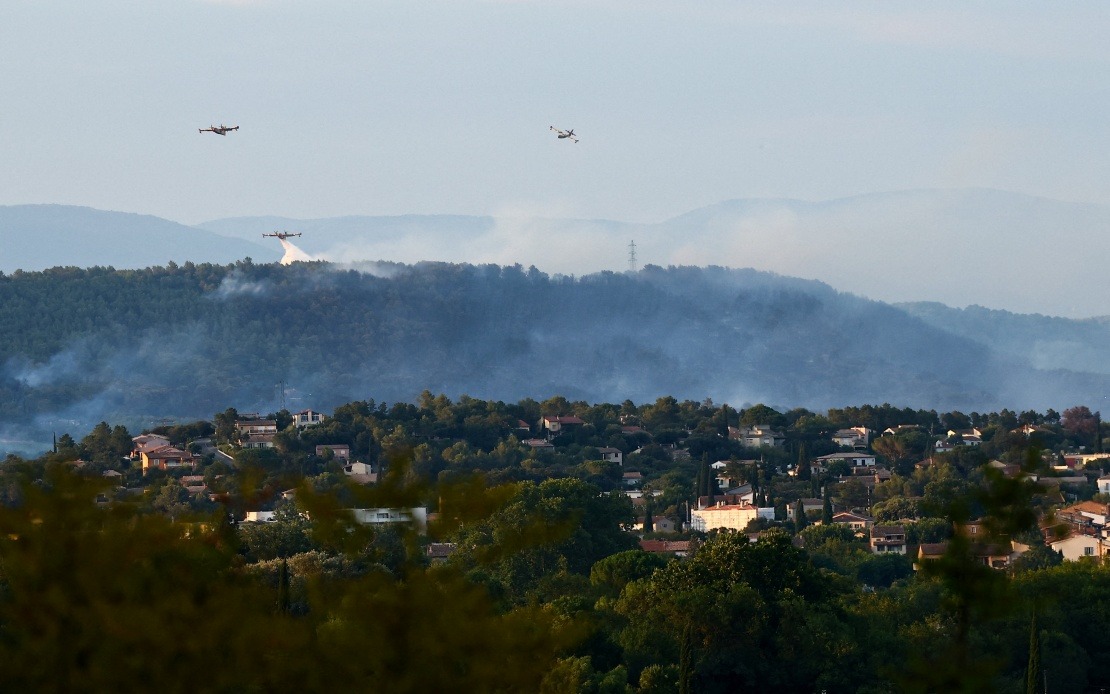
France is grappling with an unprecedented wildfire crisis that threatens to eclipse all previous records since the end of World War II. According to French Interior Minister Laurent Nunez, the country has witnessed the destruction of almost 40,000 hectares of forest and vegetation since January 2026 began, a staggering figure that underscores the severity of the current environmental emergency gripping the nation.
The scale of destruction far exceeds comparable periods in recent history. When Nunez disclosed these figures on Monday, he emphasized that the 2026 figures dramatically surpass those from the previous year, painting a picture of rapidly escalating environmental degradation. What distinguishes this year's crisis is not merely the aggregate damage but the relentless frequency with which new fires ignite across French territory. The minister noted that fresh blazes emerge with troubling regularity, suggesting that containment efforts are struggling to keep pace with the rate of ignition.
The underlying cause of this catastrophic wildfire season is an exceptional heat wave sweeping across France. Temperatures have approached 40 degrees Celsius in many regions, with some areas experiencing even more extreme conditions. This climate anomaly has created ideal conditions for fires to spread rapidly across both forested and vegetated areas, overwhelming firefighting resources and creating a chain reaction of successive conflagrations that tax response capabilities.
President Emmanuel Macron acknowledged the gravity of the situation in mid-July, explicitly characterizing the current wildfire season as the most severe since the conclusion of World War II. This assessment from the nation's highest political authority underscores just how exceptional the current crisis represents within the broader historical context. For a country accustomed to managing seasonal fire risks, the breach of records that have stood for eight decades signals a fundamental shift in environmental conditions.
The meteorological data underlying this crisis further illustrates the extremity of conditions. At the end of June, France's national meteorological service issued weather warnings across 72 of the nation's 96 departments—the highest number ever recorded for such warnings. This near-universal coverage of hazard alerts demonstrates how the heat wave has transcended regional boundaries to become a nationwide phenomenon, stretching emergency response infrastructure across the entire country.
For Malaysian observers and Southeast Asian audiences, the French wildfire crisis carries important implications regarding climate change and environmental vulnerability. While Malaysia's tropical climate differs markedly from Mediterranean France, the underlying drivers—extreme heat, prolonged dry conditions, and forest degradation—mirror risks that Southeast Asia faces with increasing frequency. The region has experienced its own devastating fire seasons, particularly during El Niño years, when unprecedented drought conditions ravage peatlands and tropical forests across Indonesia, Malaysia, and neighboring countries.
The French experience illustrates how even developed nations with substantial resources, advanced firefighting technology, and trained personnel struggle when environmental conditions become extreme enough. This reality carries weight for Southeast Asian governments managing fire risks in landscapes often more vulnerable to ignition and spread than European forests. The political and economic costs of large-scale wildfires—in terms of air quality, agricultural losses, tourism impacts, and public health consequences—represent a serious policy concern for the region.
Moreover, the frequency of record-breaking fire seasons itself warrants attention. Nunez's statement that 2026 already exceeds the previous year's damage while the season continues suggests that successive years are producing progressively worse outcomes. This pattern mirrors trends observed in Southeast Asia, where the interval between major fire episodes has contracted and their intensity increased over recent decades. The prospect of wildfires becoming the new normal rather than exceptional events demands policy frameworks that treat fire management not as episodic crisis response but as permanent infrastructure investment.
The French government's response to the current emergency will likely reveal approaches that Southeast Asian nations might study and adapt. While specific policy measures were not detailed in available reports, the scale of the challenge would typically necessitate international cooperation, cross-border resource sharing, and investment in fire prevention technologies. These mechanisms have proven valuable in Southeast Asia's own fire management efforts, particularly through regional frameworks that enable countries to pool expertise and resources during shared environmental emergencies.
The broader context of France's wildfire crisis reflects the global reality that climate change operates without respect for national development status or technological sophistication. A wealthy European nation with advanced early warning systems and substantial firefighting capacity nonetheless faces unprecedented environmental stress. This reality should inform debate in Southeast Asia about the limits of adaptation measures and the necessity of aggressive emissions reduction strategies as fundamental approaches to preventing future crises.
As France continues to battle spreading flames and confronts the possibility that this record-breaking year will worsen before seasonal relief arrives, the international community watches an environmental catastrophe unfold in real time. For policymakers across Southeast Asia, the French crisis serves as a sobering reminder that the transition to more extreme and frequent environmental hazards may already be underway, necessitating urgent preparation and investment in resilience regardless of national wealth or existing infrastructure.

