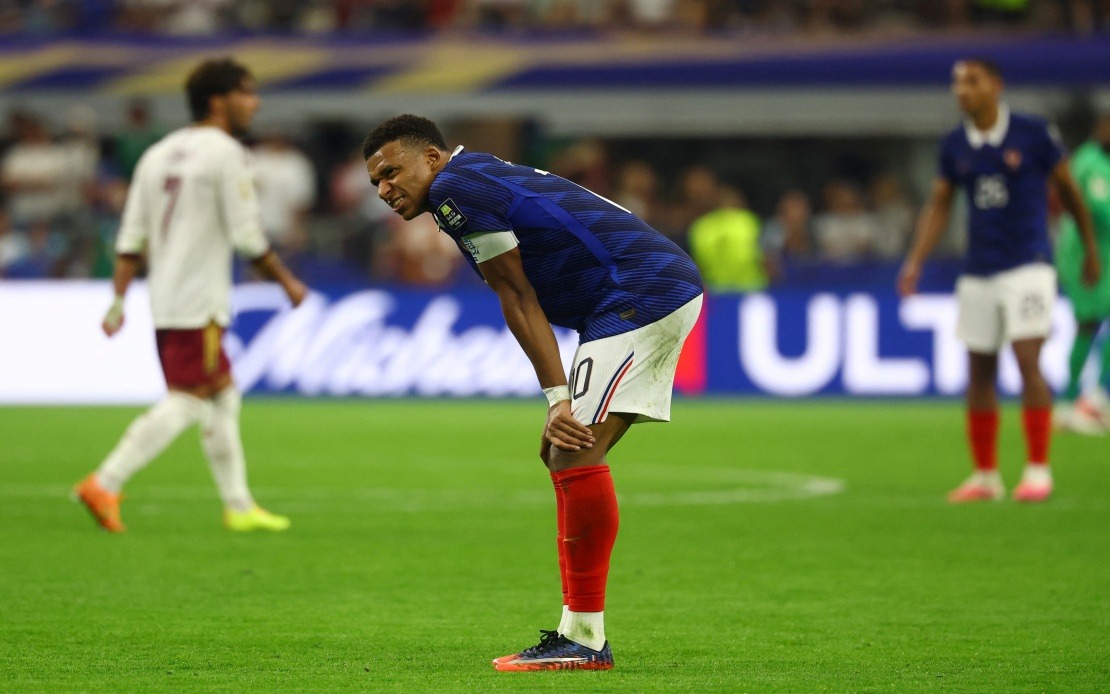
France's dramatic elimination from the World Cup semifinals at the hands of Spain sparked widespread civil unrest across major urban centres, culminating in the detention of over 160 individuals during overnight clashes and street disturbances. The incidents underscore the intense emotions surrounding major sporting competitions in Europe and raise questions about crowd management and security protocols during high-stakes international events.
The Paris Police Prefecture reported that 141 arrests were made throughout the capital and surrounding regions in the immediate aftermath of Tuesday evening's decisive 2-0 match loss. The bulk of these apprehensions stemmed from incidents involving the deployment of firework mortars, which authorities characterised as targeted attacks against uniformed police officers and emergency service workers responding to the disturbances. Such confrontations represent a significant security concern for French law enforcement, which must balance public celebrations with the need to maintain order in densely populated urban areas.
Parallel disturbances unfolded simultaneously in Lyon, where hundreds had gathered at the historic Place Bellecour to watch the semifinal together. Following Spain's unexpected victory, the crowd fragmented into smaller, more volatile groups that began hurling projectiles toward police lines. The projectiles included fireworks and other handheld objects, triggering intervention by French riot police units deployed throughout the city. Approximately 20 individuals were taken into custody in connection with the Lyon incidents, though authorities reported no serious injuries or substantial property damage in the southeastern city.
The demographics of those arrested reveal patterns often observed in sporting-related unrest. Detainees ranged in age from those born between 2002 and 2011, indicating participants spanning from young teenagers to individuals in their early twenties. This age distribution suggests that many involved lacked the context of France's previous World Cup triumphs and may have reacted with particular intensity to what they perceived as an unexpected, unacceptable defeat by a rival European nation.
French authorities emphasised that despite the scale of arrests, no serious injuries were documented among either civilian crowds or police and emergency personnel. This relative restraint in terms of physical harm, however, masks the underlying tensions that erupted across the country's major metropolitan areas. The use of firework mortars against police represents an escalation beyond typical post-match celebrations, suggesting organised intent to provoke confrontations rather than spontaneous expressions of disappointment.
The unrest carries particular significance for France, a nation that has experienced recurring cycles of civil disorder tied to sporting events, social grievances, and urban alienation. The World Cup, as one of global sport's most prestigious tournaments, generates extraordinary emotional investment across French society. A semifinal defeat to Spain—a fellow European power—appears to have triggered reactions disproportionate to what might be expected from a regular competitive loss, reflecting deeper currents within French football culture and national pride.
For Malaysian and Southeast Asian observers, these events illustrate the universal phenomenon of intense emotional responses to major sporting competitions, a dynamic well understood in our own region where football commands passionate followings. The French scenario demonstrates how quickly celebrations can transform into confrontation when outcomes disappoint ardent supporters, a pattern that extends across continents and cultural contexts. Security agencies throughout Asia have drawn lessons from European experiences with crowd management during football tournaments, recognising the potential for rapid escalation in volatile situations.
The incident also highlights the ongoing challenge facing authorities in distinguishing between legitimate protest or emotional expression and criminal behaviour warranting intervention. French riot police faced the difficult task of managing large crowds while protecting themselves and other emergency responders from projectile attacks, all while attempting to minimise civilian casualties or injury. Such scenarios frequently test the boundaries between public order maintenance and proportional response.
France's rapid deployment of riot control units and the substantial number of arrests suggest that authorities had anticipated potential disorder and positioned resources strategically throughout Paris and Lyon. This preparedness likely prevented the situations from escalating further, though the scale of arrests indicates that the disturbances were neither minor nor easily contained through standard crowd management techniques. The coordination between Paris Police Prefecture and regional authorities in Lyon demonstrates the institutional capacity to respond to simultaneous incidents across multiple cities.
Looking forward, the incident will likely prompt French authorities to review their protocols for managing crowds during major sporting events, particularly tournaments with high emotional stakes. Insurance policies covering public spaces may also face scrutiny, as may the broader question of whether spectator zones in public squares require enhanced security measures during international competitions. Event organisers worldwide will monitor the French response closely, seeking insights applicable to their own contexts.
The broader European football context adds dimension to these events. Spain's victory, achieved through disciplined play and tactical execution, prompted emotional responses that transcended the sporting sphere. For France, the loss represents a significant disappointment on home continent turf, intensifying the sting of elimination. Such dynamics help explain why the disturbances assumed the scale and character they did, with young supporters channelling frustration and anger into confrontations that authorities characterised as dangerous and requiring swift intervention.

