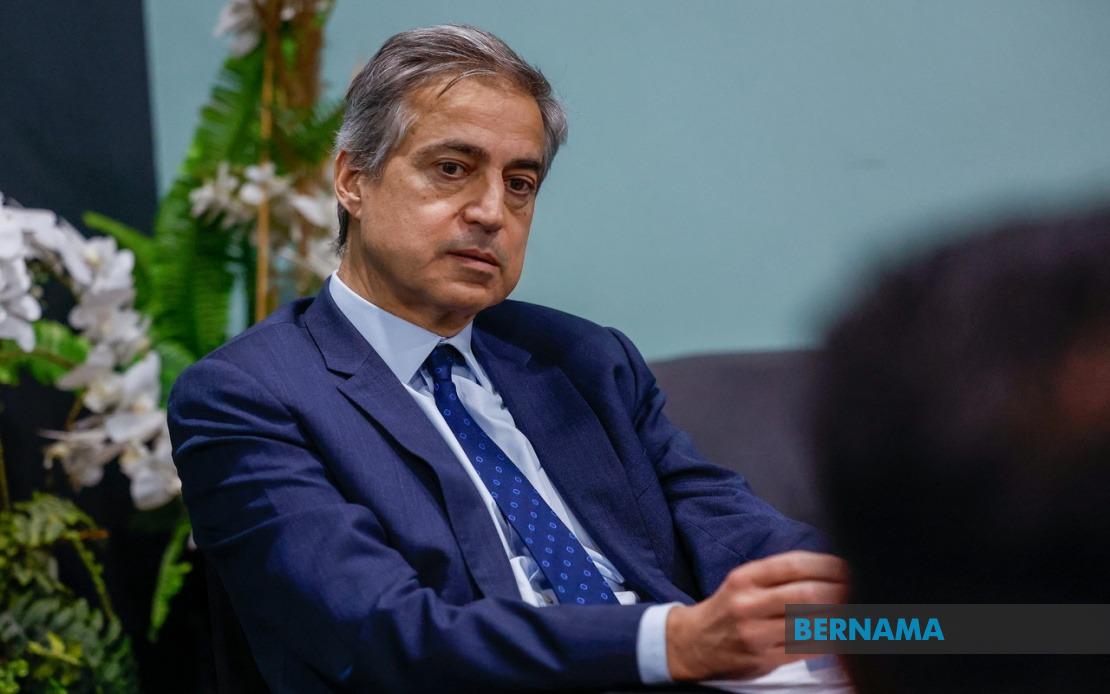
France and Malaysia are committed to expanding their bilateral partnership as both nations work to foster stability and cooperation in an increasingly fractured international environment, French Ambassador Marc Abensour declared at the French National Day celebration held in Kuala Lumpur on Tuesday evening. Speaking at the official reception at his residence, Abensour articulated a vision of the two countries serving as stabilising forces, using their multifaceted engagement to counterbalance the divisions that continue to reshape global politics and economics.
The relationship between Paris and Kuala Lumpur extends far beyond diplomatic pleasantries. According to Abensour, bilateral trade figures demonstrate genuine momentum, having expanded by 11 per cent in the previous financial year. This growth reflects deepening commercial integration and suggests that businesses in both nations see mutual opportunity despite broader economic headwinds affecting the region. The trade expansion underscores how practical economic incentives can anchor diplomatic relationships during periods of geopolitical uncertainty.
France's corporate footprint in Malaysia remains substantial. Approximately 600 French-registered companies maintain active operations throughout the country, collectively generating employment for more than 30,000 Malaysian workers. This employment base has multiplier effects throughout the economy, supporting supply chains, local services, and downstream industries that depend on these enterprises. The scale of French corporate presence reflects both investor confidence in Malaysia's market fundamentals and the sophistication of bilateral business relationships that have matured over decades.
From an investment perspective, Malaysia occupies a strategically important position within France's global capital allocation strategy. The country ranks as the world's tenth-largest destination for French foreign direct investment, a distinction that reflects both historical ties and contemporary assessments of economic prospects. This ranking places Malaysia in rarefied company, alongside larger developed economies and major emerging markets, indicating the significance Paris attributes to the Malaysian market for future growth and returns.
Educational and cultural exchanges form another pillar supporting the bilateral framework. The ambassador highlighted that more than 3,700 candidates pursued French-language certification examinations in Malaysia during the reference period, placing the nation third in Asia for French-language learning engagement, trailing only India and China in absolute numbers. This linguistic dimension carries significance beyond mere statistics, as it represents pipeline development for future workers in French-invested enterprises, potential diplomats, and individuals who may facilitate cross-cultural understanding and commercial negotiations between the two societies.
The vibrancy of people-to-people connections demonstrates that the France-Malaysia relationship transcends government-to-government formality. The breadth of educational aspirations among Malaysian students, combined with ongoing cultural programming and professional exchanges, creates social bonds that tend to withstand political fluctuations. These interpersonal networks become particularly valuable during periods of international tension, as they provide informal channels for communication and relationship-building outside official diplomatic structures.
Federal Territories Minister Hannah Yeoh attended the reception as guest of honour, underscoring the event's official significance within Malaysia's diplomatic calendar. The gathering itself reflected the relationship's maturity, with approximately 800 attendees including senior government officials, diplomatic corps representatives, and ambassadors from numerous countries. The presence of such a distinguished audience demonstrated Malaysia's commitment to recognising France's importance within its foreign policy framework and the expectation that France similarly values the Malaysian partnership.
The celebration of French National Day on July 14 carries particular symbolism in contemporary international relations. The commemoration of the 1789 Storming of the Bastille and the ideals of liberty, equality and fraternity represents universal democratic principles that transcend national boundaries. When Malaysia actively participates in honouring this occasion, it signals alignment with liberal democratic values and a commitment to the international system of norms and rules that France has long championed through institutions like the European Union and various multilateral frameworks.
The event's culinary programming subtly illustrated the cultural synthesis occurring between the two nations. While guests experienced authentic French cuisine reflecting Parisian culinary traditions, organisers incorporated Malaysian elements through a durian-tasting booth, creating a gastronomic metaphor for how two distinctive cultures can coexist, complement each other, and enrich shared experiences. This symbolic fusion of flavours underscored the ambassador's message about building bridges—cultural differences need not create distance when approached with mutual respect and genuine curiosity.
For Malaysia and the broader Southeast Asian region, deepening ties with France carries strategic implications. France maintains significant military capabilities, nuclear deterrence, and influential roles within European institutions that shape global governance. By strengthening the Malaysia-France relationship, Kuala Lumpur diversifies its international partnerships and ensures access to perspectives and capabilities beyond its immediate geographic sphere. This diversification becomes increasingly valuable as great power competition intensifies and regional powers seek strategic autonomy through multiple partnerships.
The timing of Abensour's emphasis on bridge-building amid global fragmentation reflects authentic contemporary concerns. International order has fractured along multiple dimensions—geopolitical rivalry between major powers, economic decoupling, technological competition, and divergent visions of governance legitimacy. In this context, bilateral relationships between mid-sized powers like Malaysia and established powers like France that consciously commit to cooperation and institutional engagement become crucial stabilising elements within the international system.
Looking forward, the France-Malaysia partnership appears positioned for continued expansion. The economic fundamentals supporting trade growth remain intact, investment flows show no signs of diminishing, and educational exchanges continue building human capital that facilitates future cooperation. As global fragmentation deepens, relationships anchored in pragmatic mutual benefit, cultural appreciation, and shared democratic values may emerge as among the most resilient and valuable international partnerships available to both nations.

