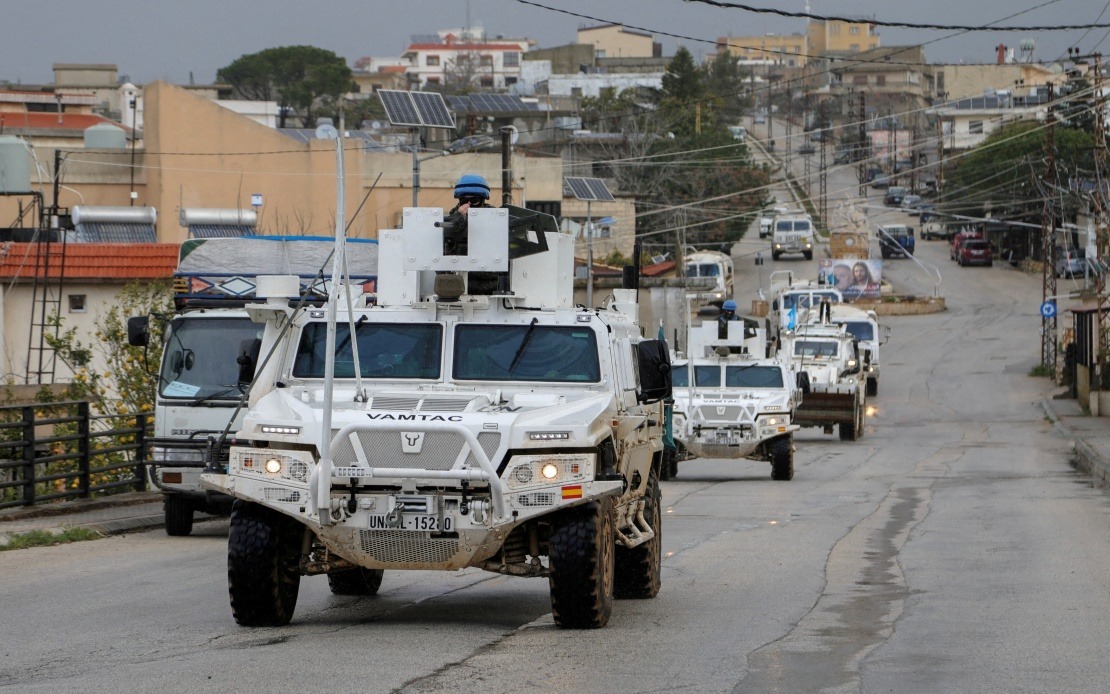
France and Italy have committed to assembling an international coalition designed to sustain stability in Lebanon once the United Nations Interim Force in Lebanon withdraws at the end of 2024. French President Emmanuel Macron announced the partnership during a joint appearance with Italian Prime Minister Giorgia Meloni in Antibes this week, signalling a coordinated European approach to a critical Mediterranean security challenge. The initiative represents a significant diplomatic effort to manage the geopolitical consequences of UNIFIL's departure and reflects growing European concern about Lebanon's fragile state.
Under Security Council Resolution 2790, UNIFIL's operations are scheduled to conclude on December 31, with a full personnel withdrawal to be completed within twelve months thereafter. This timeline creates an immediate governance problem: Lebanon's institutional capacity remains severely strained following years of economic collapse, political paralysis, and military weakness. The planned international coalition aims to fill the functional vacuum that UNIFIL's departure would otherwise create, providing both security reassurance and institutional scaffolding during a vulnerable transition period.
Macron framed the coalition as essential to Lebanon's long-term sovereignty and institutional development. His statement emphasised that external support should strengthen Lebanese state capacity rather than undermine it—a delicate balance given historical anxieties about foreign intervention in Lebanese politics. The initiative explicitly targets territorial security, seeking to prevent Lebanese soil from becoming a platform for cross-border escalation that could destabilise the broader Levantine region. This framing reflects European concerns about proxy conflicts, weapons trafficking, and the proliferation of armed groups operating with impunity.
Meloni's endorsement highlighted Italy's commitment to Mediterranean stability and its role as a European power with vested interests in Middle Eastern security architecture. The Italian Prime Minister warned explicitly against allowing a security vacuum to develop, describing such a scenario as potentially catastrophic. Her language underscored the existential risk that Lebanon's deterioration poses not merely to Lebanese citizens, but to regional stability writ large, including European strategic interests in energy security, trade routes, and counterterrorism operations.
The proposed coalition operates within a carefully constructed diplomatic framework designed to ensure legitimacy and prevent accusations of unilateral Western intervention. By explicitly coordinating with both the European Union and the United Nations, France and Italy are positioning their initiative as a multilateral endeavour rooted in international law rather than great-power competition. This approach attempts to secure buy-in from regional and global actors who might otherwise perceive European military presence as a neo-colonial undertaking.
For Malaysia and Southeast Asian stakeholders, this development carries several implications. The Lebanese crisis exemplifies how state fragmentation in strategically important regions creates cascading security challenges that ultimately affect global stability and Malaysian interests. Lebanon's weakness enables transnational criminal networks, terrorist organisations, and rival powers to exploit ungoverned space, with consequences that reverberate across continents through migration flows, weapons proliferation, and economic disruption. Malaysia's own experience navigating security challenges in contested territories makes this an instructive case study.
The European coalition model also offers lessons for regional multilateralism. Southeast Asia faces its own stability challenges in contested zones, and the French-Italian approach—emphasising coordination among multiple actors while maintaining deference to local sovereignty—represents a pragmatic diplomatic template. The explicit commitment to strengthening Lebanese armed forces and state institutions, rather than replacing them with foreign military governance, reflects a matured understanding of post-Cold War intervention ethics that may resonate with ASEAN principles.
However, the coalition faces substantial implementation challenges. Lebanon's political class remains fractured along sectarian lines, making consensus on security arrangements difficult. Regional powers with competing interests in Lebanon—including Syria, Iran, Israel, and Saudi Arabia—may resist international arrangements they perceive as threatening their own strategic positions. The proposed coalition must navigate these competing claims whilst maintaining credibility as a neutral facilitator rather than a partisan player.
The timing of this announcement, with UNIFIL's departure now less than six months away, suggests growing urgency among European policymakers about Lebanon's trajectory. UNIFIL has provided essential stability since its deployment following the 2006 conflict, maintaining a buffer between Israeli and Lebanese forces whilst allowing the Lebanese military modest space to rebuild. Without equivalent international presence, the risk of renewed armed confrontation rises substantially, potentially drawing in external powers and destabilising the entire Eastern Mediterranean.
Financial commitments remain undisclosed, but equipping and sustaining a multinational coalition of meaningful scale would require significant resources. France and Italy's willingness to lead suggests they envision a coalition of perhaps 5,000-10,000 personnel, staffed primarily by European nations with potential contributions from Arab states and other UN members. The operational mandate would likely focus on border security, training Lebanese forces, and maintaining sufficient presence to deter hostile activities without direct combat operations.
The coalition's success will ultimately depend on Lebanese political actors themselves embracing institutional reform and demonstrating commitment to pluralism and rule of law. External military presence can create enabling conditions, but cannot substitute for internal Lebanese consensus and political will. The French-Italian initiative therefore represents both an important security intervention and a tacit acknowledgment that Lebanon's recovery requires ultimately indigenous solutions supported, rather than imposed, by the international community.

