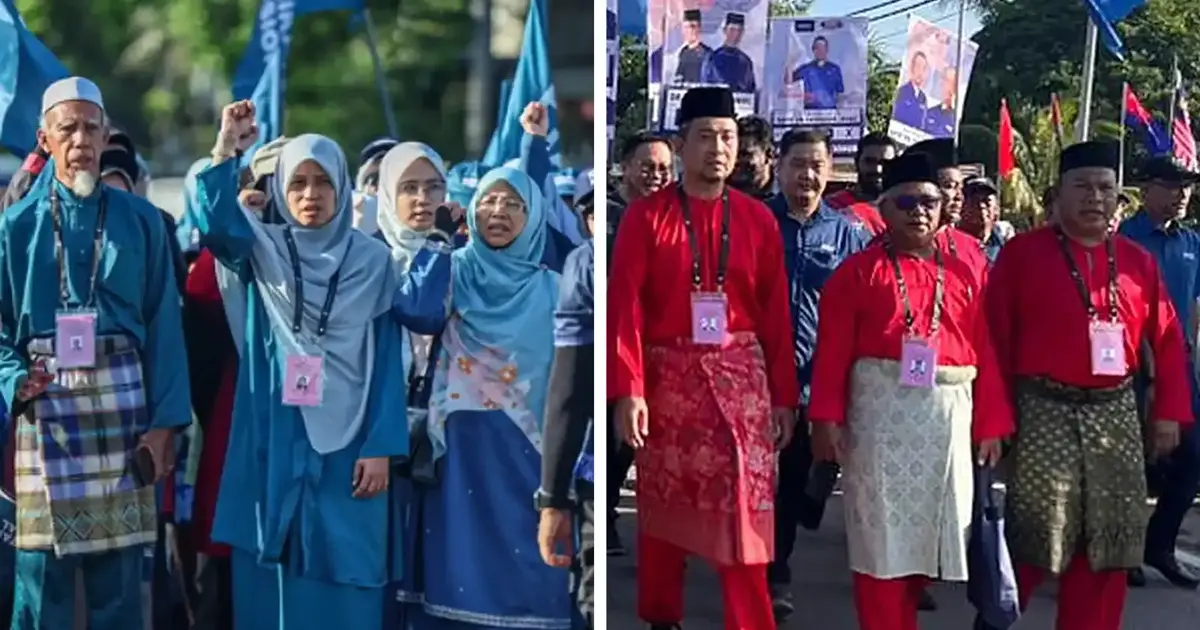
Perikatan Nasional's ongoing internal fragmentation threatens to become a major liability as the coalition prepares for the Johor state election, with political observers warning that the visible split between its two largest components—PAS and Bersatu—risks damaging public confidence in the bloc's viability and coherence. The anticipated campaign difficulties reflect deeper structural problems that have plagued the Islamist-Malay nationalist alliance since its formation, with the two parties pursuing increasingly divergent political strategies and messaging that could confuse voters about what a Perikatan government would actually deliver.
The strategic divergence between PAS and Bersatu reveals competing visions for Perikatan's direction. PAS, anchored in its Islamic-based ideological framework and strong grassroots organization in rural constituencies, operates from a fundamentally different political logic than Bersatu, which emerged as a breakaway faction from UMNO and retains considerable appeal among urban Malay professionals and reform-minded voters. When these parties campaign separately or with conflicting narratives, they project an image of internal discord rather than unified leadership, precisely what voters seek during election season when uncertainty about governance increases.
Johor's electoral significance amplifies these concerns considerably. As Malaysia's second-largest state by population and a traditional UMNO stronghold, Johor elections serve as bellwethers for national sentiment and test cases for coalition viability. A Perikatan campaign plagued by visible tensions between PAS and Bersatu would signal weakness at the precise moment when the coalition needs to demonstrate it represents a credible alternative to both the UMNO-led Barisan Nasional government and the increasingly fragmented opposition. For ordinary voters making decisions in Johor, such internal disagreements breed skepticism about whether the coalition possesses the discipline and shared vision necessary to govern effectively.
Analysts highlight that fragmented campaign efforts directly translate into wasted resources and muddled messaging. When PAS holds separate rallies emphasizing Islamic governance themes while Bersatu simultaneously campaigns on anti-corruption platforms and economic competence narratives, they create confusion rather than cumulative persuasive effect. Voters exposed to conflicting party materials from the same coalition struggle to identify a coherent Perikatan platform, reducing the likelihood they will consolidate their support around coalition candidates. This multiplication of competing messages diminishes each party's individual campaign impact while failing to create a unified coalition brand.
The voter confidence dimension extends beyond simple messaging confusion. Elections fundamentally involve voters assessing which coalition possesses the internal cohesion and leadership clarity to govern. A coalition where significant components publicly disagree or campaign independently appears unstable, suggesting that if elected, internal conflicts could prevent effective governance. This perception proves particularly damaging in Johor, where voters have consistently valued stability and economic performance over ideological purity. Perikatan's fragmentation directly contradicts the stability narrative that typically resonates in the state, potentially driving votes toward UMNO-BN, which despite its internal problems projects greater organizational unity.
The historical context matters considerably for understanding current anxieties. Perikatan Nasional emerged in 2020 as an alternative power structure, initially presenting itself as a fresh, unified bloc offering clean governance. However, years of internal tension, disagreements over power-sharing arrangements, and divergent approaches to key policy questions have gradually eroded that initial coherence. By the time Johor votes, the coalition will have accumulated considerable baggage regarding its inability to maintain internal discipline, making skeptical voters question whether voting Perikatan represents genuine change or simply substituting one fractious governing coalition for another.
Geographic and demographic considerations further complicate the campaign dynamics. PAS maintains superior organizational capacity and voting strength in Johor's rural and semi-rural constituencies, while Bersatu appeals more strongly to urban Malay communities and educated younger voters. Rather than complementing each other strategically, their campaign separation potentially creates gaps where neither party effectively mobilizes critical voter segments. A truly unified Perikatan campaign could leverage PAS's grassroots machinery while amplifying Bersatu's urban messaging reach, but fragmented efforts fail to capitalize on these complementary strengths.
The broader implications for Malaysian politics appear significant. Johor's election result will substantially influence whether Perikatan consolidates itself as a permanent feature of Malaysia's political landscape or gradually fragments further. A poor showing attributed to internal divisions would strengthen arguments within both parties that their partnership lacks sustainable foundation. Conversely, demonstrating campaign unity and emerging with respectable results could provide momentum for coalition cohesion nationally. The stakes therefore extend far beyond this single state election to fundamental questions about whether Malaysia's coalition politics can accommodate successful multi-party arrangements outside the traditional Barisan framework.
Voter behavior research suggests that during elections, moderate and swing voters—precisely the constituencies Perikatan needs to attract—respond negatively to perceptions of coalition instability. These persuadable voters already harbor reservations about Perikatan as a relatively new political formation, and visible internal divisions reinforce doubts about whether voting for the coalition represents a prudent choice. In contrast, voters who have already committed to either Barisan or opposition bloc tend to be less influenced by such perceptions, meaning that fragmentation primarily hurts Perikatan's growth potential.
Moving forward, Perikatan faces a critical window where demonstrating campaign discipline in Johor could meaningfully restore investor and voter confidence. Whether PAS and Bersatu possess the political will and strategic acumen to subordinate their particular interests to coalition-wide success remains uncertain. Political observers will scrutinize campaign organization closely, watching whether the two parties coordinate messaging, cross-promote each other's candidates, and present unified policy positions. Such coordination would signal that Perikatan's leadership has recognized the vulnerability created by fragmentation and committed to addressing it. Failure to demonstrate such coordination would likely confirm analyst concerns that internal divisions represent fundamental structural problems rather than temporary coordination challenges.

