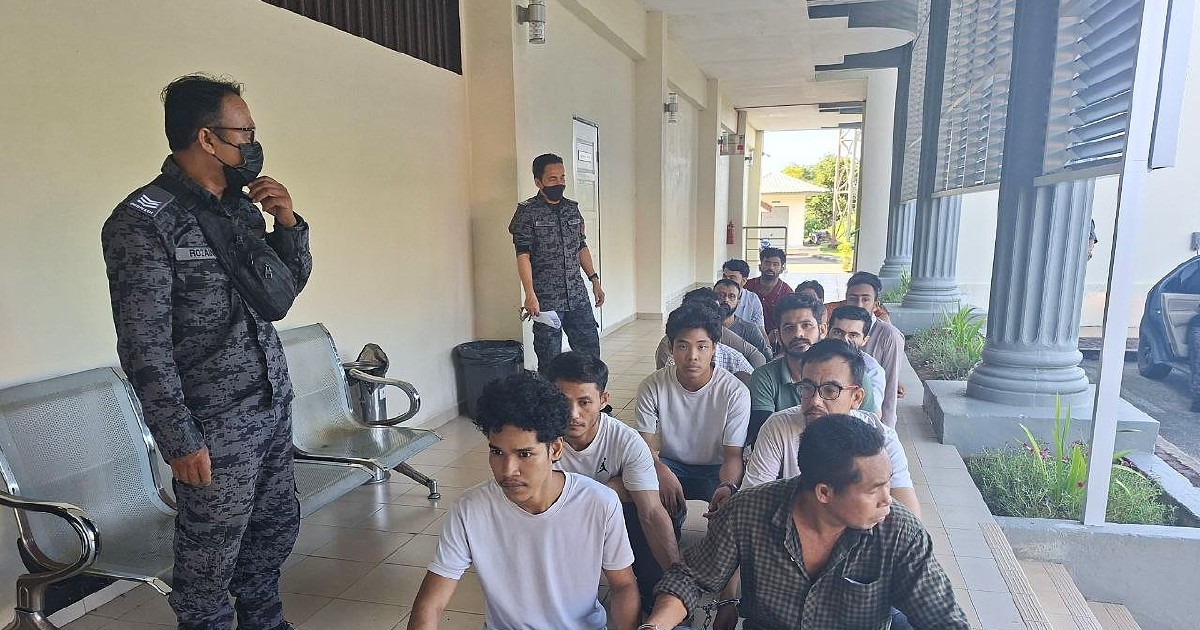
Fourteen foreign nationals were arraigned at the Sessions Court in Pasir Mas, Kelantan, on charges stemming from violations of Malaysia's immigration laws, marking another significant enforcement action against irregular migration in the northern state. The men faced multiple charges relating to unauthorised entry into Malaysian territory, remaining in the country beyond the expiration of their permits, and improper use of their travel documentation — offences that collectively underscore persistent challenges in border control and migration management across the region.
The scale of the prosecution reflects the Immigration Department's sustained focus on combating irregular migration patterns that have grown increasingly complex in recent years. Kelantan, situated along the Thai-Malaysia border, has long been a corridor for both licit and illicit cross-border movement. The state's geographical position makes it particularly vulnerable to unauthorised entry routes, with the porous land border requiring consistent enforcement vigilance from multiple agencies. This particular case represents routine but essential work by immigration authorities to maintain legal entry standards and deter systematic abuses of the visa system.
Malaysia's immigration laws carry substantial penalties for violations of this nature. Individuals convicted of illegal entry face imprisonment periods and substantial fines, with sentences often running consecutively when multiple charges are involved. Overstaying offences similarly carry custodial terms and financial penalties designed to discourage deliberate circumvention of permit conditions. The misuse of entry documents — whether through falsification, lending documentation to others, or exceeding the scope of authorised activity — constitutes a separate category of violations that authorities treat with particular seriousness because such conduct undermines the integrity of Malaysia's border management infrastructure.
The circumstances surrounding how these individuals entered the country or came to overstay remain part of the investigation and judicial process. Some cases may involve genuine documentation errors or circumstances beyond the migrant's control, while others suggest deliberate violation of immigration regulations. The mix is typically diverse, ranging from migrant workers who lost employment and could not arrange timely departure, to individuals who deliberately overstayed to seek irregular employment, to those involved in organised networks facilitating unauthorised entry.
This enforcement action takes place within a broader Southeast Asian context of irregular migration challenges. The region hosts millions of migrant workers, many of whom operate within legal frameworks, but significant numbers exist outside formal regulation. Malaysia's domestic economy depends substantially on migrant labour across construction, plantation work, manufacturing, and domestic service sectors, yet the country simultaneously faces pressure to enforce its border regulations rigorously. This creates institutional tension between labour market demand and immigration law enforcement — a dilemma that other regional economies including Thailand and Singapore also navigate.
The misuse of entry documents category of charges suggests these cases may involve coordinated violations rather than isolated incidents. Such patterns often indicate involvement of migration brokers or smuggling networks that facilitate irregular border crossing for fees. When authorities prosecute document misuse cases, they frequently uncover evidence of larger criminal networks operating across multiple countries. These networks exploit vulnerable migrants seeking employment opportunities while simultaneously profiting from violation of immigration regulations.
For Malaysian employers who hire migrant labour, such enforcement actions serve as reminders of their legal obligations to ensure workers possess valid documentation and appropriate work permits. Employers face substantial liability for knowingly employing undocumented or overstaying workers, with penalties including fines and potential imprisonment for complicit company directors. The responsibility for immigration compliance thus extends beyond individual migrants to encompass the businesses that benefit from their labour, creating accountability throughout the employment chain.
The prosecution of these fourteen individuals represents investment of investigative and prosecutorial resources by Malaysian authorities. While individual cases may appear routine, collectively they constitute Malaysia's approach to managing migration flows and maintaining rule of law within its territory. The availability of court capacity to hear immigration cases, combined with Immigration Department enforcement capacity, shapes the overall effectiveness of migration governance and the deterrent effect of potential prosecution.
Regional cooperation on migration issues remains underdeveloped despite shared challenges. While Malaysia participates in bilateral arrangements with source countries including Bangladesh, Myanmar, and Indonesia, coordinated regional approaches to organised migration trafficking and document fraud remain limited. Intelligence sharing between ASEAN members on smuggling networks could potentially enhance enforcement effectiveness, yet institutional barriers and competing national interests limit such cooperation.
Looking forward, Malaysia's immigration enforcement will continue balancing legitimate border security concerns with the reality that migrant labour remains integral to the economy. The charges against these fourteen individuals will move through the judicial system, with outcomes likely to include deportation following any custodial sentences. Such cases also provide data that informs policy discussions about whether current penalty structures effectively deter violations or whether alternative compliance mechanisms might prove more efficient. For now, the prosecution continues the steady enforcement work that characterises everyday immigration administration across Malaysia.

