The Jeram Padang state seat in Jempol has crystallised into the only four-cornered contest in Negeri Sembilan's 16th state election, according to the returning officer's announcement following today's nomination closing at the Jempol District and Land Office Hall. Returning officer Amino Agos Suyub confirmed the competitive field after the morning's filing deadline, setting the stage for what will be the most crowded race in the Jempol state constituency.
The Jeram Padang battleground brings together four distinct political forces. G. Manivannan represents Pakatan Harapan, seeking to dislodge Datuk Mohd Zaidy Abdul Kadir, who holds the seat for Barisan Nasional. Challenging both establishment coalitions are R. Sri Sanjeevan of Parti Pribumi Bersatu Malaysia and Dayana Dal of Parti Orang Asli Malaysia, who stands as the sole indigenous candidate competing for the seat. The presence of an Orang Asli candidate signals the growing political mobilisation of indigenous communities in Malaysia's electoral landscape, particularly in states with significant Orang Asli populations like Negeri Sembilan.
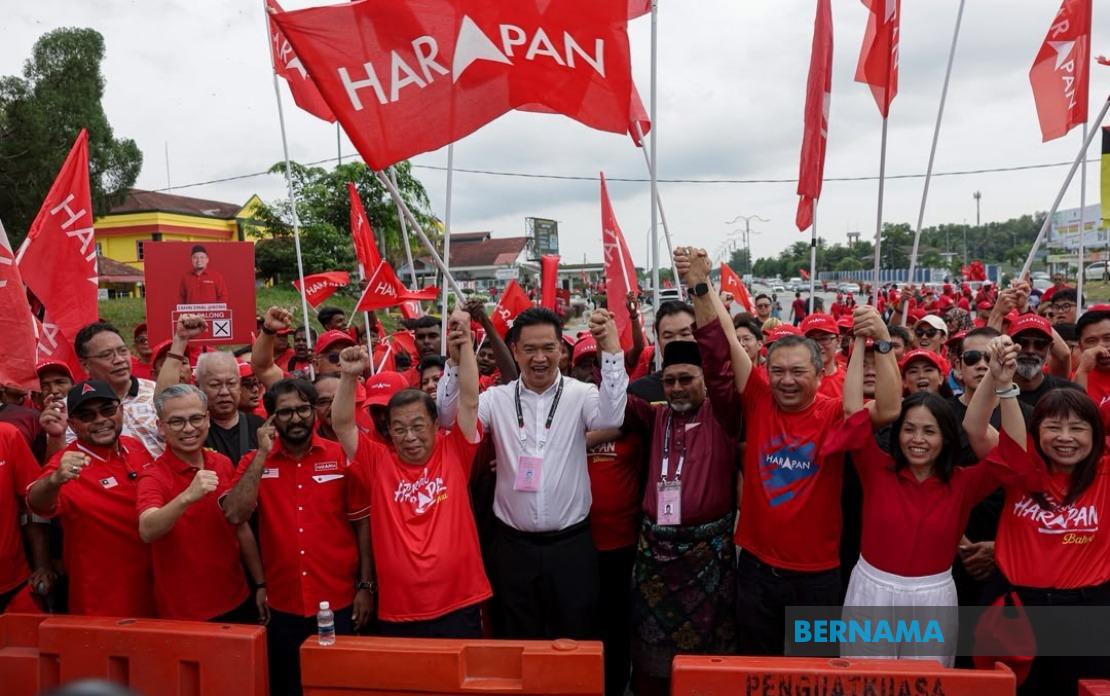
The nomination filing process unfolded in quick succession this morning, with Sri Sanjeevan submitting papers at 9.09 am, followed by Dayana Dal at 9.12 am, Manivannan at 9.17 am, and Mohd Zaidy at 9.20 am. Manivannan's filing was accompanied by PH Communications director Datuk Seri Fahmi Fadzil, underscoring the coalition's determination to capture the seat. The tight clustering of filing times reflects the competitive intensity and organisational readiness of all four camps.
While Jeram Padang emerges as the standout race, the broader Jempol constituency presents a mixed electoral scenario. The Serting state seat is shaping into a three-way contest between Yaacob Mahmood of Pakatan Harapan, incumbent Mohd Fairuz Mohd Isa representing Perikatan Nasional, and Muhammad Noraffendy Mohd Salleh, commonly known as Affendy Salleh, fielded by Bersatu. This configuration reflects Bersatu's dual positioning across multiple coalitions and its role as a swing factor in contested seats.
Palong similarly features a three-cornered battle, with incumbent Datuk Mustapha Nagoor of Barisan Nasional defending against Muhammad Zahin Zinal Abidin from Pakatan Harapan and Rebin Birham of Bersatu. The repeated involvement of Bersatu candidates across multiple seats in Jempol underscores the party's strategic positioning as a potential kingmaker in close contests, particularly in constituencies where neither PH nor BN dominates overwhelmingly.
The Bahau state seat presents the only straight fight within the constituency, pitting incumbent Teo Kok Seong of DAP, who campaigns under the Pakatan Harapan banner, against Chong Fui Ming representing the Malaysian Chinese Association within Barisan Nasional. This bilateral contest between DAP and MCA reflects the traditional two-coalition polarisation in urban-leaning, ethnically diverse constituencies, though it also highlights DAP's successful incumbent position in a Barisan stronghold.
The competitive configuration across Jempol reflects broader dynamics in Negeri Sembilan's political landscape. The state has become increasingly contested territory, with no single coalition commanding consistent dominance. The presence of multiple candidates in three of four seats suggests voter appetite for alternatives and a fragmentation of political support beyond the two major coalitions. Bersatu's involvement across multiple constituencies demonstrates the party's ambitions to establish itself as a significant force despite its relatively recent formation and variable electoral fortunes.
For Pakatan Harapan, the multiple contests present opportunities to expand its foothold in Jempol, a traditionally competitive area. The coalition's fielding of candidates across all four seats signals determination to compete for statewide gains. Barisan Nasional's incumbent advantages in three seats provide a defensive foundation, though the need to contest against both PH and Bersatu indicates pressure on multiple fronts. Perikatan Nasional's presence through Bersatu highlights the ongoing fragmentation within the Malay-Muslim political base that has characterised recent Malaysian elections.
The electoral commission has scheduled early voting for July 28, with the main polling day set for August 1. This timetable provides candidates with roughly two weeks for campaigning, a compressed period that favours incumbents and well-organised parties with established ground machinery. Early voting typically benefits voters in essential services and the elderly, demographics that can shift outcomes in closely contested races.
The Jeram Padang four-way contest will warrant particular scrutiny as voting approaches, given the potential for vote splitting and the challenge for any candidate to achieve a decisive victory with fragmented support. The outcome could hinge on how effectively each camp consolidates its base vote and mobilises supporters across the compressed campaign period. The involvement of the Orang Asli candidate adds an additional dimension, potentially attracting indigenous voters seeking dedicated representation, though the magnitude of this effect remains uncertain.
For Southeast Asian observers watching Malaysian electoral dynamics, the Negeri Sembilan contest reflects broader patterns of coalition fragmentation, the emergence of identity-based political parties, and the persistent competition between incumbent administrations and opposition coalitions. The outcomes in seats like Jeram Padang will shape not only state-level governance but also influence perceptions about which political combinations can command legitimacy heading toward eventual federal-level contests.

