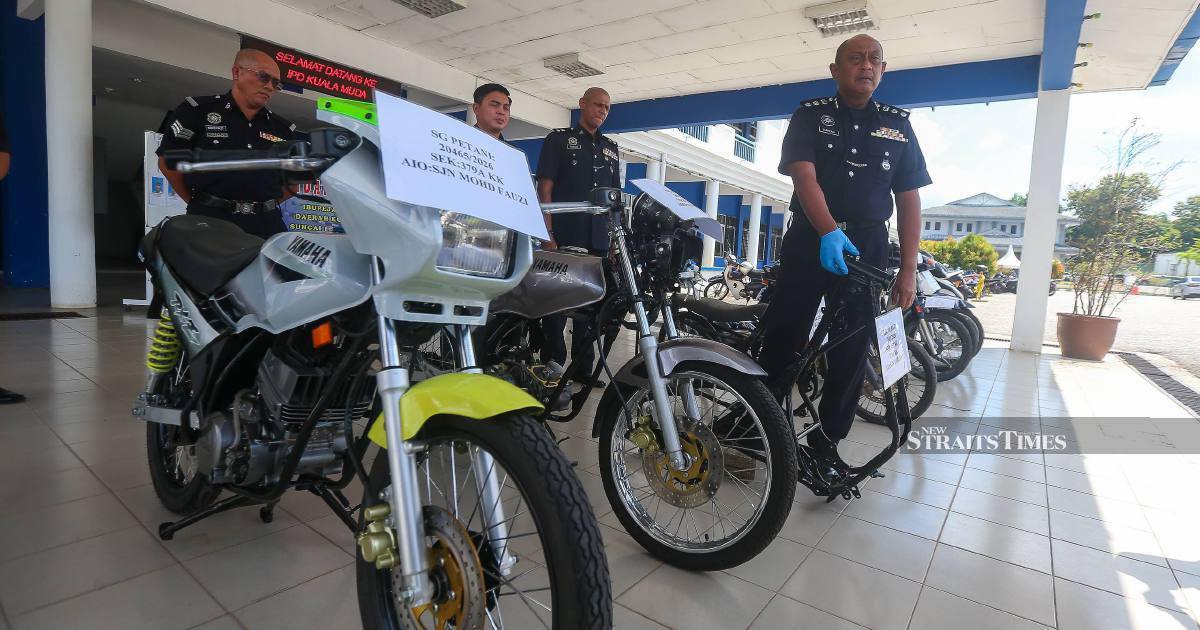
Law enforcement officers in Sungai Petani have moved swiftly against a suspected youth motorcycle theft syndicate, apprehending four teenage boys in a single operation targeting criminal activity near the Keretapi Tanah Melayu Bhd railway station parking area. The arrests on July 14 represent a significant breakthrough in combating organised petty crime in the region, with investigators focusing particularly on three brothers whose alleged involvement suggests a coordinated family operation.
The detention of minors in connection with vehicle theft cases reflects an escalating pattern of juvenile delinquency across Kedah and surrounding districts. Motorcycle thefts have emerged as a persistent challenge for urban and semi-urban communities throughout Malaysia, with organised youth rings increasingly targeting parking facilities near public transport hubs where vehicle owners leave their two-wheelers unattended for extended periods. The KTMB railway station represents precisely the type of vulnerable location where criminals exploit the temporary absence of owners during their journeys.
Family-based criminal networks involving siblings warrant particular investigative attention, as they tend to demonstrate higher operational sophistication than isolated individual offenders. The involvement of three brothers suggests possible mentorship within the family unit, with older siblings potentially introducing younger members to criminal behaviour. This familial dimension complicates intervention strategies, as conventional rehabilitation approaches must address not only individual behavioural issues but also environmental and relational factors that enable criminal activity within domestic settings.
The fourth teenager arrested alongside the sibling group raises questions about the broader criminal network and recruitment mechanisms. Youth criminal enterprises frequently operate through social networks, with participants recruited through friendship circles or school connections. Understanding how recruitment occurs provides valuable intelligence for police prevention strategies, particularly within secondary schools and youth gatherings where potential offenders may be identified and diverted toward legitimate opportunities.
Motorcycle theft remains economically motivated crime with clear supply-chain dimensions. Stolen vehicles are typically dismantled for parts, sold to unscrupulous repair workshops, or trafficked to neighbouring states and across international borders. The involvement of teenagers suggests criminal organisations employ young offenders for operational roles—such as actual theft—while insulating senior members from direct involvement. This stratification places youthful perpetrators at greatest legal jeopardy whilst more culpable senior organisers evade direct prosecution.
The choice of KTMB parking facilities as a hunting ground demonstrates criminals' understanding of situational vulnerability. Railway station parking areas operate in specific geographic and temporal patterns, with predictable windows when vehicles remain unattended. Commuters using public transportation face particular risk, as their extended absence from vehicles—potentially several hours during workdays—creates extended opportunity windows. Conversely, such predictability also enables police intervention through targeted patrols and surveillance operations.
Youth involvement in property crimes carries significant implications for Kedah's social policy and community policing frameworks. Adolescence represents a critical developmental period during which intervention can meaningfully redirect trajectories toward lawful behaviour. Early criminal involvement frequently correlates with educational disengagement, family instability, and limited economic opportunity. Addressing root causes requires coordination between law enforcement, educational institutions, family services, and employment programs.
The arrests arrive amid broader state-level concerns regarding motorcycle security across Peninsular Malaysia. Authorised vehicles represent major consumer assets for working-class Malaysians, who depend on motorcycles for transportation to employment, education, and essential services. Rising theft rates undermine public confidence in security infrastructure and create substantial financial hardship for victims navigating insurance claims and replacement costs. Particularly concerning are rural and semi-rural areas where police resources remain stretched and enforcement capacity is limited.
Investigators will focus on determining whether the four teenagers operated independently or formed part of larger organised networks. Evidence gathering will likely encompass examination of communications, surveillance footage analysis, recovered stolen goods tracing, and potential links to known criminal organisations. The interrogation phase proves critical, as youthful offenders frequently provide intelligence about senior organisers and fencing operations when confronted with evidence and legal consequences.
Police have indicated that investigations remain ongoing, with possibilities for additional charges and suspect identifications. The recovery of stolen motorcycles will help restore property to rightful owners whilst potentially generating forensic evidence applicable to other theft investigations. Community cooperation through tip-offs and witness testimony strengthens enforcement effectiveness, as does coordination between railway station security and police crime prevention units to implement protective measures reducing future vulnerability.

