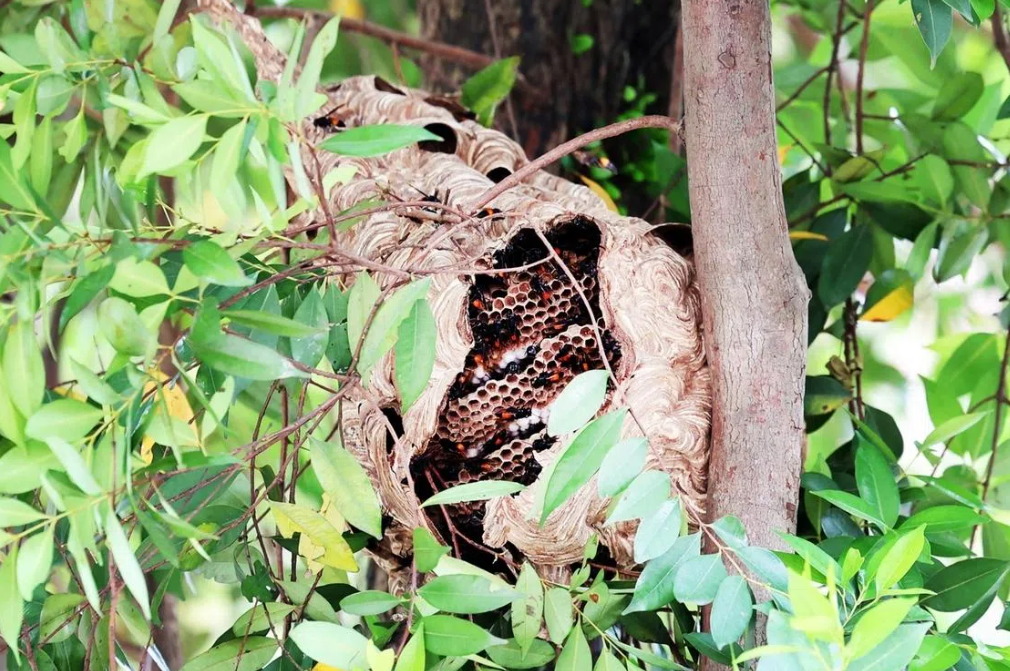
Four people required hospital treatment after being attacked by hornets near Redhill Market in Singapore on the afternoon of July 10. The Singapore Civil Defence Force and Tanjong Pagar Town Council responded to distress calls around 1pm after the swarm emerged from a nest lodged in a tree along the footpath separating Block 78 Redhill Lane and a Shell petrol station. All four victims were transferred to Singapore General Hospital, where medical staff assessed the severity of their injuries and provided treatment for the stings and associated symptoms.
The attack unfolded with frightening speed, according to eyewitness accounts gathered by local media. A man identified only as Chen, who was at the market enjoying coffee when the incident occurred, witnessed the chaos as the insects descended on shoppers and passers-by. He described seeing an elderly man being chased and repeatedly stung by the aggressive insects. The scene drew attention from other visitors to the market, many of whom immediately sought safety as the hornets spread across the immediate vicinity, their territorial behaviour escalating as they protected their nest.
Among the victims was a woman in her 70s whose injuries proved particularly distressing. Another witness, Mei Zhen, encountered the injured woman at a nearby toilet facility, where she was attempting to tend to her wounds. The woman's ears bore visible evidence of multiple stings—swollen, reddened, and bleeding—while she complained of severe headaches and dizziness. Zhen's account painted a vivid picture of the attack's intensity, noting that more than ten hornets had circled the woman's head, with some crawling through her hair and others landing on nearby surfaces. The psychological trauma of such an encounter, combined with the physical injuries, underscores the genuine danger posed by these insects in urban environments.
Hornets represent a more dangerous threat than many realise. According to information from the National University Hospital, these insects possess biological weaponry far more potent than common bees or smaller wasps. Each sting injects a larger dose of venom directly into the victim's tissue, compounding the overall toxic exposure during multiple-sting attacks. The venom itself is a complex biochemical mixture designed by nature to incapacitate prey and deter threats. Histamine, a primary component, triggers immediate allergic responses in the human body, causing inflammation and discomfort. Melittin, another key ingredient, generates intense pain that can persist for hours after the initial sting.
Beyond these immediate irritants, hornet venom contains additional proteins—particularly phospholipase and hyaluronidase—that can actively damage human cells and tissues. In cases where victims receive multiple stings or possess heightened allergic sensitivity, the cumulative effect can become life-threatening. Severe reactions may manifest as dangerous drops in blood pressure, reduced blood circulation to critical organs, or swelling of the airway that restricts breathing. These complications explain why prompt medical intervention is essential and why the four victims in this incident required hospital assessment and monitoring.
The Tanjong Pagar Town Council's response demonstrated the established protocol for such emergencies. Officers immediately established a safety perimeter around the affected footpath, preventing further public access to the danger zone. The council's contracted pest control specialists were activated to locate and safely extract the nest from the tree. This measured approach prioritises both human safety and, where possible, the preservation of the insects themselves. Following successful removal of the nest, authorities confirmed that the area had been thoroughly cleared and returned to safe public use, allowing the market and surrounding spaces to resume normal operations.
The council has since issued guidance for residents on managing encounters with hornets. The primary recommendation is deceptively simple yet crucial: remain calm and immediately leave the vicinity if hornets are spotted. Panicked movements or aggressive responses only provoke the insects further, increasing the likelihood of attack. Instead, residents should seek immediate shelter inside a nearby building, creating a physical barrier between themselves and the swarm. Critically, the council warns against any attempt to disturb or remove a hornet nest independently, as such actions almost invariably trigger defensive attacks. This guidance is aimed at preventing the kind of incident that occurred at Redhill Lane.
For those who do experience stings, the appropriate response involves leaving the area at once and calling 995 for emergency medical assistance if symptoms become severe or if the victim experiences difficulty breathing, facial swelling, or signs of allergic shock. Minor stings—swelling and localised pain without systemic symptoms—can often be managed with basic first aid, including ice application and over-the-counter pain relief. However, given the potency of hornet venom, erring on the side of caution and seeking professional evaluation is sensible, particularly for elderly victims, children, or those with known insect allergies.
The Redhill Market incident is not an isolated occurrence within Singapore or the broader Southeast Asian region. In 2024 alone, the city-state has experienced multiple hornet-related incidents. Earlier that year, five people required hospitalisation following an attack at Sungei Buloh, a nature reserve area where human-insect interaction is more likely. More tragically, a man lost his life after being attacked by hornets while cycling along the Sembawang Park Connector, highlighting the potential for fatal outcomes in severe cases. These recurring incidents reflect broader environmental shifts, including habitat changes and the expansion of both human settlement and insect populations into overlapping spaces.
For Malaysian readers, the Singapore incidents carry particular relevance. Malaysia's tropical climate and biodiversity create similar conditions for hornet populations, and urban expansion across the region brings increasing numbers of people into proximity with nests. Cities like Kuala Lumpur, Penang, and Johor Bahru face comparable challenges as parks, green corridors, and residential areas provide nesting opportunities. The medical implications of hornet attacks—requiring hospital-level care and potentially leading to life-threatening complications—underscore the importance of public awareness and swift emergency response capabilities across Southeast Asia. The guidance issued by Singapore authorities provides a useful template for Malaysian municipalities and residents navigating the risks posed by these formidable insects.
Authorities in Singapore have indicated that further information regarding hornet management and prevention may be forthcoming from the National Parks Board, which oversees ecological and wildlife matters. The incident at Redhill Lane, while resolved without fatalities, serves as a reminder that even in highly developed urban environments with sophisticated emergency response systems, nature retains the capacity to pose sudden and serious threats. Public education, rapid response capabilities, and clear communication about appropriate behaviour during wildlife encounters remain essential components of urban safety infrastructure in tropical and subtropical regions where hornets thrive.

