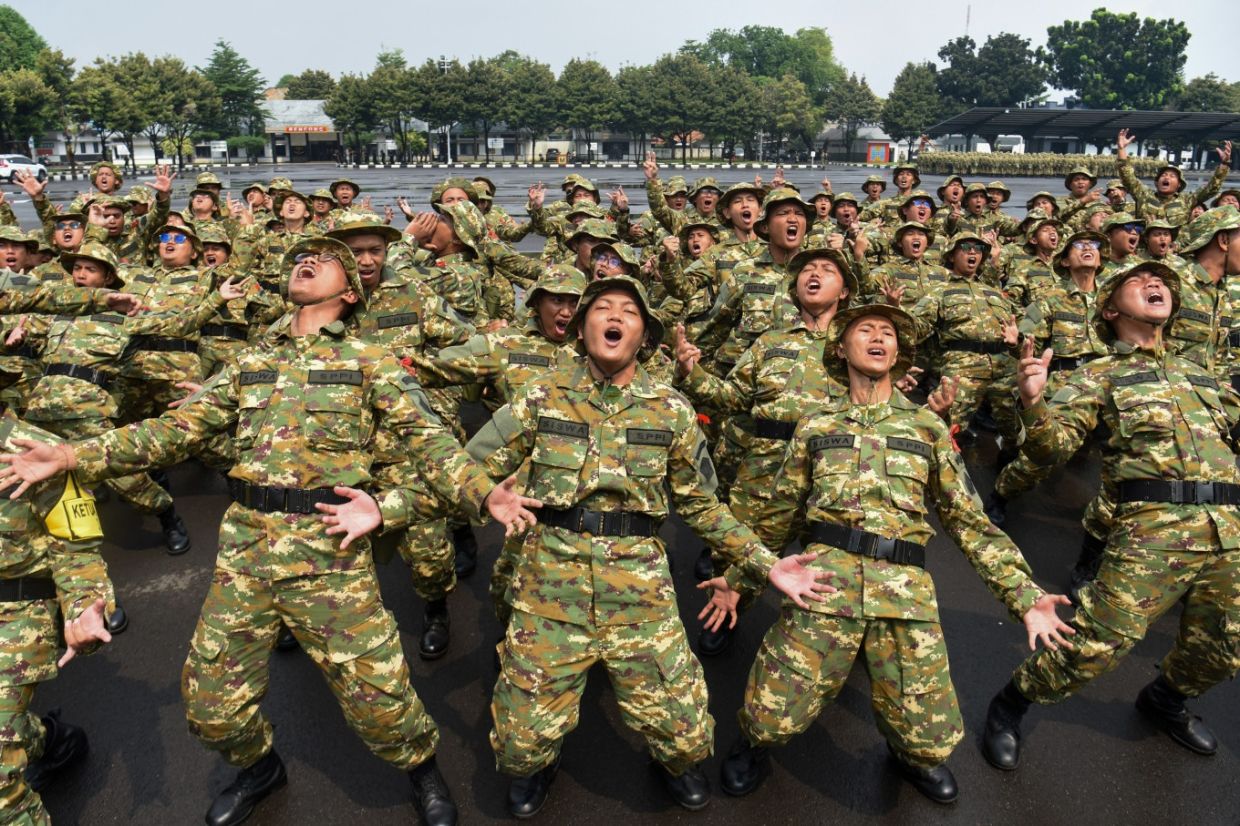
Four participants have died during the mandatory military-style training phase of President Prabowo Subianto's Red and White Rural Cooperatives and fishing villages programme, prompting intensifying pressure from civil society and lawmakers to suspend or substantially reform the controversial scheme. The deaths, which have occurred within days of the 30-day basic military training conducted under the Defence Ministry's reserve component, represent a significant challenge to a flagship government initiative expected to establish 80,000 cooperative units and 5,000 fishing villages by 2029.
The latest fatality occurred in Jakarta on Thursday and Friday when Muhammad Rifqi Renaldi Gunawan, who was undergoing training at an Air Force facility, experienced severe breathing difficulties and subsequently died despite hospital intensive care. This incident followed three earlier deaths among more than 35,000 programme participants: Anisa Muyassaroh, who collapsed from heat stroke during training in Balikpapan, East Kalimantan; Yonanda Muhammad Taufiq, who suffered cardiac arrest after introductory exercises at a South Sumatra training centre; and Novia Rahmadhani Sihotang, who died in Jakarta from health complications linked to tuberculosis.
The Defence Ministry's response has centred on implementing procedural improvements rather than questioning the fundamental structure of the training. Brigadier General Rico Ricardo Sirait announced on Friday that the ministry would conduct a comprehensive review addressing health screening procedures, early detection of medical conditions, participant monitoring and emergency response protocols. This measured approach reflects official confidence that operational refinements rather than programmatic suspension can address the safety concerns, though the rapid succession of deaths suggests systemic rather than isolated issues within the training framework.
However, international human rights organisations have taken a more critical stance. Amnesty International Indonesia's executive director Usman Hamid characterised the military training component as fundamentally incompatible with cooperative principles and called for its immediate cessation. Hamid argued that subjecting cooperative managers to military-style discipline contradicts the democratic values and collective decision-making that define functional cooperatives, representing instead a troubling expansion of military influence into civilian economic structures. He specifically requested an independent investigation to determine whether systemic failures in training design, supervision or emergency protocols directly contributed to the deaths.
The concerns articulated by civil society groups reflect broader anxieties about militarisation under Prabowo's administration. Hamid explicitly connected the training programme to the Indonesian military's discredited dual function model from the Suharto-era New Order, warning that mandatory military training for civilian cooperative managers represented a dangerous echo of that period's institutional overreach. This framing has resonated with opposition figures who view the programme as symptomatic of wider efforts to expand military authority beyond traditional security domains.
Members of the House of Representatives Commission I, which oversees defence affairs, have adopted a less confrontational but still substantive position regarding the programme's continuation. Dave Laksono of the Golkar Party acknowledged the training's intended purpose of instilling discipline, leadership and nationalist values while explicitly stating that implementation methods and emergency response systems require substantial refinement. Laksono's position—that the training should continue but with meaningfully upgraded safety protocols and professional accountability mechanisms—reflects parliamentary consensus that the programme's underlying concept remains viable despite implementation failures.
Commission member Imas Aan Ubudiyah of the National Awakening Party has emphasised the critical importance of enhanced pre-training medical assessment. Ubudiyah stressed that rigorous health screenings must become integral to the training process, alongside continuous medical supervision and careful evaluation of participants' physical capabilities. Her public statement on Thursday effectively positions improved risk mitigation not as an optional enhancement but as a prerequisite for the programme's legitimacy going forward, setting a clear benchmark against which future training sessions will be measured.
The Presidential Chief of Staff's statement attempted to manage political damage while maintaining the programme's viability. Dudung Abdurachman's assertion on Friday that no evidence of negligence had emerged thus far appeared designed to forestall accusations of systemic mismanagement while acknowledging that underlying medical conditions or other contributing factors remained under investigation. His characterisation of the training itself as not particularly strenuous suggested an official position that participant selection and health screening rather than the training design itself bore primary responsibility for the incidents, though this interpretation has met scepticism from safety advocates.
The practical architecture of the broader programme compounds scrutiny of the military training component. All cooperative managers must complete the 30-day military training followed by 15 days of managerial instruction before deployment, meaning the military phase serves as a gate-keeping mechanism for civilians entering economic roles. This sequencing raises questions about whether military acculturation is truly essential for cooperative management capacity, or whether it primarily serves ideological purposes aligned with the government's stated emphasis on nationalist values and institutional discipline.
For Malaysia and the broader Southeast Asian region, the Indonesian programme's difficulties carry important implications. Similar schemes emphasising military participation in civilian institutional development have surfaced across the region with varying degrees of controversy. The Indonesian experience demonstrates the political vulnerabilities that arise when governments seek to impose military discipline frameworks on civilian-sector workers, particularly when fatalities occur. Malaysian policymakers evaluating comparable initiatives might draw lessons regarding the necessity of robust independent health protocols and the political costs of perceived institutional overreach.
The coming weeks will reveal whether the Defence Ministry's promised safety review produces substantive modifications that satisfy parliamentary and international concerns, or whether the accumulated pressure for programme suspension continues mounting. The government faces a difficult political balance: abandoning a flagship initiative signals weakness and policy failure, while persisting with the current framework risks further deaths that would intensify calls for suspension and potentially taint other government programmes. The review process will likely determine whether military-style training remains part of cooperative manager development or whether the programme pivots toward purely civilian management instruction.
Longer-term success of the cooperative and fishing village initiatives depends significantly on resolving the training controversy promptly and convincingly. With targets of 80,000 cooperative units established by 2029, the current programme cannot sustain additional fatalities without facing potential legal challenges and international scrutiny that would compromise implementation. The challenge facing Prabowo's government involves demonstrating that nationalist values and institutional discipline can be cultivated through cooperative management education itself, rather than through military training mechanisms that have proven both ideologically controversial and operationally dangerous.

