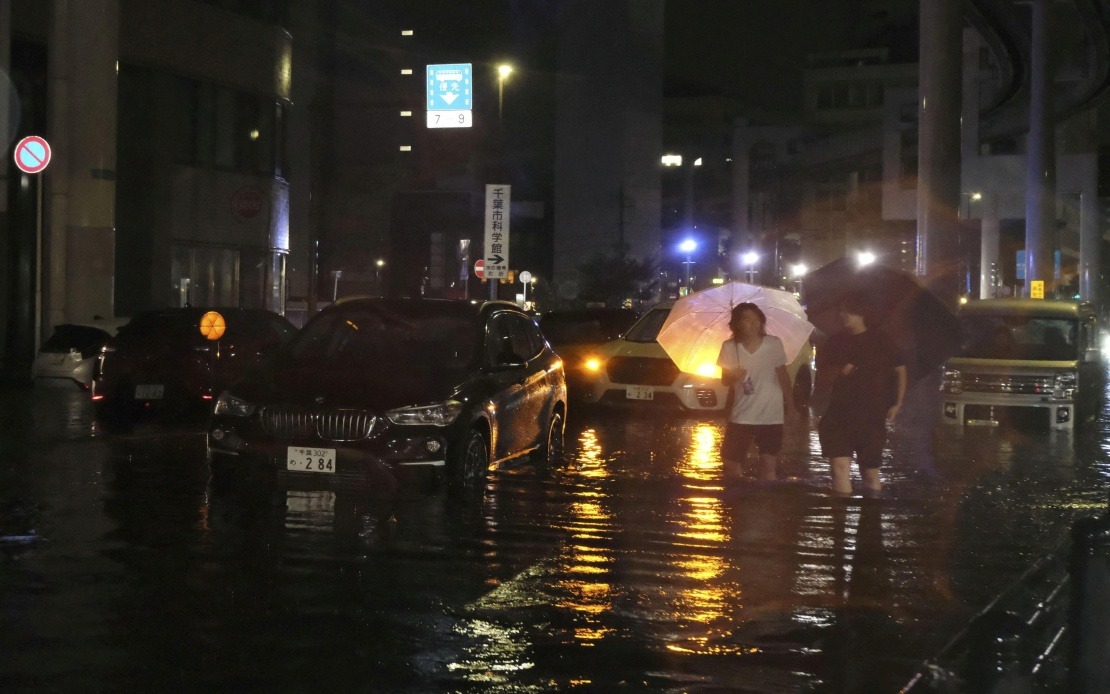
Four people have died and one remains unaccounted for as an unprecedented deluge of rain swept across eastern Japan's Chiba Prefecture on Thursday and into Friday morning. The Japan Meteorological Agency activated its maximum alert status—a Level 5 warning—for downpours affecting more than one-third of municipalities throughout the prefecture situated adjacent to Tokyo, marking an exceptional weather event that exposed the region's vulnerability to extreme precipitation.
The atmospheric conditions that triggered this disaster stemmed from a volatile combination of meteorological factors. Warm, moisture-laden air moving into eastern Japan collided with cold air aloft, creating profoundly unstable atmospheric conditions that unleashed torrential precipitation. In Chiba's Chuo Ward, hourly rainfall reached 115 millimetres on Thursday night alone—equivalent to what the region typically receives over an entire August in normal weather patterns. This concentration of moisture in such a brief window overwhelmed drainage systems and created dangerous flooding across the prefecture's urban and suburban areas.
The scale of the warning response reflected the severity of the situation. Authorities in major cities including Chiba and Ichikawa urgently directed residents to implement immediate protective measures as water inundated streets and public spaces. The Japan Meteorological Agency concurrently issued a Level 5 landslide warning for several municipalities, including Chiba city and the adjacent prefecture of Ichihara, acknowledging the heightened risk of geological failures on saturated slopes. Both the downpour and landslide warnings were subsequently downgraded on Friday morning as atmospheric conditions stabilised, though continued heavy rainfall remained possible throughout the day.
The human displacement resulting from this weather event proved staggering. The Fire and Disaster Management Agency reported that evacuation orders initially affected more than 400,000 people across Chiba and neighbouring Ibaraki prefectures as authorities sought to move populations away from flood-prone and landslide-susceptible areas. By 7 am Friday, approximately 126,000 residents still remained under mandatory evacuation orders across both prefectures, indicating the prolonged nature of the emergency response. The Cabinet Office established over 200 evacuation centres across Chiba, Ibaraki, Saitama, and Gunma prefectures to accommodate those displaced from their homes.
Infrastructure and utilities across the region suffered substantial disruption. Water erupted from underground sewage access points in Chiba city as the drainage network became overwhelmed by the volume of surface runoff. Citizens navigated streets transformed into shallow rivers, wading through knee-deep water in desperate attempts to reach their homes. The prefectural government building in Chiba served as an impromptu refuge, accommodating approximately 1,800 stranded commuters who found themselves unable to proceed through flooded transportation routes. Such scenes underscored how quickly urban environments can become impassable during extreme weather events, trapping populations in central locations.
Electrical infrastructure also suffered considerable strain from the flooding. A subsidiary of Tokyo Electric Power Company Holdings Inc. reported that approximately 45,000 households across Chiba Prefecture experienced power outages at the peak of the weather event, further complicating emergency response efforts and leaving residents without lighting, refrigeration, and communication capabilities during a critical period. The combination of water damage, downed power lines, and overwhelmed utility systems created cascading failures that extended beyond the immediate weather emergency.
For Malaysia and other Southeast Asian nations situated in tropical and subtropical regions, this Japanese disaster carries significant implications. As climate change intensifies atmospheric moisture and creates more volatile weather patterns, the possibility of extreme precipitation events similar to those witnessed in Chiba becomes increasingly relevant to regional planning. Malaysian cities with aging drainage infrastructure and rapidly expanding urban areas face comparable risks, particularly during the monsoon seasons when atmospheric conditions can produce similarly intense rainfall. The Japanese response—involving rapid evacuation protocols, widespread emergency shelters, and coordinated metropolitan shutdown—offers instructive lessons for regional disaster management frameworks.
The incident also highlights how even developed nations with advanced early warning systems and robust infrastructure face considerable challenges when atmospheric conditions produce precipitation at rates that exceed design specifications. Japan's meteorological agency provided timely warnings, yet the speed and intensity of rainfall still resulted in fatalities and widespread disruption. This reality suggests that adaptation strategies must focus not only on early warning systems and evacuation procedures but also on fundamental infrastructure redesign to accommodate more extreme weather scenarios that may become normalised in coming decades.
Meteorology experts emphasise that such weather patterns may become more frequent as climate patterns shift, particularly in regions bordering the Pacific where atmospheric circulation patterns are shifting. The combination of ocean warming, increased atmospheric moisture capacity, and jet stream instability creates conditions favourable for the development of intense precipitation systems. Communities throughout East and Southeast Asia must reassess their resilience planning accordingly, ensuring that critical infrastructure, evacuation routes, and emergency services are calibrated for scenarios substantially more severe than historical experience would suggest necessary.

