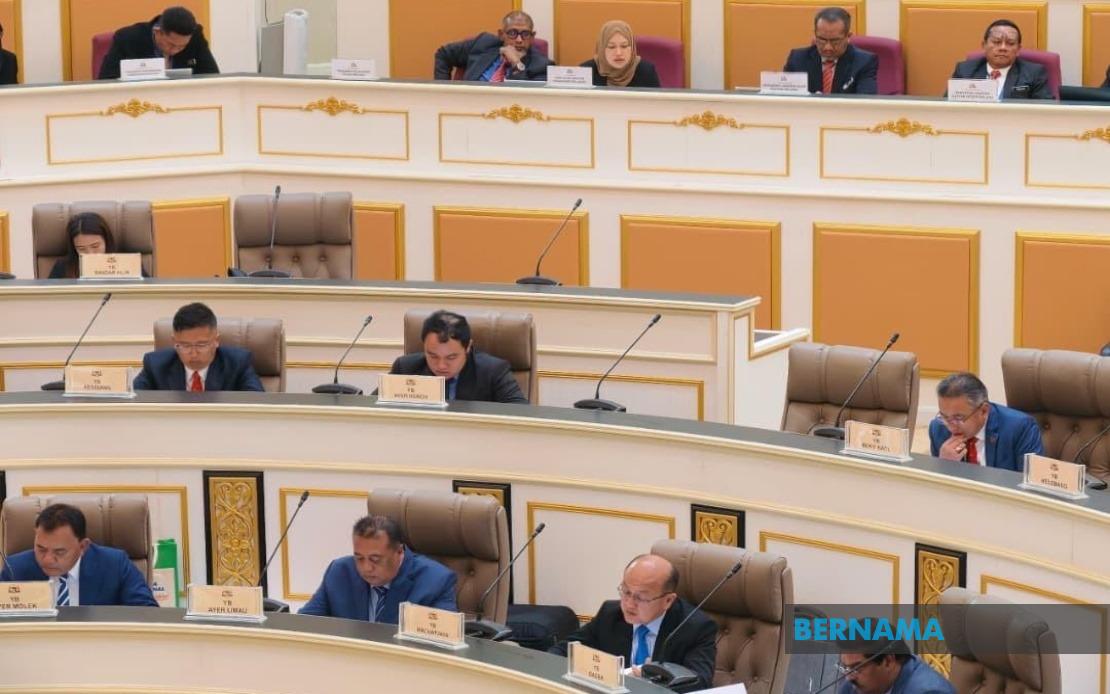
A significant political realignment unfolded in Melaka's legislature on July 15 as four Democratic Action Party assemblymen formally relocated to opposition benches, marking a dramatic rupture in the ruling coalition's parliamentary composition. The shift places Allex Seah Shoo Chin, Low Chee Leong, Leng Chau Yen, and Kerk Chee Yee alongside lawmakers from Perikatan Nasional and independent representatives, effectively reducing the Barisan Nasional administration's numerical strength in the assembly.
The repositioning came immediately after the four representatives declared their withdrawal of support for the Barisan Nasional-led Melaka government. Their announcement preceded the formal seating adjustment, signalling a carefully orchestrated departure that saw the legislators implement their stated intentions with minimal delay. The manoeuvre represents one of the more dramatic coalition fractures witnessed in Malaysian state politics in recent years, transforming parliamentary dynamics in a state where numerical margins have historically determined political stability.
Notably, the sole Parti Amanah Negara assemblyman, Adly Zahari, who simultaneously holds the position of Melaka Pakatan Harapan chairman, has chosen to remain positioned within the government bloc despite the broader party exodus. This decision establishes a visible schism between Amanah and its DAP counterparts, creating an unusual configuration where representatives from the ostensibly aligned Pakatan Harapan coalition now occupy physically and politically distinct parliamentary positions. Zahari's continued alignment with the administration signals deeper ideological or strategic divergences within the opposition coalition structure.
The catalyst for this political upheaval stems from the Melaka State Legislative Assembly's passage of constitutional amendments designed to facilitate the appointment of nominated assemblymen, a mechanism that DAP has long contested as fundamentally incompatible with democratic principles. The Melaka DAP leadership, through chairman Khoo Poay Tiong, characterised the legislative changes as departing from electoral democracy's foundational tenets, arguing that allowing unelected representatives to join the assembly undermines the legitimacy of popular representation. This principled opposition transcended routine parliamentary disagreements, necessitating the party's immediate disengagement from executive collaboration.
The timing of DAP's withdrawal carries particular significance given Prime Minister Datuk Seri Anwar Ibrahim's public intervention requesting postponement of the decision. Ibrahim's appeal emphasised the importance of maintaining governmental focus on development initiatives and public welfare rather than engaging in destabilising coalition manoeuvres. However, the party proceeded despite this high-level intervention, suggesting that DAP's leadership felt the constitutional amendments represented a sufficiently egregious breach of democratic principles to justify the considerable political costs associated with abandoning state government participation.
Assembly Speaker Datuk Ibrahim Durum's formal exhortation to all lawmakers to conduct themselves with discipline, decorum, and procedural adherence during the sitting reflected institutional concerns about maintaining parliamentary order during a period of heightened political tension. The speaker's emphasis on compliance with house rules indicated awareness that the seating rearrangement might precipitate unruly conduct or procedural challenges. The careful management of physical repositioning on the final day of sitting, coupled with explicit reminders about behavioural expectations, suggests administrative efforts to prevent the coalition rupture from devolving into parliamentary chaos.
For Malaysian observers of state politics, this Melaka development illuminates persistent tensions between constitutional innovation and democratic legitimacy that permeate the nation's evolving political landscape. The appointed representative mechanism, which various state administrations have pursued as an expedient means of securing parliamentary numerical advantages, consistently generates opposition from those viewing such appointments as antithetical to representative democracy's core principles. The willingness of DAP to sacrifice executive participation rather than accommodate nominated assemblymen demonstrates how constitutional questions can supersede conventional coalition calculus.
The broader implications for Pakatan Harapan's coherence demand consideration, particularly given the visible fracturing between DAP and Amanah positions on the government question. Coalition unity has historically proven fragile in Malaysian state politics, and visible disagreements about fundamental governance approaches threaten organisational credibility during a period when opposition parties seek to project stability and principled governance as alternatives to incumbent administrations. The public divergence between Zahari's continued government alignment and DAP's opposition exit necessarily complicates unified coalition messaging.
Regional analysts should monitor whether this Melaka precedent influences political calculations in other Malaysian states where similar constitutional amendments or nominated representative schemes remain under consideration. If DAP's principled departure generates positive popular sentiment or strengthens opposition positioning, competing parties may adopt comparable strategies in future conflicts between executive expediency and democratic principle. Conversely, if the manoeuvre proves electorally damaging or destabilises opposition coordination, it may discourage comparable challenges to government coalition arrangements in other jurisdictions.
The seating movement represents more than administrative repositioning; it crystallises genuine ideological disagreements about democratic governance that transcend personality-driven politics or routine coalition bargaining. DAP's refusal to accommodate constitutional changes perceived as undermining electoral legitimacy, despite substantial costs, suggests commitment to democratic principles even when such commitment requires sacrificing governmental participation. This stance offers substantive material for assessing how Malaysian political parties approach questions of institutional integrity versus pragmatic power retention, a tension that continues defining the nation's evolving political trajectory.

