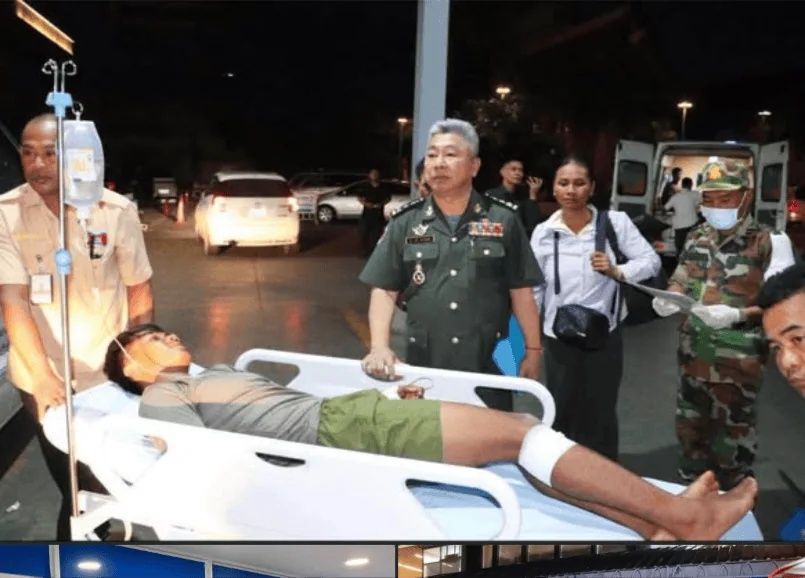
Cambodia's Ministry of National Defence confirmed on Monday that an explosive device detonated along its shared border with Thailand, leaving four soldiers wounded during a routine patrol operation. The incident occurred at 12:35 p.m. on Sunday in a cashew plantation area spanning Chouk Kruos and Thma Don villages in Oddar Meanchey province, a region in northwestern Cambodia that has long been prone to border tensions and unexploded ordnance from decades of conflict.
Lieutenant General Maly Socheata, undersecretary of state and official spokeswoman for Cambodia's Ministry of National Defence, announced the casualty figures and provided initial details of the explosion. She confirmed that the injured personnel were receiving comprehensive medical treatment from military medical teams and other relevant support staff, though she did not specify the severity of their injuries or their current condition.
The incident underscores the persistent security challenges facing both countries along their shared frontier, an area that remains heavily contaminated with landmines and unexploded ordnance from the Khmer Rouge era and subsequent conflicts. The Cambodia-Thailand border, stretching over 800 kilometres, has been a flashpoint for periodic military clashes and territorial disputes, though the two nations have worked to improve relations in recent years.
Thailand's military promptly responded to the incident through its official channels. Thai Army spokesperson Winthai Suvaree issued a statement on Sunday noting that Thai forces conducting routine patrols on the Thai side of the border heard the explosion emanating from Cambodian territory. The Thai military's immediate clarification appeared designed to preempt any potential misunderstanding or accusation of involvement in the blast.
The Royal Thai Army emphasised in its statement that its personnel did not discharge any weapons or deploy grenades during the timeframe of the explosion. Military officials conducted a rapid investigation coordinating with responsible Thai units stationed along the border, which corroborated that the blast originated on Cambodian soil and resulted from causes entirely unrelated to Thai military activity. This swift investigation and transparent communication reflects efforts by both militaries to maintain stability along the border and prevent escalation.
The border region between Cambodia and Thailand remains one of Southeast Asia's most dangerous areas due to the legacy of warfare spanning several decades. During the Cambodian civil war and the Khmer Rouge regime's subsequent rule, vast stretches of land were sown with antipersonnel mines. While extensive demining operations have been undertaken since the 1990s, countless ordnance items remain buried or concealed, posing ongoing hazards to military personnel and civilians alike.
Oddar Meanchey province, where this incident occurred, has witnessed previous border confrontations between Cambodian and Thai forces. The province shares a mountainous frontier with Thailand's Sisaket and Buriram provinces, terrain that has historically complicated border demarcation efforts and allowed clandestine movement of combatants and smuggled goods. The region's geographic isolation and remoteness have made comprehensive demining initiatives particularly challenging.
For Malaysia and other Southeast Asian nations, developments along the Cambodia-Thailand border carry broader implications for regional stability. The successful management of this contentious frontier demonstrates the importance of military communication protocols, rapid incident investigation, and diplomatic coordination in preventing border incidents from spiralling into larger conflicts. The contrasting approaches taken by similar neighbouring states offer valuable lessons for maintaining peace in a region where territorial disputes and security concerns remain sensitive.
Both Cambodia and Thailand have made progress in recent years toward normalising relations and establishing joint mechanisms for managing border disputes. The swift and transparent response from both defence ministries in this instance suggests that established protocols are functioning as intended. However, the continued occurrence of such incidents highlights the unfinished business of comprehensive demining and border security infrastructure development across the region.
The welfare of soldiers injured in such incidents extends beyond immediate medical treatment. Rehabilitation and psychological support for personnel affected by border operations remain important considerations for military health systems throughout Southeast Asia. Cambodia's commitment to providing attentive medical care for its wounded soldiers reflects broader regional standards for military personnel welfare, though resource constraints in developing nations often complicate comprehensive support systems.
Looking forward, international cooperation on demining efforts, shared intelligence regarding ordnance locations, and coordinated border management will remain essential for reducing such incidents. Organisations like the International Committee of the Red Cross and various UN agencies have long supported humanitarian demining initiatives in Southeast Asia, recognising that legacy contamination affects not only military operations but civilian livelihoods across border regions.

