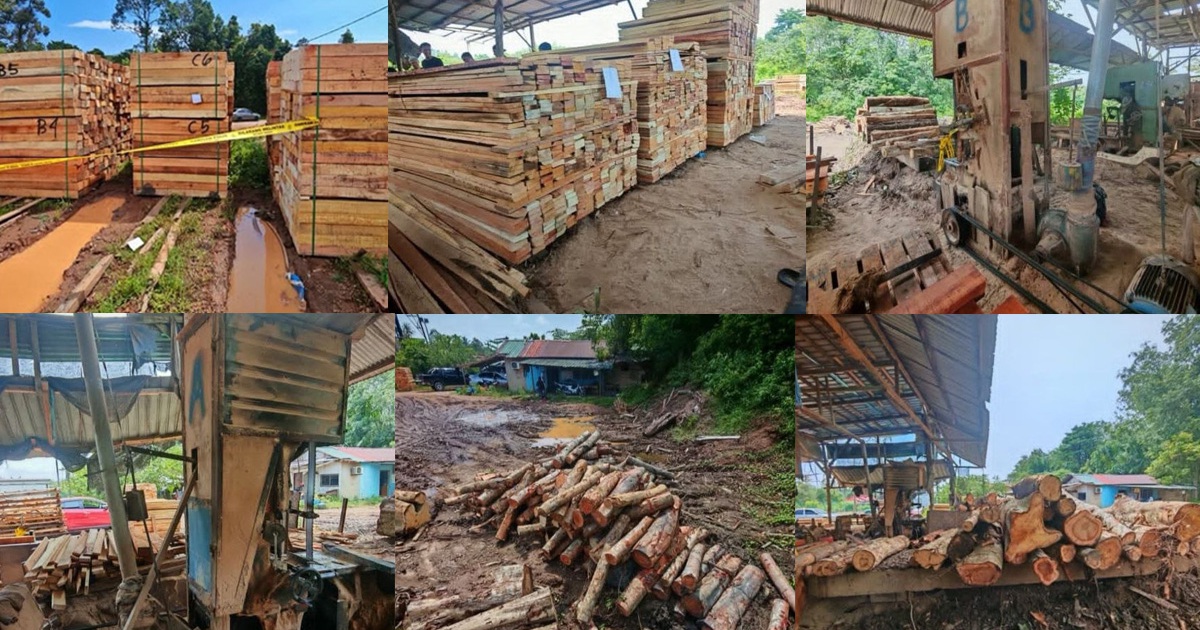
Enforcement authorities descended on an unlicensed sawmill operation in Kampung Bukit Kechik, Tanah Merah, during a coordinated raid that resulted in the arrest of four individuals including the facility's operator. The operation, which targeted illegal timber processing activities in the state, has again highlighted the persistent challenge of unlicensed resource extraction in Kelantan, a region historically dependent on forestry and agricultural industries.
The seized materials and equipment, valued at RM600,000, encompassed both processed timber and the machinery used in the milling operation. The comprehensive nature of the seizure suggests that authorities had obtained sufficient intelligence to identify not only the location of illegal activity but also the scope of operations at the facility. Such coordinated actions typically involve multiple agencies working to ensure compliance with timber licensing regulations and environmental protection standards.
The detentions mark another instance of law enforcement efforts to curb the proliferation of unlicensed timber processing in Malaysia. These unauthorised operations often operate without proper environmental assessments, labour safety protocols, and tax compliance, creating several layers of concern for regulatory authorities. The lack of proper licensing means operators bypass legitimate channels that exist to monitor sustainable forestry practices and prevent overexploitation of timber resources.
Kelantan's forestry sector has long been subject to regulatory oversight, given the state's substantial forest reserves and the economic importance of timber production. However, the continued emergence of unlicensed facilities suggests that enforcement remains challenging, particularly in rural areas where monitoring capacity may be stretched. The presence of such operations can undermine legitimate businesses that operate within legal frameworks and bear the full cost of compliance.
The three workers arrested alongside the sawmill operator raise questions about awareness and complicity within the timber processing chain. Employment at unlicensed facilities often means workers lack basic workplace protections, pension contributions, and formal employment records. Many individuals working in such operations may be unaware of the illegality of their workplace or may have limited employment alternatives in their communities.
The financial value of the seized assets demonstrates the economic incentives driving illegal timber operations. By avoiding licensing fees, environmental compliance costs, and formal tax obligations, unlicensed operators can undercut legitimate competitors and generate substantial profits. The RM600,000 in seized material and equipment suggests this was not a small-scale operation but rather a relatively substantial illegal enterprise.
Kelantan's experience with timber enforcement reflects broader Southeast Asian challenges in managing forest resources and combating illegal logging. The region's porous borders and interconnected supply chains create environments where materials can move across jurisdictions, complicating enforcement efforts. For Malaysian authorities, curbing domestic unlicensed operations is essential both for protecting local forests and for maintaining the country's international reputation regarding sustainable timber practices.
The raid methodology employed by authorities suggests increasing sophistication in identification and targeting of illegal facilities. Intelligence-gathering capabilities, whether derived from community reports, surveillance, or investigative work, have enabled enforcement agencies to move beyond random inspections toward more targeted operations. This approach maximises limited enforcement resources and generates higher-impact results.
Authorities will now face the task of determining the full scope of the operation, including supply chains, customer networks, and whether the facility had been operating for an extended period. Understanding these networks is crucial for disrupting illegal timber trade more comprehensively. Investigations may reveal connections to other unlicensed facilities or broader patterns of non-compliance in the region.
The incident underscores the importance of continued vigilance in Kelantan's timber sector. While this single raid removes one unlicensed operation from the market, sustained enforcement requires ongoing resource allocation and inter-agency coordination. Authorities must balance enforcement efforts with support for legitimate timber operators and rural communities dependent on forest-based livelihoods.
For Malaysian businesses operating in forestry and related industries, such enforcement actions reinforce the regulatory environment's seriousness. Companies investing in proper licensing, environmental compliance, and legal operations gain competitive protection when authorities actively pursue unlicensed competitors. However, effective enforcement also requires clarity regarding licensing pathways, particularly for smaller operators in rural areas who may lack awareness of or access to formal registration processes.
Looking forward, the sustainability of Malaysia's timber sector depends on balancing economic activity with environmental protection and regulatory compliance. Kelantan's continued experience with illegal operations suggests that demand for milled timber remains robust, but the challenge lies in channelling this demand through legitimate, monitored pathways. Strengthening rural monitoring capabilities and ensuring community engagement in enforcement efforts could enhance the effectiveness of regulatory frameworks designed to manage the state's valuable forest resources.

