Formula One's highest court of appeal is set to deliver a definitive ruling on one of the sport's most contentious podium controversies, more than eight weeks after the race that sparked the dispute. The international court will meet in Paris on Tuesday to resolve the question of who rightfully finished third at the Monaco Grand Prix, with the decision carrying significant implications for both the drivers involved and the integrity of the sport's penalty system.
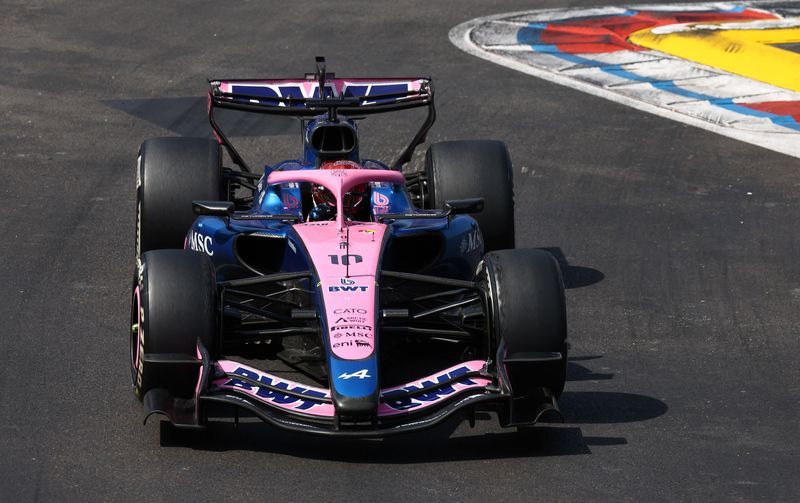
Pierre Gasly of Alpine claimed victory on the podium during the June 7 race in the Mediterranean principality, only to have his achievement stripped away hours later when race stewards imposed two five-second penalties for speeding in the pit lane. The penalties demoted the French driver to seventh position, allowing Red Bull's Isack Hadjar to move up to the third-place podium position and claim the trophy. For Gasly, it represented a dramatic reversal of fortune in one of motorsport's most prestigious events.
The situation took another dramatic turn just five days later when Alpine presented evidence revealing a timekeeping error had contributed to the penalties. The stewards accepted this submission and reversed their decision, expunging Gasly's penalties entirely. Hadjar was obliged to return the trophy, restoring Gasly to the podium in third place. What appeared to be a resolution, however, merely opened a fresh chapter in the controversy, with several paddock observers concerned that the reversal had set a problematic precedent for how penalties could be challenged.
Both McLaren and Red Bull filed appeals to the international court on June 16, each with distinct grievances that extend beyond Gasly's specific situation. McLaren's complaint centers on the treatment of Oscar Piastri, who had dropped from fourth to fifth place following Gasly's reinstatement. Critically, Piastri had served his own pit-lane speeding penalties during the race itself, under the assumption that such infractions were unavoidable and would be penalized regardless. He believed he had not been speeding but served the penalty as an accepted part of racing.
Unlike Gasly, whose penalties were applied after the race and theoretically could be removed without time loss, Piastri had no opportunity for recourse. The time he lost in the pits remained lost, and it subsequently affected his racing strategy and performance for the remainder of the event. The Australian's inability to benefit from the same penalty reversal that aided Gasly created an apparent inconsistency in how drivers were treated under identical circumstances, raising fundamental fairness questions within the paddock.
McLaren team principal Andrea Stella articulated his concerns during the following weekend's Dutch Grand Prix at Zandvoort, which McLaren's Lando Norris won. Stella emphasized that the appeal operated on two distinct but interconnected levels. On a macro level, he argued that the post-race penalty reversal process itself required scrutiny to protect the sport's competitive integrity. "The process that happened after the race in Monaco needs to be reviewed because from a standpoint of fairness for all competitors, the fact that the penalty was removed introduces some significant elements of concern," Stella explained.
Beyond the broader sporting principle, Stella highlighted McLaren's tangible championship interests. The team had served a penalty that could not be appealed during the race, resulting in lost positions and crucial championship points. Piastri's fifth-place finish, rather than the fourth place he might have achieved, represented material damage to McLaren's constructors' championship aspirations at a critical stage of the season. This dual-pronged argument—combining appeals to sporting fairness with direct financial and competitive stakes—reflects how penalty decisions cascade through an entire team's season.
The dispute underscores a fundamental tension in modern Formula One governance: the balance between enforcing consistent regulations and allowing for genuine errors to be corrected. Stewards' decisions have traditionally been treated as near-final, with limited appeals mechanisms. Yet the Monaco situation demonstrated that timekeeping and measurement errors can occur, potentially invalidating penalties based on flawed data. The challenge becomes determining how to address such errors without creating a precedent where every penalty becomes subject to post-race challenge and negotiation.
For Malaysian and Southeast Asian Formula One enthusiasts, this case carries broader significance for understanding how the sport's regulations function and evolve. The outcome will influence penalty protocols for future races, potentially affecting Malaysian drivers or Malaysian-backed teams competing in the championship. It also raises questions about how technological errors in modern motorsport—where hundredths of seconds and precise measurements govern outcomes—should be handled by governance bodies.
The FIA has announced that the hearing will proceed without public or media attendance, maintaining confidentiality throughout the proceedings. This closed-door approach, while protecting the deliberative process, stands in contrast to the public attention the Monaco race attracted and reflects the sensitivity surrounding the decision. Officials have committed to publishing their determination as promptly as possible following the hearing, though they have not specified a timeline.
The ruling will likely influence how stewards and the FIA approach pit-lane enforcement and post-race reviews moving forward. A decision favoring Gasly would validate Alpine's evidence and suggest that genuine errors warrant penalty reversal, establishing a framework for future corrections. Conversely, a ruling favoring McLaren and Red Bull might impose stricter standards on penalty appeals or reinforce the finality of race-day decisions, even when errors occur. Either outcome will reverberate through the paddock and shape procedural expectations for the remainder of the season and beyond.

