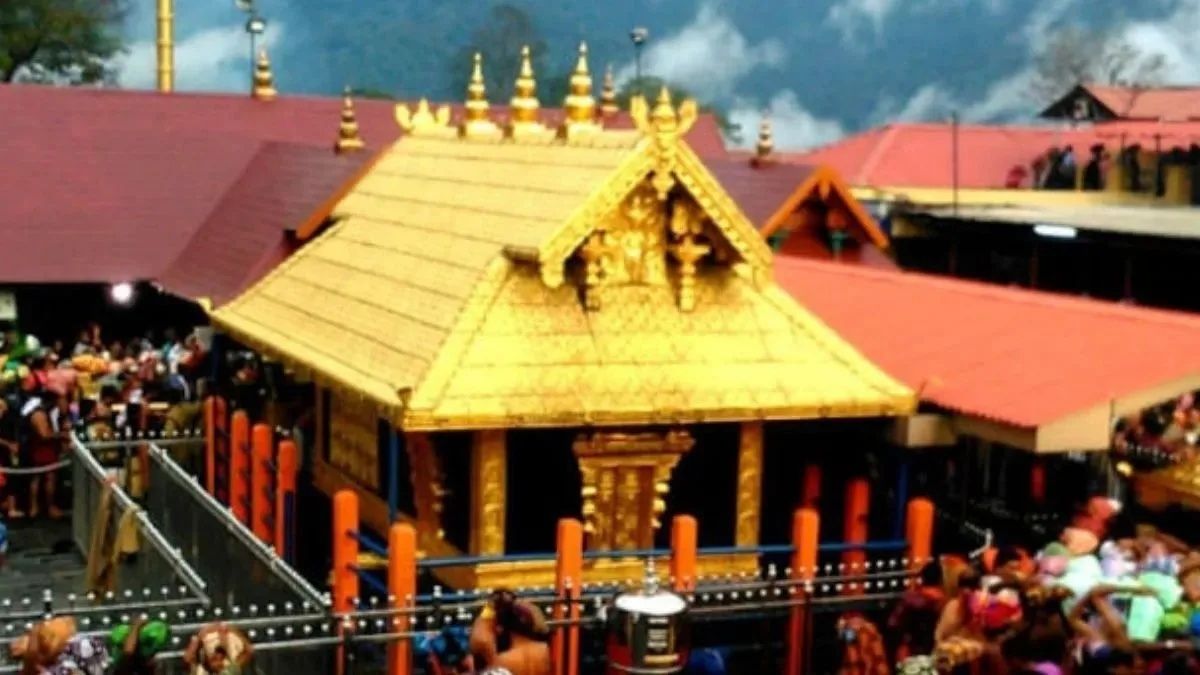
India's Special Investigation Team has escalated its investigation into one of Kerala's most high-profile temple scandals by filing a comprehensive report with the Kerala High Court that identifies former Travancore Devaswom Board president PS Prashanth, Sabarimala Thantri Kandaru Rajeevaru, businessman Unnikrishnan Potty, and five other individuals as accused in the alleged Sabarimala gold theft case. The filing on June 29 marks a significant development in what began as a straightforward inventory discrepancy but has morphed into an intricate web involving temple administrators, board officials, and private contractors.
According to the investigation report, the primary accused is the late former Executive Officer Murari Babu, whose death during the investigation has prevented direct interrogation. Beyond him, the SIT has assembled evidence pointing toward the involvement of PS Prashanth in his capacity as the former TDB president, the chief priest Kandaru Rajeevaru, sponsor Unnikrishnan Potty, Chennai-based Smart Creations owner Pankaj Bhandari, TDB member A Ajikumar, and Thiruvabharanam Commissioner Rajilal. This constellation of accused individuals suggests the alleged conspiracy reached across multiple institutional layers within the temple's administrative and management structure.
The investigation has uncovered what the SIT describes as evidence of a far-reaching conspiracy that transcended the circle of initially suspected individuals, encompassing a broader network of Travancore Devaswom Board officials and members. This expansion of the accused list indicates that the probe has progressively peeled back layers of institutional involvement, suggesting systemic vulnerabilities in the oversight mechanisms governing one of Kerala's most significant Hindu pilgrimage destinations. The implications extend beyond the immediate theft to questions about accountability within temple governance bodies that manage some of India's most sacred religious properties and considerable material wealth.
Central to the SIT's findings is the revelation that precious Dwarapalaka guardian deity idols underwent a second replating process in 2025, which investigators believe was orchestrated to conceal the extensive gold plating fraud that allegedly occurred six years earlier in 2019. According to the detailed investigation report, the idols were deliberately transported and subjected to replating specifically to obscure evidence of the earlier irregularities that had gone undetected for years. This alleged cover-up operation represents a deliberate effort to suppress discovery of the original conspiracy through a secondary manipulative act.
The original gold misappropriation scheme involved the 2019 transportation of the Dwarapalaka idols—sacred objects originally enveloped in substantial gold cladding installed in 1998—to Chennai at the behest of Unnikrishnan Potty. During this process, the investigation alleges that the original thick gold covering was deliberately stripped away and replaced with merely a superficial gold layer, with the removed precious metal being diverted for unauthorized purposes. To avert immediate detection, the accused parties purportedly supplied a fraudulent warranty document claiming forty years of quality assurance, a deceptive mechanism designed to deflect scrutiny from the substandard workmanship. Within months, however, the inferior quality of the replating deteriorated, exposing the underlying copper substrate and rendering the deception unsustainable.
The investigation narrative reveals how PS Prashanth's ascension to the TDB presidency created an opportunity for Unnikrishnan Potty to establish influence with the new leadership and propose a fresh replating initiative. The SIT contends that this second 2025 transfer represented a calculated effort to perform additional work on the idols under the guise of routine maintenance, thereby obscuring the original 2019 malfeasance and eliminating physical evidence of the earlier theft. This layering of fraudulent activities demonstrates a pattern of deliberate deception extending across multiple years and iterations of manipulation.
Another critical finding involves the misclassification of these valuable sacred objects in official documentation. The investigation alleges that former TDB members and officials knowingly characterized these highly precious gold-clad idols as ordinary copper plates in official transit permits, deliberately understating their actual value and circumventing mandatory judicial oversight procedures that would have applied to artifacts of genuine significance. This systematic misdescription represents not merely administrative carelessness but an intentional obfuscation designed to evade the regulatory architecture established to protect temple assets of exceptional religious and material importance.
The SIT has simultaneously informed the Kerala High Court that its parallel investigation concerning the Sreekovil, or sanctum sanctorum, doorframes has reached completion, with the final charge sheet having been filed in that component of the broader temple asset scandal. The agency has requested an extension to finalize remaining investigative work specifically related to the Dwarapalaka idols, indicating that additional corroborating evidence remains under analysis and that the charge sheet against the named accused in this dimension is forthcoming. This bifurcated investigative approach suggests the scope of alleged irregularities extends across multiple categories of temple valuables and involves distinct but overlapping networks of culpability.
Upon review of the substantial evidence presented by the SIT, the Kerala High Court has authorized the agency to initiate a fresh criminal case against PS Prashanth and other named individuals regarding the alleged 2025 replating operation. The court's directive includes an instruction that should sufficient evidence crystallize against any of the accused individuals, the SIT must proceed according to established legal protocols, including the potential filing of supplementary charge sheets to address additional charges or accused parties that the ongoing investigation may uncover. This judicial sanction provides the investigative team with prosecutorial flexibility as the probe continues to develop.
For Malaysian observers, this case illuminates institutional vulnerabilities within temple governance structures across South Asia that oversee substantial religious properties and financial resources. The sophistication of the alleged fraudulent scheme—involving deliberate asset misclassification, fraudulent documentation, cover-up operations, and the exploitation of administrative transitions—raises questions relevant to how similar religious organizations and heritage institutions across the region safeguard their treasures. The involvement of private contractors from neighboring states and the apparent participation of multiple institutional layers suggest that robust inter-organizational oversight mechanisms remain inadequately developed, a concern that extends beyond Kerala to temple boards and religious bodies throughout India and regionally.
The case underscores how historical religious institutions managing irreplaceable sacred objects and accumulated wealth require contemporary governance frameworks incorporating transparent procurement processes, independent auditing mechanisms, and stronger institutional checks against the concentration of discretionary authority. The fact that alleged irregularities persisted undetected for years between the 2019 operation and its discovery raises uncomfortable questions about the adequacy of existing oversight mechanisms within the Travancore Devaswom Board, despite its role as one of India's largest and most prominent temple management organizations. As similar institutions across South Asia manage their properties and assets, the Sabarimala investigation provides sobering lessons about the necessity for structural reforms in governance, accountability, and transparency.
The investigation's progression reflects the capabilities of dedicated special investigation teams to unravel complex institutional fraud, yet it simultaneously exposes how such conspiracies can flourish within organizational hierarchies where administrative controls remain underdeveloped. The Kerala High Court's authorization for continued investigation and potential supplementary charges suggests the full scope of this scandal may yet expand further, with implications for how religious and cultural institutions across the region approach the management and protection of irreplaceable heritage assets and accumulated temple wealth.

