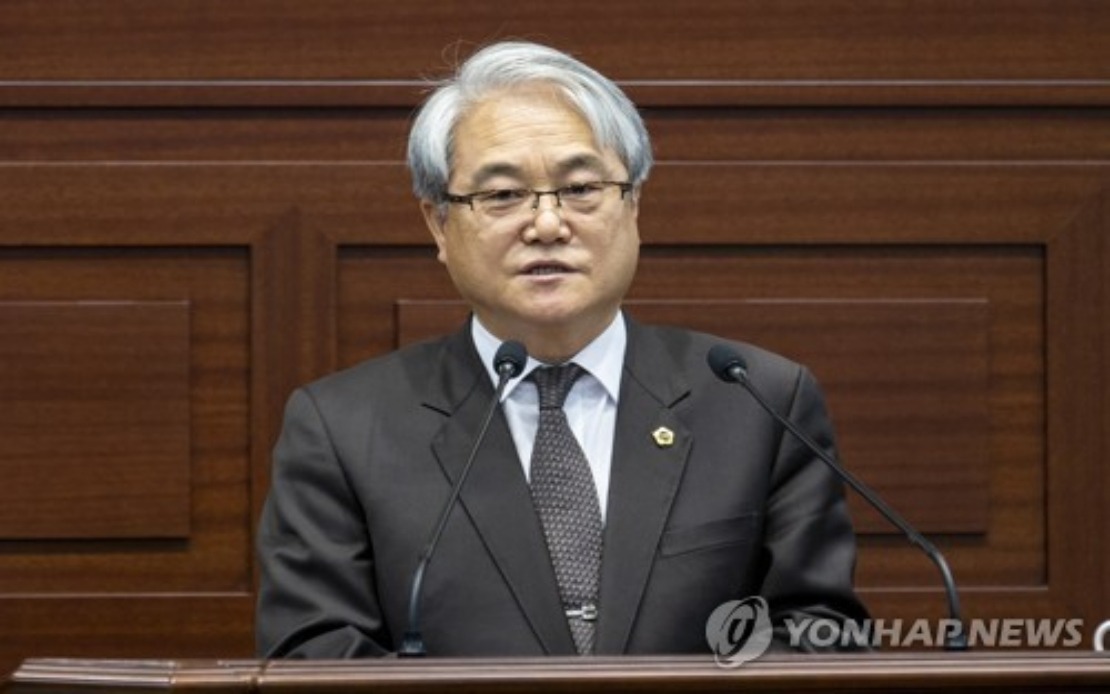
The body of Kim Ha-soo, who until recently served as the administrative head of Cheongdo County in South Korea's southeastern region, was discovered on a mountainside early Monday morning, police authorities confirmed. Rescue personnel located Kim at approximately 7 a.m., and a handwritten note was recovered at the scene, though law enforcement officials have refrained from releasing specifics about its contents or apparent circumstances surrounding the discovery.
The death comes at a particularly sensitive moment for Kim, who had been actively pursued by prosecutors and police in connection with multiple serious allegations. Most significantly, he stood accused of accepting illicit payments from a public official in exchange for facilitating that individual's career advancement while Kim held the county chief position, a post he maintained from 2022 until his departure earlier this year. The investigation had been progressing methodically through the formal stages of the criminal justice process.
The bribery scandal extends beyond Kim himself. A separate individual suspected of serving as the intermediary in the corrupt transaction—the person allegedly responsible for physically delivering the illicit funds—had previously been found deceased under undisclosed circumstances. This pattern of deaths among principals involved in the investigation raises questions about the psychological pressures and circumstances surrounding such high-profile corruption cases in South Korea, where public disgrace and legal consequences carry substantial social weight.
Beyond the financial corruption charges, Kim also faced a separate criminal referral to prosecutors for allegedly committing a home invasion. The incident occurred in January when Kim is suspected of forcibly entering the residence of a nursing home administrator, suggesting a pattern of concerning behaviour beyond standard white-collar crime. The motivation for such an action remains unclear from available information, though it may indicate deepening personal or professional tensions.
South Korea's system for investigating and prosecuting officials implicated in corruption has become increasingly rigorous in recent years, reflecting broader democratic accountability demands from the public. Former presidents, prime ministers, and senior administrators have faced prosecution, imprisonment, and public censure. For someone in Kim's position as a county chief—a substantial administrative role overseeing local governance—such allegations would inevitably trigger intense media scrutiny and social ostracism in addition to formal legal procedures.
The discovery of the body and associated note suggests Kim may have taken his own life, a tragic endpoint that underscores the intense pressure facing South Korean officials caught in corruption scandals. The phenomenon of high-profile deaths among those under investigation is not entirely uncommon in South Korea, where the combination of legal jeopardy, media attention, and societal stigma creates enormous personal strain. However, authorities have not yet confirmed this characterization of events.
For Malaysia and other Southeast Asian nations observing South Korean governance practices, this incident illustrates both the strengths and potential costs of aggressive anti-corruption mechanisms. While South Korea's willingness to investigate and prosecute officials regardless of rank demonstrates institutional commitment to accountability, the extreme personal consequences some individuals face also raises questions about adequate support systems, mental health resources, and proportionate responses within the criminal justice framework.
The investigation into the broader corruption network in Cheongdo County will likely continue despite Kim's death, as prosecutors have presumably documented evidence and identified other potential conspirators. The case against the public official suspected of providing the bribes, and any other individuals involved in the scheme, would presumably proceed through the courts. This broader accountability process matters because corruption in local government directly affects citizen access to services and undermines public trust in administration.
The Cheongdo County case also illustrates how corruption frequently emerges not as isolated incidents but as systematic networks involving multiple participants across institutional boundaries. The involvement of both a public servant and what appears to be a facilitation arrangement suggests a pattern of mutual obligation and mutual benefit that characterizes many corruption schemes in local government contexts throughout East Asia.
As details emerge about Kim's investigation and the circumstances of his death, South Korean authorities will face scrutiny regarding their investigative methods and the support mechanisms available to those facing criminal charges. The incident may prompt broader discussion about prosecutorial practices, the treatment of accused officials, and whether current systems adequately balance the need for accountability with humane consideration for individuals under investigation.
For regional observers, the case underscores the importance of building anti-corruption institutions that maintain effectiveness while also providing appropriate legal protections and support structures for those subject to investigations, ensuring that accountability mechanisms themselves do not become sources of disproportionate harm or tragedy.

