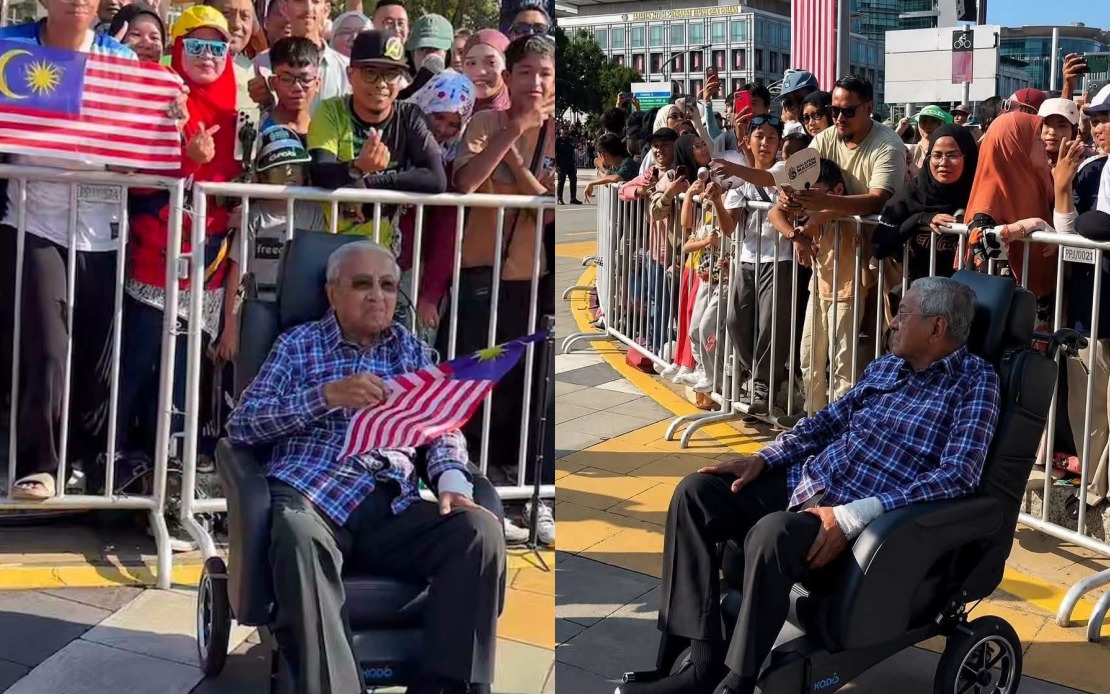
The National Day Celebration 2026 Secretariat has moved to clarify the status of former prime ministers attending Malaysia's National Day festivities, emphasising that attendance is neither guaranteed nor automatic under current protocols. The clarification emerged following public scrutiny of former Prime Minister Tun Dr Mahathir Mohamad's presence at the morning celebration held at Dataran Putrajaya on August 31st, raising broader questions about how the government manages official invitations to elder statesmen and their participation in national events.
According to Datuk Abdul Halim Hamzah, who chairs the 2026 National Day and Malaysia Day Celebration Working Committee and serves as Secretary-General of the Communications Ministry, the framework governing such invitations has remained consistent for the past six years. The protocol centres on the Prime Minister's Department's Protocol and International Conference Secretariat Division, known locally as BIUPA, which handles all invitation procedures for major official Federal Government functions. This centralised approach ensures consistency and allows for formal oversight of attendance at state-level ceremonies, preventing ad hoc decisions that might create precedent or complications.
The distinction between automatic entitlement and discretionary invitation represents a significant shift in how Malaysia treats its former leaders at official functions. Prior to 2018, the government appears to have operated under a different understanding, potentially extending blanket invitations to all living former prime ministers as a matter of courtesy and respect for their office. The establishment of the 2018 procedure marked a deliberate change in approach, moving away from what might be termed a ceremonial default position toward a more managed, application-based system that grants the sitting Prime Minister greater control over state event attendance.
Halim explained that while invitations remain non-automatic, the new system does not prevent former leaders from attending such occasions. Instead, attendance requires a formal application submitted by the interested party through established channels. This creates a middle ground between blanket exclusion and automatic inclusion, allowing flexibility while maintaining governmental oversight. The framework respects the dignity and contributions of former prime ministers whilst simultaneously preserving the current administration's prerogative to manage official events and control optics around who appears on the national stage during significant ceremonial moments.
In Dr Mahathir's specific case, the circumstances surrounding his August 31st attendance involved a separate but related approval process. The Prime Minister's Office received an application from the former leader for access to the Overseas Rest Facility, a benefit available to former prime ministers under the Members of Parliament (Remuneration) Act 1980. The application indicated that Dr Mahathir was scheduled to remain abroad between August 28th and 31st, 2026, a period that would normally have precluded his participation in the National Day ceremony. However, Prime Minister Datuk Seri Anwar Ibrahim approved this application in accordance with legislative provisions governing remuneration and benefits for former heads of government, effectively permitting his return for the celebration.
This dual-approval structure reveals the intricate mechanics of managing relationships between a current administration and its predecessors. Rather than a simple yes or no to attendance, the system involves coordinated approvals across different administrative domains—the invitation protocol managed by BIUPA and the benefits administration overseen by the Prime Minister's Office. Both approvals required separate justification and were evaluated against different regulatory frameworks, suggesting that attendance at national events is no longer treated as a standalone matter but as one element within a broader system of managing former prime ministerial prerogatives and entitlements.
The implications of this policy shift extend beyond ceremonial considerations. In Malaysia's political context, where former prime ministers have historically wielded significant influence and occasionally challenging voices, the ability to regulate their public visibility at state occasions carries symbolic weight. By moving to a discretionary system, the government retains the option to exclude former leaders whose relationship with the current administration might be fractious or whose presence could overshadow the Prime Minister's moment in the national spotlight. This represents a pragmatic acknowledgment that not all transitions of power occur smoothly and that former leaders might hold views at odds with current policy directions.
The 2018 establishment of this protocol also reflects evolving international practice. Many democracies manage access to official state events with greater scrutiny than Malaysia previously exercised, using such occasions to reinforce the legitimacy and prominence of the sitting government rather than extending blanket ceremonial roles to all former officeholders. By adopting this approach, Malaysia aligned itself more closely with contemporary democratic governance norms while maintaining its respect for senior statesmen through the option of application-based attendance.
For Malaysian readers and regional observers, this clarification underscores how institutional rules shape political relationships even after leaders leave office. The difference between automatic invitation and managed discretion fundamentally alters the power dynamics between incumbent and former prime ministers. What once might have been guaranteed as a courtesy becomes a matter of negotiation and formal process, requiring applications and approvals rather than simple assumption of attendance. This transformation, though subtle, reflects deeper questions about how governments transition power and how they regard those who previously held the highest office.
The statement from the National Day Celebration Secretariat also serves a defensive function, preemptively addressing potential criticism about fairness or inclusivity in how former leaders are treated. By publicising the 2018 precedent and explaining the application-based system, the government provides a principled justification for any future decisions to accept or decline attendance by particular former prime ministers. This transparency, while potentially appearing bureaucratic, offers protection against accusations of arbitrary or politically motivated decisions regarding who participates in national ceremonies and celebrations.

