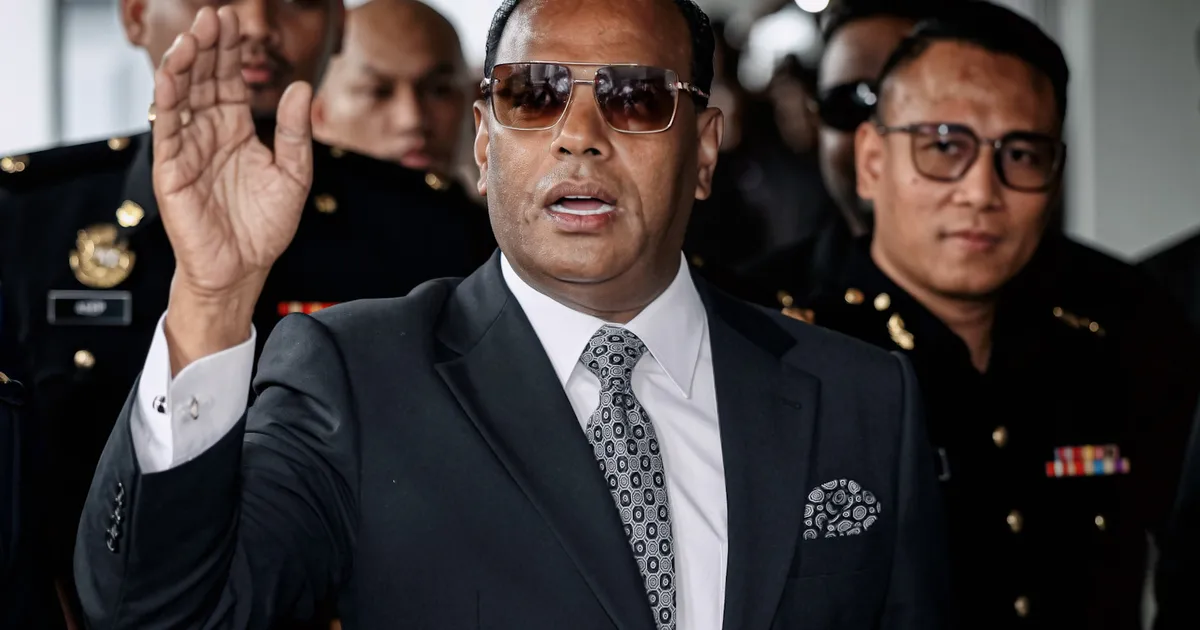
The former minister of human resources has moved to dispel suggestions that he used backchannels to seek protection from authorities investigating corruption allegations against him, asserting that his written communication to Prime Minister Anwar Ibrahim was motivated purely by a desire for judicial fairness and transparent scrutiny of his case. Saravanan's statement represents his latest effort to control the narrative surrounding his legal predicament and the circumstances that prompted him to reach out to the nation's top political leader.
In responding to criticism and speculation about the nature and intent of his correspondence with Anwar, Saravanan has emphasised that his primary objective was to request a thorough and impartial examination of the facts underpinning the graft charges levelled against him. He has rejected any characterisation of his actions as an attempt to orchestrate a cover-up or to leverage his former ministerial status to evade proper accountability. This distinction between seeking a fair hearing and seeking to suppress an investigation remains central to Saravanan's defence of his conduct.
The former human resources ministry chief has consistently maintained that the corruption allegations he faces lack substantive foundation and rest on shaky evidentiary ground. By framing his letter to Anwar as a request for meticulous review rather than interference, Saravanan appears to be banking on the argument that legitimate examination of the evidence would ultimately exonerate him. This strategy reflects a broader approach among politicians facing legal challenges: positioning their actions as compatible with the rule of law rather than antithetical to it.
Saravanan's clarification also speaks to broader questions about access and privilege within Malaysia's political system. When former ministers write directly to the prime minister regarding their legal cases, questions inevitably arise about whether such correspondence represents an inappropriate circumventing of proper judicial channels. The distinction Saravanan draws between seeking a personal favour and requesting institutional due process thus carries considerable weight in assessing the propriety of his actions.
For Malaysian observers, the case exemplifies the enduring tension between political connections and legal independence that has long characterised the nation's governance landscape. Former ministers retain networks and relationship capital that ordinary citizens cannot access, and while writing to the prime minister about one's case is not necessarily improper, it inevitably invites scrutiny about whether the writer is leveraging such access to gain advantage. Saravanan's insistence that his motives were pure reflects an understanding that the optics of such correspondence matter as much as the substance.
The broader context of anti-corruption enforcement in Malaysia also frames Saravanan's position. Under Anwar's administration, the government has signalled commitment to addressing misconduct within state institutions, and the charges against the former minister sit within this larger political and legal environment. Saravanan's assertion that the allegations are not credible implicitly challenges the prosecutorial judgement underpinning his case, suggesting that he believes either the evidence is weak or the interpretation of his conduct is misconceived.
From a Southeast Asian perspective, Saravanan's situation is not unusual. Several countries in the region have seen prominent political figures respond to corruption allegations by questioning investigative rigour and requesting higher-level review. What distinguishes Malaysia's approach is the relative transparency with which such correspondence eventually becomes public knowledge, allowing citizens to form independent assessments of political actors' conduct during legal jeopardy.
Saravanan's clarification also raises questions about the role of the prime minister's office in evaluating allegations against individuals not currently in the cabinet. By requesting that Anwar undertake a review, Saravanan arguably placed the prime minister in a delicate position: too sympathetic a response could appear to privilege a former ally, whilst a dismissal might seem unnecessarily harsh. The fact that the correspondence ultimately became public knowledge suggests neither party succeeded in managing the political sensitivities involved.
The former minister's insistence on the weakness of the charges against him will ultimately matter less than the findings of the courts hearing his case. His letter to Anwar, however it is characterised, cannot alter the evidentiary record or the legal arguments that prosecutors and his defence team will marshal. Nevertheless, Saravanan's public statements contribute to the political narrative surrounding his situation and may influence how Malaysians assess both his credibility and the credibility of the charges he faces.
Moving forward, the case will likely proceed through normal judicial channels, where questions of guilt or innocence will be determined by evidence presented in court rather than by letters to the prime minister or media statements clarifying intentions. Yet Saravanan's effort to reshape public understanding of his actions demonstrates that even when facing corruption allegations, political actors attempt to maintain control over how their circumstances are interpreted and understood by the Malaysian electorate.

