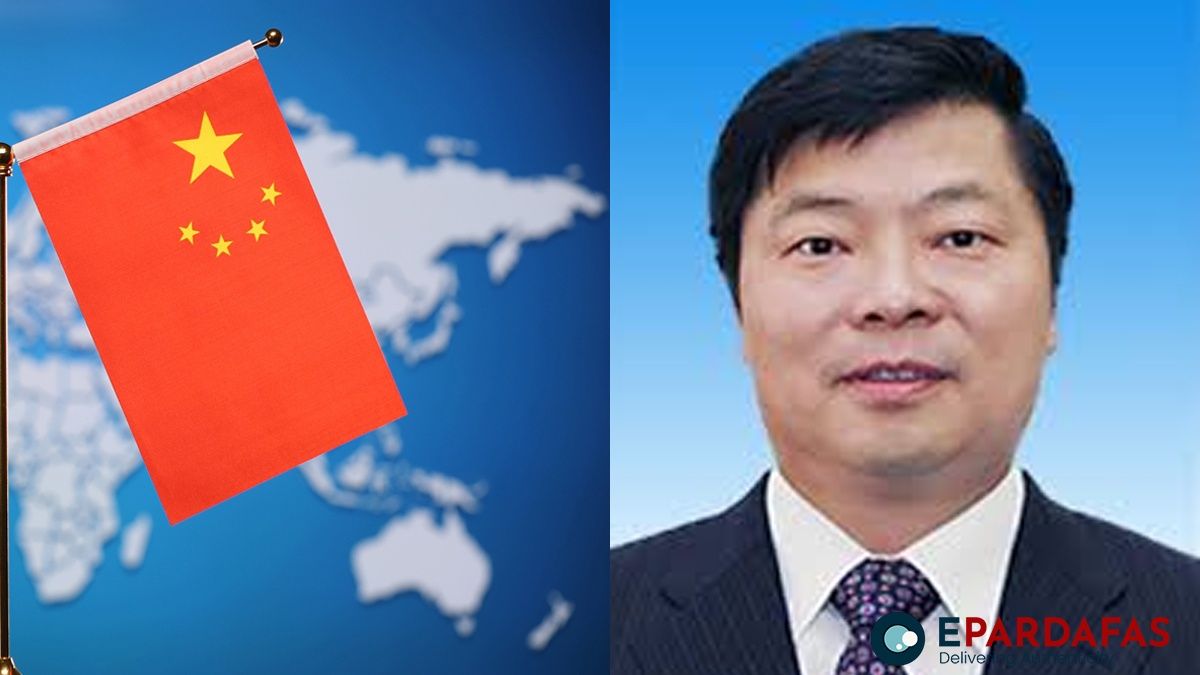
Beijing's top anti-corruption authority has launched an investigation into Ouyang Weimin, the former president of the China Development Bank, on suspicion of serious breaches of party discipline and legal violations. The Central Commission for Discipline Inspection announced the probe on Sunday, July 19, alongside the National Commission of Supervision, though officials provided no further details about the specific allegations or the scope of their inquiry.
Ouyang's career trajectory reflects the typical rise of senior Chinese financial bureaucrats. He joined the Communist Party in 1986 and spent much of his early professional life at the People's Bank of China, the country's central banking institution. His ascent through the ranks took him from technical banking roles to increasingly prominent government positions, culminating in his appointment as vice-governor of Guangdong, one of China's most economically significant provinces and a key financial hub adjacent to Hong Kong.
In 2019, at the height of his career, Ouyang was elevated to the presidency of the China Development Bank, simultaneously taking on the role of deputy party secretary at the institution. This dual appointment underscores the way Chinese state-owned enterprises intertwine financial and political authority, with party representatives holding substantial oversight roles. He maintained these positions until stepping down as president in 2023, though the circumstances of his departure and whether it was connected to the current investigation remain unclear.
The China Development Bank itself is a pivotal institution in Beijing's economic policy apparatus. Established in 1994, it operates as a state-funded and state-owned development finance entity with a specific mandate to drive China's economic growth. Unlike commercial banks prioritising shareholder returns, the development bank focuses on supporting key industries and economically underdeveloped regions, making it a direct instrument of national economic strategy. It reports directly to the State Council, the cabinet-level executive body, reflecting its importance to top-level policymaking.
Ouyang's investigation arrives within the broader context of President Xi Jinping's sweeping anti-corruption campaign, which has fundamentally reshaped China's political landscape over the past decade. This initiative has touched officials at all levels, from provincial administrators to senior military officers, and has resulted in the downfall of numerous high-ranking figures previously considered politically secure. The campaign has ostensibly targeted genuine corrupt practices, with documented cases involving embezzlement, bribery, and abuse of power.
However, international observers and political analysts have noted that the anti-corruption drive has coincided suspiciously with the removal of individuals perceived as potential political rivals or obstacles to Xi's centralisation of power. The targeting of financial sector leaders, in particular, has drawn scrutiny, as control over credit allocation and state funding represents considerable political leverage. By investigating figures in positions like Ouyang's, the party apparatus can simultaneously address corruption concerns whilst consolidating authority over the financial system.
For Malaysian and Southeast Asian readers, this development carries several implications. The China Development Bank is a major source of financing for infrastructure projects throughout the region, including Belt and Road Initiative ventures. Leadership changes and investigations at this institution can signal shifts in Beijing's priorities regarding regional investment and development lending. Uncertainty about the bank's direction, even temporarily, can affect the timeline and terms of ongoing projects across Southeast Asia.
Moreover, the investigation reflects the institutional fragility that characterises China's political system, where sudden personnel changes at major state enterprises can occur without public warning or transparent procedure. This unpredictability can complicate long-term planning for governments and businesses negotiating with Chinese institutions or relying on Chinese financing.
The mechanics of Ouyang's investigation illustrate how anti-corruption enforcement works in practice within the Chinese system. The dual involvement of the Central Commission for Discipline Inspection, which focuses on Communist Party members, and the National Commission of Supervision, which handles broader government officials, suggests Ouyang faces accusations spanning both party and state conduct violations. The vague public announcement is typical of Chinese procedure, which often withholds specific allegations pending the conclusion of inquiries.
Historically, such investigations have led to varied outcomes. Some officials have faced criminal prosecution, imprisonment, and asset seizures, whilst others have received administrative penalties or retirement. The absence of detailed public information makes predicting Ouyang's fate difficult, though his seniority and the attention his case has received suggest the matter is being treated seriously by authorities.
The timing of the announcement and the bank's continued operations raise questions about succession planning and institutional continuity. Major investigations into state enterprise leaders can create vacuums in decision-making authority, particularly if the subject is suspended from duties pending the outcome. This may affect the bank's capacity to approve new lending programmes or adjust existing ones, with potential ripple effects for borrower nations in Asia.

