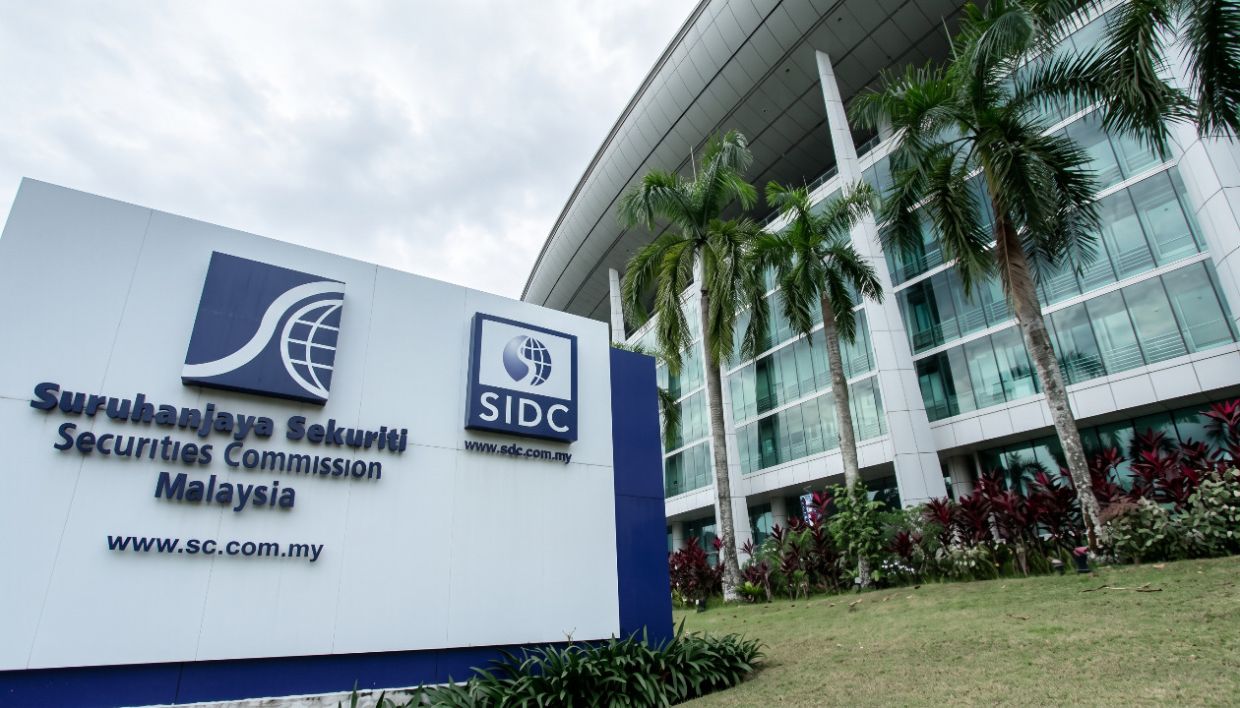
The Kuala Lumpur Sessions Court has handed down a three-year prison sentence to former bank analyst Mohd Arif Fadzlee Mohd Arifin, concluding a protracted legal battle over his unauthorised involvement in securities trading. The conviction marks a significant enforcement action by the Securities Commission Malaysia (SC) and underscores the regulator's commitment to tackling illegal financial services operations that can expose unwary members of the public to substantial investment losses.
Mohd Arif faced two separate charges filed by the SC in January 2024 under the Capital Markets and Services Act 2007 (CMSA). The first charge, brought under section 59(1), centred on his representation of himself as a representative of CIMB Wealth Advisors Berhad whilst conducting securities dealing activities without holding a valid Capital Markets Services Representative's Licence (CMSRL) issued by the SC. The regulations governing this sector are deliberately strict, as dealing in securities is explicitly classified as a regulated activity under Schedule 2 of the CMSA, meaning practitioners must obtain proper licensing to operate lawfully.
The second charge under section 362(3) alleged that Mohd Arif had misused the Unit Trust Consultant (UTC) designation to deceive investors into believing he possessed legitimate credentials to conduct securities transactions. This form of title fraud is particularly insidious as it exploits the public's confidence in recognised professional designations, creating a false veneer of legitimacy around what were fundamentally unauthorised financial services. The misconduct occurred across locations in Petaling Jaya and Nilai during 2011, suggesting a pattern of activity spanning multiple years before enforcement action was initiated.
Throughout the judicial process, Mohd Arif maintained his innocence by claiming trial on both charges. He was granted bail set at RM60,000 whilst awaiting trial, allowing him to remain free pending the court's determination. The prosecution mounted a comprehensive case, presenting evidence through ten witnesses including two victims whose financial interests had been harmed by the accused's unlicensed operations. This witness-heavy approach proved instrumental in establishing the factual foundation necessary for conviction.
By late February 2026, the Sessions Court determined that the prosecution had successfully demonstrated a prima facie case against the accused, obligating Mohd Arif to mount a substantive defence rather than having the charges dismissed at that preliminary stage. In response, Mohd Arif elected to testify under oath in his own defence but chose not to call any corroborating witnesses or produce documentary evidence in support of his account. This limited defensive strategy ultimately proved insufficient to counter the evidence arrayed against him.
Judge's reasoning during the conviction process focused on Mohd Arif's failure to raise reasonable doubt regarding the prosecution's allegations. The court found his testimony unconvincing and determined that the evidence established both charges beyond reasonable doubt. Such findings indicate the judge accepted the victim testimonies and expert evidence presented by the regulatory authorities as credible and persuasive, while viewing the defence case as lacking substance.
The sentence handed down—three years imprisonment for each charge with both terms to run concurrently—represents a middle-ground approach. Whilst the CMSA permits sentences of up to five years imprisonment under section 59(1) and up to five years under section 362(3), courts typically consider mitigating factors such as the defendant's personal circumstances, the absence of prior convictions, and the degree of public harm inflicted. In this instance, the concurrent sentencing means Mohd Arif will serve a single three-year term rather than six years sequentially, reflecting judicial discretion in applying proportionate punishment.
This prosecution carries broader implications for Malaysia's financial services sector and investor protection landscape. The case demonstrates that the SC maintains active enforcement capabilities against individuals who attempt to conduct securities operations outside the regulatory framework. For retail investors in Malaysia and the wider Southeast Asian region, the conviction reinforces the importance of verifying that any financial adviser or securities dealer holds proper SC licensing before entrusting them with investment decisions or funds.
The regulatory framework protecting investors operates on a foundational principle: only licensed professionals who have demonstrated competence, trustworthiness, and compliance understanding should be permitted to advise on or conduct securities transactions. When individuals like Mohd Arif circumvent these requirements through deception or misrepresentation, they not only violate the law but undermine confidence in legitimate financial professionals. The three-year sentence sends a clear deterrent message that such violations carry serious criminal consequences.
For the financial services industry itself, this case serves as a reminder of persistent compliance challenges. Even individuals with banking backgrounds may cross into unlawful territory if they operate outside their licensed remit or use fraudulent titles. Banks and financial institutions must maintain robust supervision systems to ensure that former employees do not leverage previous industry connections to establish illegal advisory practices. The SC's success in securing conviction also validates the effectiveness of the CMSA's dual-offence approach, which separately criminalises both the unlicensed conduct itself and the fraudulent misrepresentation of credentials.
Looking forward, this enforcement action may encourage the SC to pursue similar cases against other unlicensed operators, particularly those claiming association with reputable financial institutions. The regulatory environment across Southeast Asia is gradually tightening around unauthorised financial services, with other jurisdictions implementing comparable licensing requirements. Malaysian investors increasingly benefit from clear regulatory lines that distinguish legitimate professionals from unlicensed operators, though vigilance remains necessary as fraudsters continue developing new methods to appear credible.
The resolution of this case also underscores the importance of sustained legal advocacy by regulatory agencies. The SC's investment of prosecutorial resources across multiple years, from charging in January 2024 through conviction in 2026, demonstrates institutional commitment to investor protection even when cases require patient investigation and court time. As Malaysia positions itself as a regional financial hub, maintaining such enforcement credibility becomes essential for international confidence in the quality of market regulation and consumer safeguards.

