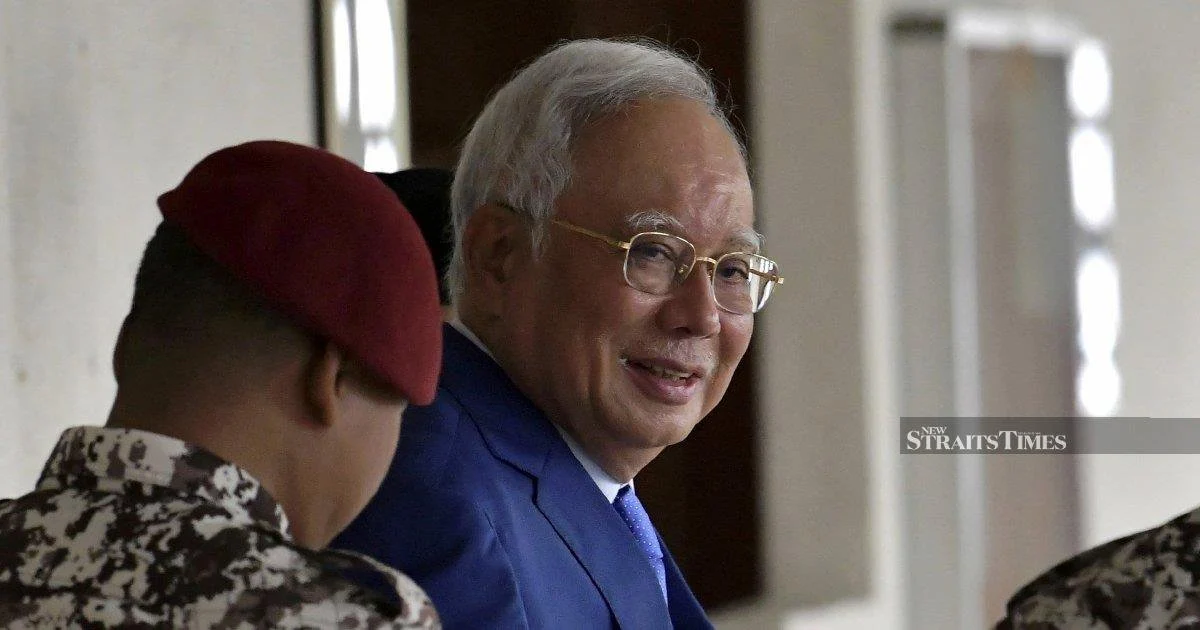
Marina Ibrahim, who previously served as the Skudai state assemblyman, has levelled fresh accusations against the Democratic Action Party, asserting that inconsistency has characterised the opposition coalition's stance on judicial matters involving the former prime minister. According to Ibrahim's allegations, a DAP leader at some point endorsed the concept of seeking a royal pardon for Datuk Seri Najib Razak and facilitating his confinement to his residence as an alternative to conventional imprisonment.
The assertion represents another flashpoint in the ongoing political dispute between Ibrahim and the DAP, particularly within Johor's competitive legislative landscape. Ibrahim's claim touches upon a sensitive intersection of criminal justice, executive clemency, and partisan positioning that has animated Malaysian politics since Najib's conviction on corruption-related charges. The timing of her statement underscores the calculus that competing political factions employ when addressing the legal predicament of prominent figures who have fallen from power.
Najib's legal journey through Malaysia's court system has itself become a contested political domain, with different coalitions and personalities weighing in on questions of proportionality, mercy, and the machinery of governance. His original conviction in 2020 at the High Court was followed by a subsequent appeals process that occupied significant judicial attention. The question of whether mercy mechanisms should apply to Najib has divided commentators and politicians, with some viewing clemency as a legitimate expression of executive discretion and others regarding it as a dangerous precedent that undermines accountability for those previously wielding state power.
Ibrahim's charges of double standards carry particular weight given the DAP's historical positioning as an advocate for judicial independence and anti-corruption enforcement. The party has consistently emphasised its commitment to strengthening institutional checks and maintaining the integrity of legal proceedings, making any suggestion that party figures contemplated circumventing sentencing protocols through alternative detention arrangements potentially damaging to its brand and credibility. Such allegations invite scrutiny into whether principled stances remain consistent across circumstances or shift when calculations of political advantage shift.
The Skudai assemblyman's statement arrives within a broader context of Malaysia's unresolved tensions regarding how the political system should treat former leaders caught in legal jeopardy. The country has witnessed numerous instances where personalities at the apex of power faced criminal investigation or prosecution, yet the outcomes have often proven inconsistent and subject to political variables. This inconsistency itself fuels public cynicism regarding whether legal systems operate according to impartial criteria or bend toward partisan interests.
For Malaysian observers tracking Johor politics specifically, Ibrahim's criticism reflects the ferocious competition between established coalition partners for dominance within the state. Johor, as the second-most populous Malaysian state and a bellwether region for national political trends, remains hotly contested between the Pakatan Harapan alliance (which includes the DAP) and opposing formations. Strategic accusations like those Ibrahim has articulated function partly as weapons in this territorial battle, designed to undermine DAP credibility among voters who value institutional integrity.
The substance of Ibrahim's allegations—if substantiated—would indicate that pragmatic political calculations influenced whether certain party figures pursued mercy mechanisms for Najib. This narrative aligns with a broader critique sometimes levelled against opposition coalitions: that despite rhetorical commitments to governance reform, constituent parties and individual politicians occasionally accommodate compromises that contradict publicly stated principles when circumstances warrant. Whether such accusations reflect genuine inconsistency or represent strategic political manoeuvre remains contested.
The regional implications of Malaysia's handling of Najib's case extend beyond domestic partisan calculation. Southeast Asia's democratic transitions and consolidation depend partly upon whether societies can construct judicial and executive systems that apply rules consistently regardless of a defendant's former prominence. Countries throughout the region grapple with precisely this challenge: whether accountability mechanisms preserve legitimacy across political transitions or become weaponised instruments of victors against vanquished opponents. Malaysia's trajectory on this dimension influences perceptions of institutional strength across the wider region.
From the perspective of international observers monitoring Malaysia's democratic health, the persistence of allegations regarding selective application of legal and mercy mechanisms remains concerning. Rule of law frameworks require not merely formal neutrality but demonstrated consistency across cases and circumstances. When political figures from different coalitions face comparable circumstances yet receive divergent treatment—or when mercy options available to some appear withheld from others—public confidence in institutional impartiality deteriorates. This dynamic has long complicated Malaysia's reform narrative despite genuine progress in transparency and institutional independence.
The question of what considerations should inform decisions about executive clemency, royal pardons, and alternative sentencing arrangements remains philosophically contested even in mature democracies. Yet in Malaysia's context, where such mechanisms lack fully transparent criteria and operate within spaces occupied by political uncertainty, these decisions invariably invite scrutiny regarding motivations. Ibrahim's allegations, whether they ultimately prove substantive or represent partisan rhetorical manoeuvre, illustrate how fundamentally contested the question of mercy and accountability remains within contemporary Malaysian politics.

