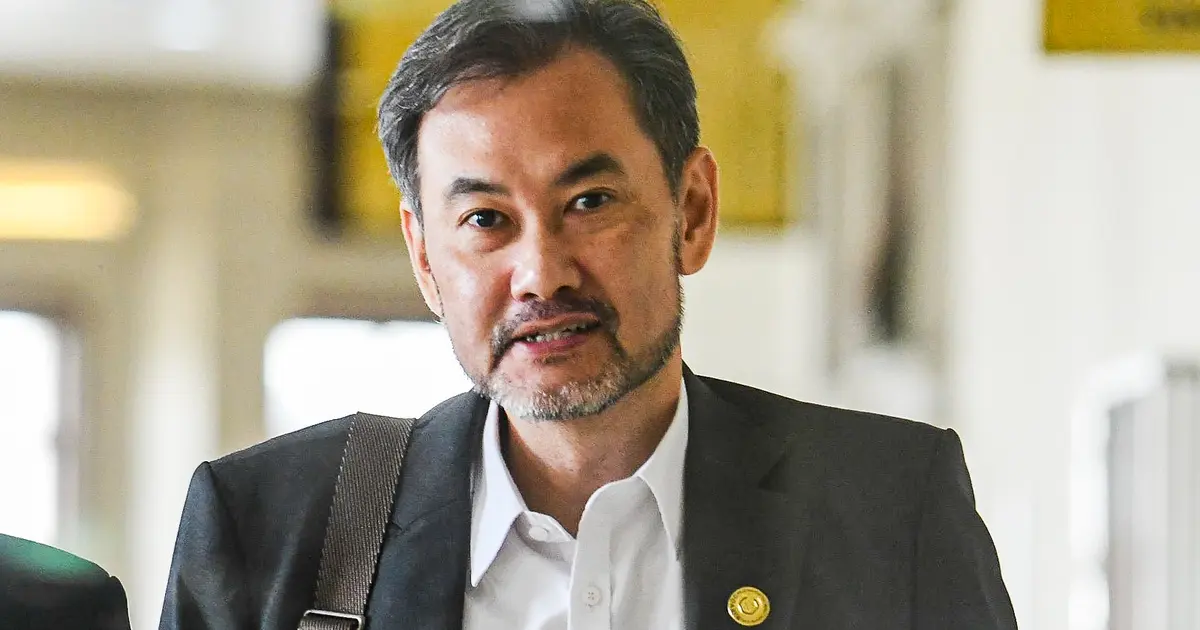
Shahrol Azral Ibrahim Halmi, who served as the chief executive officer of 1Malaysia Development Berhad during the sovereign wealth fund's controversial years, has moved to distance himself from allegations that he treated fugitive businessman Jho Low with the deference normally reserved for the nation's top political leader. The assertion comes as Malaysia's legal system continues to untangle the complex web of relationships and communications that characterised the state fund's operations under former Prime Minister Najib Razak's administration.
In his clarification, Shahrol acknowledged that informal communication channels existed between 1MDB's leadership and Najib's office, but he rejected the characterisation that these arrangements elevated Jho Low to a status equivalent to Malaysia's prime minister. Instead, Shahrol framed Low as simply one among multiple informal conduits through which sensitive matters were conveyed to the nation's top political leadership. This distinction proves significant given the sweeping accusations of misappropriation and money laundering that have engulfed the fund since its 2009 establishment.
The 1MDB scandal represents one of the most significant financial crimes to emerge from Southeast Asia in recent memory, with allegations that approximately USD4.5 billion disappeared from the fund's coffers. The scheme has implicated senior Malaysian officials, international financial institutions, and a cast of shadowy intermediaries operating across multiple jurisdictions. Jho Low, a Malaysian businessman with international connections, has been consistently identified as a central figure in orchestrating the alleged transfers, though he has fled Malaysia and evaded international law enforcement efforts.
Shahrol's testimony proves crucial to understanding the decision-making architecture that allowed the fund to operate with minimal oversight and accountability. As the entity responsible for executing investment decisions and managing daily operations, the former CEO occupied a critical position in the chain of command. His recollections of how directives flowed from political leadership through various intermediaries illuminate the informal governance structures that superseded the fund's formal administrative procedures.
The reference to multiple communication channels rather than a single primary conduit suggests a deliberate fragmentation of authority and responsibility. By routing instructions through various intermediaries, including Jho Low, the architects of the scheme may have sought to obscure the direct involvement of senior political figures while maintaining operational control over the fund's resources. This compartmentalisation strategy appears designed to create plausible deniability and complicate any subsequent investigation into culpability.
Jho Low's role as an informal intermediary rather than a formal advisor or executive raises questions about why a private businessman without official title wielded such considerable influence over a state-controlled investment vehicle. The arrangement reflected a troubling pattern in Malaysian governance during the Najib administration, whereby crucial decisions affecting billions in public assets bypassed established institutional channels. Instead, informal networks and personal relationships determined how funds were deployed and whether transactions received scrutiny from regulatory bodies.
Shahrol's insistence that Low did not occupy a position equivalent to the prime minister himself may be technically accurate, yet it simultaneously underscores how extensively political leadership had circumvented institutional safeguards. Even if Low lacked formal authority, his apparent ability to communicate with the prime minister's office directly and influence 1MDB operations demonstrated a profound erosion of corporate governance principles. The distinction Shahrol attempts to draw does little to alleviate concerns about how thoroughly informal networks had penetrated the fund's decision-making processes.
The implications for Malaysian governance structures extend beyond the specific circumstances of 1MDB. The scandal exposed vulnerabilities in oversight mechanisms that allowed a sovereign wealth fund to operate with minimal independent scrutiny or accountability. Parliamentary committees, audit bodies, and regulatory agencies that should have exercised meaningful supervision were either bypassed entirely or rendered ineffective through political pressure. Understanding precisely how this paralysis occurred remains essential for implementing reforms that prevent similar abuses.
International law enforcement agencies, including authorities in the United States and Singapore, have pursued investigations into the fund's operations alongside Malaysian authorities. These parallel investigations have revealed the transnational dimensions of the scheme, with stolen assets moving through global financial networks before being layered and integrated into the legitimate economy. Tracking these illicit flows and recovering misappropriated funds continues to preoccupy Malaysian and international investigators.
The question of how informal communications operated between 1MDB and the prime minister's office remains central to establishing responsibility for the fund's mismanagement. Shahrol's clarifications about using Jho Low and other intermediaries to relay information to Najib suggest a relationship built on mutual understanding rather than written directives or formal protocols. This informality proved advantageous to those orchestrating the scheme, as it left minimal documentary evidence and enabled plausible denials from senior officials.
For Malaysian readers and policymakers, the 1MDB affair illustrates the dangers of allowing personal networks and informal channels to supersede institutional processes in managing public assets. The scandal has prompted discussions about strengthening governance frameworks, enhancing transparency in sovereign wealth fund operations, and establishing clearer boundaries between political leadership and financial management. Whether these lessons translate into meaningful reform remains an ongoing concern for civil society observers and concerned citizens.
The investigation into 1MDB continues to yield new information as various individuals provide testimony and documents surface through legal processes. Shahrol's statements contribute another layer of understanding to how the fund operated during its critical years, though significant questions persist about the full scope of wrongdoing and the ultimate beneficiaries of the misappropriated billions. His testimony underscores the extent to which Malaysia's financial system remained vulnerable to manipulation by individuals with political connections and access to informal channels of communication.

