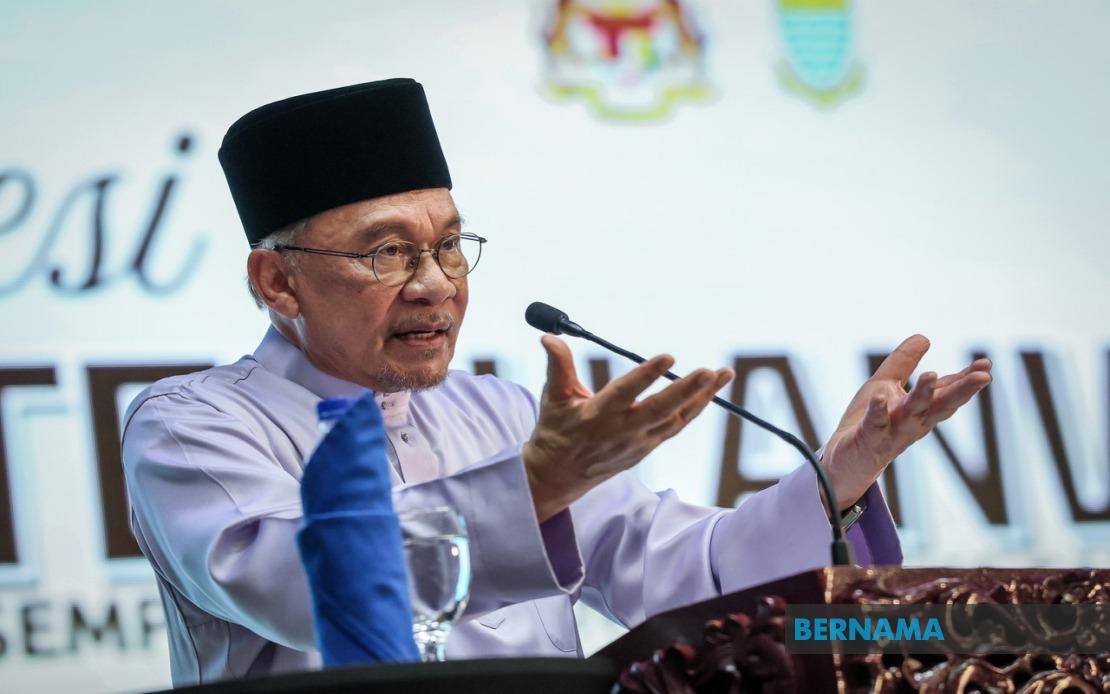
Prime Minister Datuk Seri Anwar Ibrahim has pledged to introduce financial support for Form Six students through an allocation in the upcoming Budget 2027, which parliament will receive in October. Speaking at an engagement programme in Bukit Mertajam, the premier acknowledged a significant disparity in the government's student welfare system that has left pre-university learners without direct financial assistance, despite support mechanisms existing at other educational stages.
The commitment represents recognition of a structural oversight in Malaysia's education financing framework. Currently, pupils from primary school through Form Five receive targeted allowances, as do university students undertaking tertiary qualifications. Form Six students, however, occupy an awkward intermediate position, neither receiving the assistance available to secondary pupils nor the support extended to degree-level learners. This gap has created an inequitable situation where the most academically advanced secondary students are entirely excluded from government stipends.
Anwar, who concurrently holds the Finance portfolio, explained that the decision emerged from direct dialogue with pre-university scholars who highlighted their financial needs. During these consultations, students articulated the contradiction inherent in the current system—one that provides assistance bracketing their cohort while leaving them unsupported. The recognition of this inconsistency prompted the government to commit budgetary resources to rectifying the imbalance, signalling receptiveness to grassroots concerns from the youth sector.
Education Minister Datuk Seri Fadhlina Sidek, present at the Tuanku Bainun Teacher Education Institute event, confirmed that the allowance proposal originated from formal channels within the student advocacy ecosystem. The initiative emerged as one of twelve resolutions formally presented at the MADANI Pre-University Congress held in Klang earlier that morning. This institutional pathway underscores that the government's response followed systematic engagement with student representative bodies rather than occurring in isolation.
Fadhlina indicated that the Education Ministry has adopted a comprehensive stance toward the congress resolutions, committing to evaluate all twelve proposals for potential implementation. The ministerial acceptance of these recommendations suggests openness to broader structural reforms within pre-university education beyond the allowance scheme. The ministry's commitment to investigating implementation pathways indicates serious intent to translate student demands into actionable policy, pending feasibility assessments and coordination with relevant agencies.
The specifics of the allowance scheme remain fluid. Anwar cautioned that the precise amount allocated has not been finalised, contingent instead upon the government's fiscal position when the budget is formally crafted in the coming weeks. This conditionality reflects budgetary realities—while the commitment appears firm, the magnitude of individual stipends will depend on overall revenue availability and competing budgetary priorities facing the administration across multiple sectors.
For Malaysian households with Form Six students, the proposed allowance carries tangible significance. Pre-university education typically occurs within a critical developmental window for tertiary pathway decisions, yet families navigating this stage often face elevated educational expenses without corresponding government support. An allowance could modestly ease financial burdens for middle and lower-income families, potentially reducing dropout rates among promising students who otherwise might abandon academic progression due to economic constraints. The timing of support at this juncture—when students make consequential educational choices—may yield measurable returns in university participation rates and skill pipeline development.
The announcement also reflects evolving political attention to youth concerns within Malaysia's governance framework. The MADANI Pre-University Congress mechanism demonstrates institutional channels through which student voices can influence policy formation. By formalising these pathways and responding substantively to resulting proposals, the government signals that youth constituencies merit direct engagement rather than peripheral policy consideration. This approach potentially cultivates long-term political dividend among younger voters while addressing legitimate service gaps.
From a Southeast Asian perspective, Malaysia's scholarship architecture merits comparison with regional peers. Several neighbouring countries operate more comprehensive pre-tertiary allowance systems, and the Malaysian government's move narrows this differential. The initiative potentially enhances Malaysia's competitive positioning in retaining high-achieving students who might otherwise pursue secondary education abroad, particularly in jurisdictions offering superior financial support packages to gifted learners during crucial formative stages.
Implementation logistics will prove crucial to the scheme's effectiveness. Beyond determining stipend amounts, authorities must establish eligibility criteria, disbursement mechanisms, and monitoring frameworks. Questions remain regarding whether allowances will extend universally to all Form Six students or target specific cohorts—whether based on academic merit, household income, or other criteria. These definitional choices will substantially shape both budgetary implications and the programme's equity dimensions.
The allowance commitment also sits within broader discourse surrounding youth employment and education pathways. As Malaysia navigates labour market transformations and skills mismatches, enhanced financial support for pre-university students may encourage pursuit of science, technology, engineering, and mathematics disciplines, potentially addressing sectoral talent shortages. Conversely, without complementary career guidance and curriculum modernisation, allowances alone may not fully address skills pipeline challenges confronting Malaysian industries.
Politically, the announcement demonstrates responsiveness to student advocacy while positioning the administration as attentive to educational equity concerns. With Budget 2027 tabling imminent, parliamentary scrutiny of the allowance proposal will reveal both resource commitments and political appetite for educational investment. The degree to which the allocated funds translate into meaningful student support will depend on subsequent implementation decisions and budgetary prioritisation choices as October parliamentary deliberations unfold.

