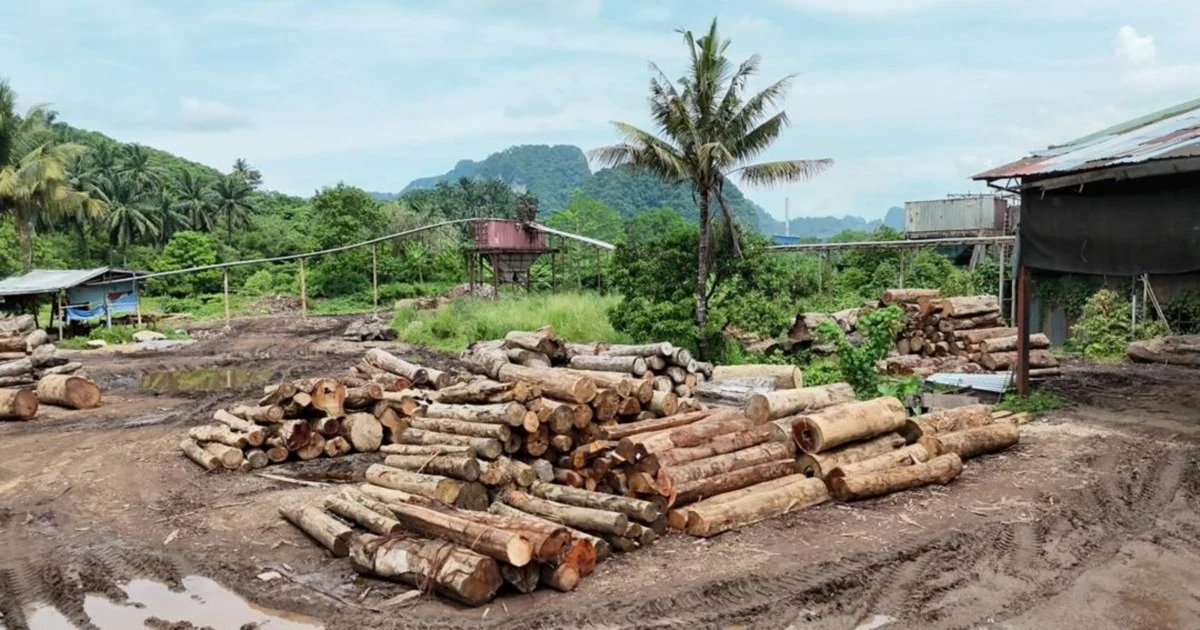
The General Operations Force (GOF) mounted a coordinated enforcement campaign across the east coast states of Kelantan and Terengganu, resulting in the detention of eleven individuals and the confiscation of substantial quantities of illegal timber and related machinery. Among those apprehended were four Indonesian nationals, underscoring the cross-border dimensions of timber trafficking that persistently challenge Malaysian forest conservation efforts.
The confiscated items, collectively valued at over RM2.43 million, represent a significant blow to illegal logging networks that have long targeted the timber-rich forests of these two states. The scale of the seizure reflects both the commercial viability of unlicensed timber extraction in Malaysia and the determined efforts of enforcement authorities to dismantle such operations. The recovery of machinery alongside the timber suggests the suspected offenders had established relatively established operations rather than conducting opportunistic harvesting.
Kelantan and Terengganu, positioned at the northeastern edge of Peninsular Malaysia, have historically been hotspots for illegal logging activity. Their accessible forest reserves, combined with proximity to international borders and established smuggling routes, have made these states particularly vulnerable to exploitation. The involvement of Indonesian nationals in this latest operation is consistent with regional patterns of transnational timber trafficking, where foreign syndicates collaborate with local facilitators to extract and transport valuable hardwoods.
The GOF's dual-state operation demonstrates the coordinated approach increasingly adopted by Malaysian enforcement agencies to address timber crimes. Such synchronised raids across multiple jurisdictions disrupt supply chains and prevent suspects from relocating operations to areas perceived as having lighter enforcement presence. The timing and coordination of these raids likely reflected intelligence gathered from prior investigations or community reports.
Illegal logging remains a persistent challenge for Southeast Asian governments grappling with deforestation, habitat loss, and the economic leakage caused by unregulated timber extraction. For Malaysia, which has committed to international sustainability standards and maintains certified forest management schemes, such enforcement actions reinforce official commitment to protecting remaining forest resources. However, the regularity with which raids uncover substantial operations suggests the profit incentives for trafficking continue to outpace deterrent mechanisms.
The detention of the eleven suspects sets the stage for investigations that will likely uncover the broader networks supporting illegal timber operations. Authorities typically examine procurement routes, processing facilities, transportation methods, and end-market destinations during such inquiries. Understanding these supply chains remains critical for authorities seeking to address both supply-side harvesting and demand-side purchasing that perpetuates the market for illegally sourced timber.
Malaysian Forest Department collaboration with the GOF reflects institutional recognition that illegal timber trafficking requires paramilitary-style enforcement capabilities rather than civilian inspection alone. The GOF's presence indicates the authorities classify these operations as security-relevant concerns, a categorisation that justifies the deployment of armed and trained personnel to conduct dangerous enforcement activities in remote forest areas.
The RM2.43 million valuation serves multiple purposes in enforcement narratives. It demonstrates the scale of economic loss occurring through illegal extraction, provides a metric for measuring agency performance, and establishes penalties through asset recovery. For Malaysian policymakers, such figures underscore the substantial revenues forgone through inadequate forest protection and the economic case for investing in stronger enforcement infrastructure.
The Indonesian dimension of this case reflects broader Southeast Asian forest governance challenges. Transnational trafficking networks exploit regulatory variations and enforcement gaps across borders, with timber sometimes originating in Indonesian forests, transiting through Malaysian territory, or being cut from Malaysian forests for export to regional destinations. Addressing this requires not only coordinated domestic enforcement but also regional cooperation mechanisms that remain inconsistently implemented.
Looking forward, the outcomes of investigations into these detained individuals will help authorities understand contemporary trends in illegal timber operations. Factors such as species targeted, processing methods employed, and final market destinations provide intelligence for risk-assessment and future resource allocation. The machinery seized offers forensic evidence of operational sophistication and sophistication levels.
For Malaysian consumers and legitimate timber businesses, these enforcement actions signal official commitment to preserving the distinction between legal and illegal timber products. Certification schemes and supply chain transparency initiatives depend partly on effective removal of illegal timber from circulation. When enforcement agencies demonstrate consistent capability to detect and interdict trafficking operations, it strengthens the market position of legitimately sourced timber and supports companies genuinely complying with forest management regulations.
The east coast states' experience with this operation will likely inform broader enforcement strategy discussions. Whether this represents standard operational success or signals particular intensity of trafficking activity in these jurisdictions will determine resource allocation decisions in coming months. Authorities will undoubtedly analyse whether the eleven detainees represent isolated operators or merely the visible portion of larger networks continuing underground.