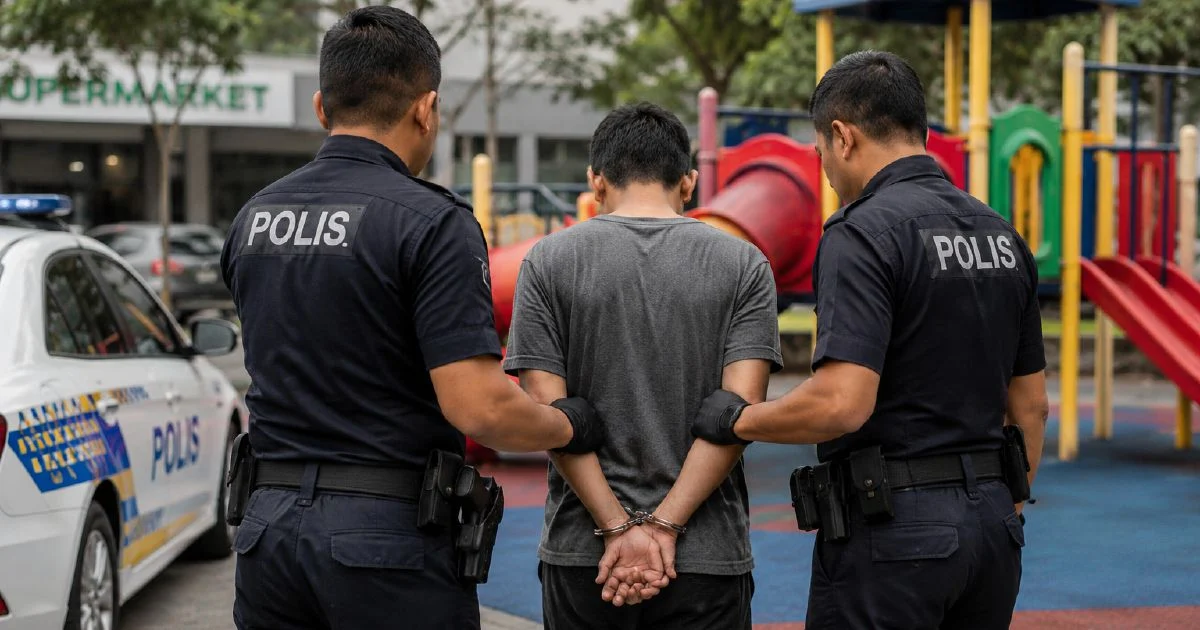
A foreign national in his early twenties has been taken into police custody in connection with an alleged indecent act that occurred at a recreational area in Cyberjaya on Tuesday evening. The incident unfolded near a supermarket in the district, prompting law enforcement intervention and raising fresh concerns about public safety in commercial and residential zones across the Klang Valley's technology hub.
The arrest marks another incident in a series of similar cases reported in populated areas throughout the greater Kuala Lumpur metropolitan region, where public playgrounds and family-oriented spaces have increasingly become sites of concern. Cyberjaya, located within the Sepang district in Selangor, has experienced significant growth as a planned administrative centre and residential destination, yet it continues to grapple with sporadic incidents affecting community confidence.
Police procedures following the apprehension include obtaining information from potential witnesses who may have been present at the playground during the time of the alleged occurrence. Initial investigations seek to establish a clear timeline of events and corroborate accounts from individuals who observed the incident. The proximity of the playground to commercial establishments suggests that staff members or customers at nearby retail facilities may have witnessed relevant details.
The case underscores a broader discussion about supervision and safety protocols at public recreational facilities throughout urban Malaysia. Playgrounds serve essential functions for family life and child development, yet their open and accessible nature can sometimes create vulnerabilities. Parents and guardians have increasingly voiced concerns about the adequacy of security measures and monitoring at such locations, particularly during evening hours when visibility may be reduced.
Cyberjaya's development as a smart city and administrative hub has attracted residents from diverse backgrounds, and the incident reflects the complex dynamics of rapid urbanisation. The detainee's foreign nationality adds international dimensions to the investigation, potentially involving coordination between Malaysian police and immigration authorities to establish his legal status, duration of residence, and background information.
The circumstances surrounding indecent exposure cases typically trigger discussions about public decency laws and the effectiveness of existing statutes in deterring such behaviour. Malaysian legislation provides specific provisions to address such conduct, and enforcement agencies continually examine whether current penalties adequately discourage similar incidents. Legal experts and community advocates often debate whether enhanced surveillance, increased patrols, or community-based interventions offer more effective solutions.
Schools, residential associations, and parent groups in Cyberjaya have periodically organised safety awareness campaigns to educate families about precautions and reporting mechanisms. Such grassroots initiatives reflect growing momentum within communities to take proactive roles in safeguarding public spaces. These efforts often involve distributing information about emergency contact procedures and encouraging prompt reporting of suspicious activities to authorities.
From an immigration perspective, the detention raises questions about screening protocols at entry points and monitoring frameworks for foreign nationals during their stay in Malaysia. The case may prompt review of risk assessment procedures and existing coordination mechanisms between police and immigration authorities responsible for tracking individuals whose behaviour suggests potential threats to public order.
The investigation will determine whether additional charges may be warranted and establish the appropriate course of action through the criminal justice system. Legal proceedings will unfold according to Malaysian law, with the Foreign Ministry potentially becoming involved should diplomatic considerations arise. The outcome of this case may influence how authorities allocate resources to public spaces and establish enforcement priorities in high-traffic recreational areas.
Community reaction to such incidents frequently prompts local authorities to reaffirm their commitment to maintaining safe environments for families. Cyberjaya's municipal administration has previously responded to similar concerns by increasing visible police presence and engaging residents in collaborative safety initiatives. The effectiveness of these measures depends on sustained commitment and adequate resourcing over extended periods rather than reactive responses to isolated incidents.
The arrest demonstrates ongoing police responsiveness to complaints from the public, with officers remaining available to investigate allegations promptly. However, investigators must balance swift action with thorough procedures to ensure that arrests lead to sustainable prosecutions and justice outcomes that command public confidence. The handling of this case will likely influence community trust in law enforcement's ability to protect shared recreational spaces.

