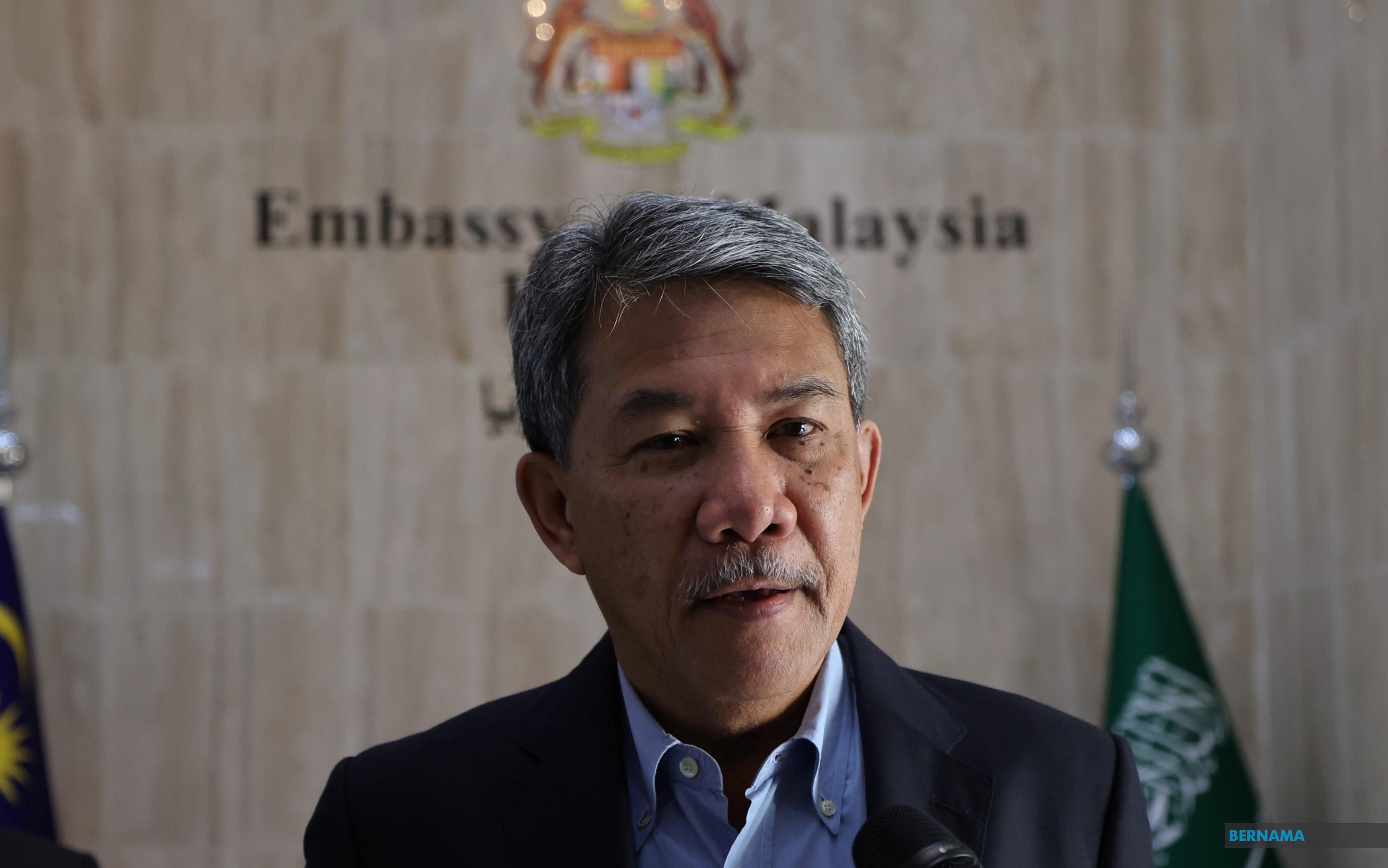
Malaysia's Foreign Minister Datuk Seri Mohamad Hasan touched down in Jeddah on August 26 to participate in an urgent gathering of the Organisation of Islamic Cooperation's Council of Foreign Ministers, arriving at King Abdulaziz International Airport at 5.45 pm. Welcoming the minister was Malaysian Ambassador to Saudi Arabia Datuk Syed Bakri Syed Abdul Rahman, who coordinated the diplomatic reception ahead of the gathering scheduled for the following day. Mohamad's presence underscores the significance Malaysia attributes to this convened session, with the minister assuming leadership of the Malaysian delegation tasked with representing the nation's interests in discussions on the Middle Eastern conflict.
The extraordinary meeting represents a coordinated response within the Islamic world to escalating tensions in the occupied territories. Delegates are expected to examine the current trajectory of developments affecting Palestine, with particular attention to conditions in both Gaza and the West Bank. Prominently featured on the agenda is the expansion of Israeli settlements across Palestinian land, a practice the international community widely regards as contrary to international law. This emergency session indicates that OIC member states view recent events as warranting immediate diplomatic engagement at the ministerial level, suggesting the gravity with which Islamic nations are treating the situation.
Ambassador Syed Bakri emphasised beforehand that Malaysia's participation carries substantial weight in articulating the nation's stance regarding Israeli military actions and territorial expansion in Palestinian areas. The ambassador characterised the Malaysian presence as essential to transmitting the country's resolute position on these contentious issues through the multilateral forum. Malaysia has consistently positioned itself among Arab and Muslim-majority nations advocating for Palestinian rights, and this delegation underscores a continuation of that diplomatic posture. The timing and nature of this extraordinary session reflect broader anxieties within the OIC regarding developments that member states believe demand urgent collective attention.
During the proceedings, Mohamad is slated to deliver Malaysia's National Statement, a formal address that will reaffirm Kuala Lumpur's steadfast commitment to the Palestinian people's legitimate aspirations. The statement will underscore Malaysia's support for Palestinian self-determination and their entitlement to establish a fully independent and sovereign state operating within boundaries established prior to the 1967 conflict. This formulation reflects the international consensus that emerged following the Six-Day War and remains the baseline for most peace initiatives. Malaysia's explicit commitment to pre-1967 borders positions the country squarely with nations advocating for a territorial framework that would grant Palestinians control over the Gaza Strip and the West Bank, consistent with UN resolutions that have outlined such parameters.
Beyond the formal agenda addressing the Palestinian question, the extraordinary meeting provides a venue for intensive bilateral diplomacy. Mohamad is anticipated to convene separately with fellow foreign ministers from various nations to advance Malaysia's broader regional and economic objectives. These side discussions offer opportunities to explore pathways for deepening bilateral relationships through expanded commercial partnerships, enhanced trade frameworks, and fresh investment channels. Such engagement is typical at multilateral gatherings, where nations leverage the assembled diplomatic presence to advance both political and economic interests simultaneously.
The Malaysian delegation's mission reflects a strategic balancing act inherent in contemporary diplomacy. While the nation prioritises advocacy for Palestinian rights and Islamic solidarity, it simultaneously pursues pragmatic economic partnerships with diverse trading partners and allies. This dual approach has characterised Malaysian foreign policy, particularly as the country positions itself as a bridge between the Islamic world and broader global markets. The presence of a high-level delegation at the OIC emergency session reinforces Malaysia's credentials within Islamic forums while the concurrent bilateral meetings demonstrate continued engagement with the international community at large.
OIC forums serve as important platforms where Muslim-majority nations coordinate positions on matters affecting Muslim populations worldwide. Malaysia's active participation in such mechanisms reflects its role as a significant voice within the organisation, extending beyond regional Southeast Asian concerns to encompass broader Islamic world affairs. The country's advocacy on Palestinian issues has historically resonated with its domestic constituency while maintaining its international standing as a responsible developing nation engaged constructively in global diplomacy. This extraordinary meeting provides an occasion for Malaysia to reinforce those credentials.
The convening of an extraordinary session rather than relying on regularly scheduled meetings signals that OIC member states perceive the current situation as requiring urgent response. Such emergency gatherings typically indicate circumstances viewed as demanding immediate diplomatic action before routine diplomatic channels might otherwise address them. The decision to hold this meeting underscores the intensity of concerns among Islamic nations regarding the trajectory of events in Palestinian territories. For Malaysia, attendance at such pivotal moments carries both symbolic and practical importance in maintaining its standing within the OIC and demonstrating responsiveness to issues that mobilise Islamic world opinion.
For Malaysian observers and policymakers, the delegation's work in Jeddah represents ongoing engagement with a persistent geopolitical issue that intersects with Malaysia's identity as a Muslim-majority nation, its regional diplomatic role, and its broader international relationships. The outcomes of the OIC deliberations may influence the contours of Malaysia's subsequent bilateral and multilateral diplomatic initiatives, particularly those affecting relations with nations across the Middle East and broader Islamic sphere. Mohamad's personal leadership of the delegation signals the issue's importance within Malaysia's diplomatic priorities and the government's commitment to active participation in OIC affairs.

