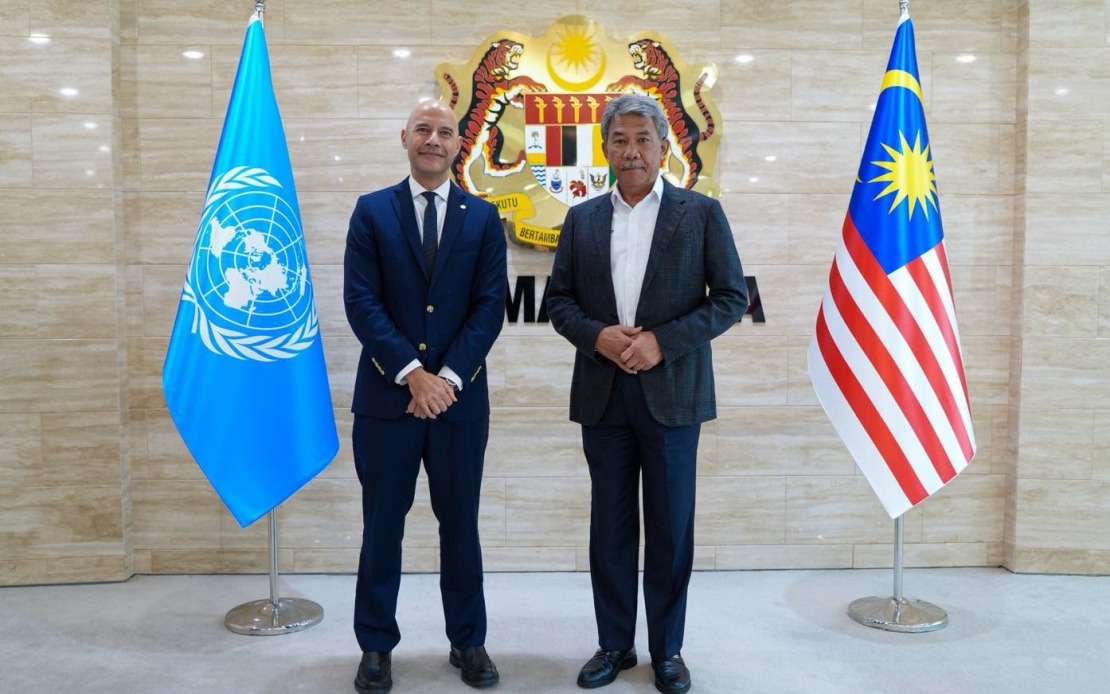
Malaysia's Foreign Minister Datuk Seri Mohamad Hasan held discussions with United Nations Resident Coordinator Nikolas Myint at the ministry's headquarters in Kuala Lumpur on Wednesday, signalling the country's continued commitment to strengthening ties with the world body. The courtesy meeting, which took place at Wisma Putra, provided a formal platform for both officials to explore avenues of enhanced cooperation between Malaysia and the multilateral organization across various sectors.
Myint, who represents the United Nations across a three-nation portfolio covering Malaysia, Singapore and Brunei, was appointed to his position by UN Secretary-General on May 31, 2026. His appointment underscores the strategic importance the United Nations places on engagement with Southeast Asian nations, particularly within the ASEAN region where Malaysia plays an influential diplomatic role. The resident coordinator mechanism serves as the primary interface between the UN system and host governments, coordinating the work of all UN agencies, programmes, and funds operating within member states.
According to a statement from Foreign Minister Mohamad Hasan, the meeting created valuable space for both parties to exchange perspectives on bilateral cooperation frameworks and Malaysia's priorities within the broader UN agenda. The discussion reflected Malaysia's recognition of the organization's evolving mandate in tackling transnational challenges that transcend borders and require coordinated multilateral responses. Such dialogues are instrumental in ensuring that Malaysian perspectives and development needs are incorporated into global policy discussions.
The Foreign Minister emphasized Malaysia's appreciation for the United Nations' multifaceted role in addressing complex international issues ranging from climate change and sustainable development to humanitarian crises and pandemic preparedness. Malaysia has consistently positioned itself as a constructive partner in advancing the UN's Sustainable Development Goals, recognizing that regional stability and prosperity are interconnected with global progress. The meeting underscored this philosophical alignment between Kuala Lumpur and the international organization.
A key theme of the discussion centered on intensifying collaboration between Malaysia and UN agencies operating locally. The government indicated its willingness to work more closely with the UNRC office and various UN specialized agencies to align national development aspirations with international best practices and support mechanisms. This coordination is particularly relevant as Malaysia navigates its own transition toward a higher-income economy while addressing social development, environmental sustainability, and inclusive growth objectives.
The bilateral engagement also reflects broader Southeast Asian diplomatic trends, where countries increasingly recognize the value of structured dialogue with UN leadership to ensure their voices are heard in global forums. As a middle-power nation with significant influence within ASEAN and the Non-Aligned Movement, Malaysia's cooperation with the UN carries implications beyond its borders, potentially shaping regional approaches to development, security, and humanitarian concerns.
For Malaysia specifically, enhanced UN partnership offers opportunities to leverage technical expertise, financial resources, and best-practice knowledge in priority areas such as climate adaptation, disaster risk reduction, and inclusive development. The UN system provides access to global networks of experts and proven implementation models that can accelerate progress on national development targets outlined in Malaysia's long-term strategic plans.
The courtesy call also occurs within a context of Malaysia's active participation in various UN mechanisms and initiatives. The country maintains representation across multiple UN committees and bodies, contributing to global decision-making processes. Strengthening ties at the resident coordinator level helps ensure that these global commitments translate into tangible benefits for Malaysian communities and align with domestic policy frameworks.
From a regional perspective, the meeting demonstrates Malaysia's commitment to multilateralism at a time of growing geopolitical complexity in Southeast Asia. By maintaining robust engagement channels with UN leadership, Malaysia reinforces its preference for rules-based international frameworks and peaceful resolution of disputes. This stance has long characterized Malaysian foreign policy and continues to resonate with ASEAN's foundational principles of non-interference and peaceful coexistence.
Looking forward, the dialogue is expected to facilitate more structured engagement between Malaysian government agencies and UN bodies on issues of mutual concern. Areas of potential collaboration likely include social protection programmes, environmental conservation, disaster preparedness, and capacity-building initiatives. Such partnerships can amplify Malaysia's development impact while contributing to the achievement of global sustainability targets.
The meeting also sends a signal of continuity in Malaysia's diplomatic engagement despite regular transitions in leadership. Regardless of which political coalition holds office, successive Malaysian governments have maintained commitment to constructive UN participation and multilateral cooperation. This consistency provides stability and predictability for international partners engaging with Malaysia on the global stage.

