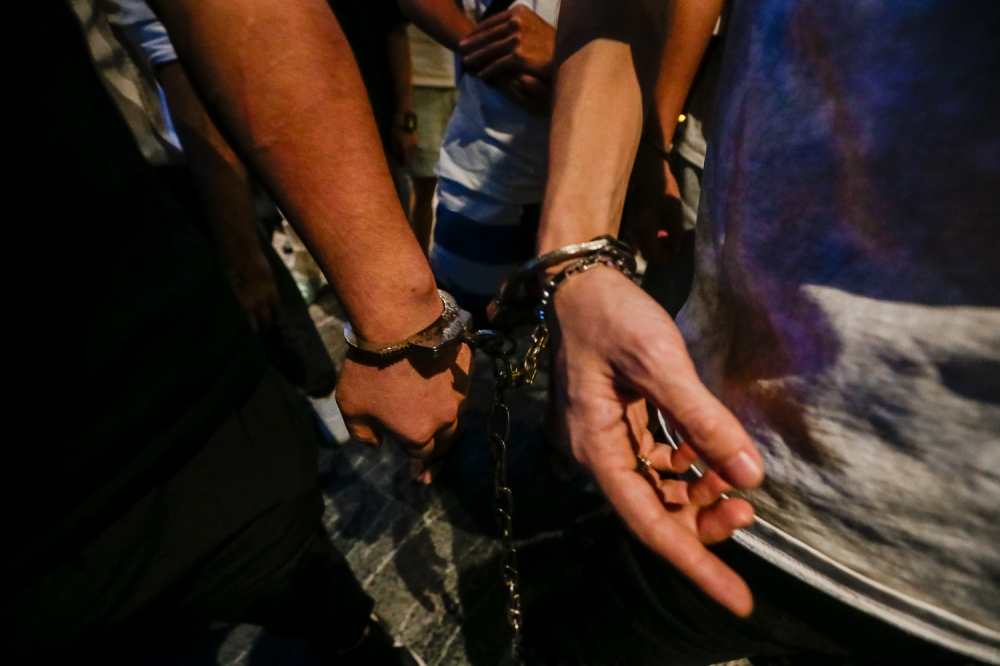
Law enforcement authorities in Kuala Lumpur have taken into custody a foreign national employed as a composer following allegations that he assaulted and threatened a student enrolled at a private educational facility. The arrest, made by Cheras police, represents a significant development in what appears to be a high-profile case involving a member of the international arts community working within Malaysia's education sector.
The incident underscores growing concerns about conduct standards among foreign professionals operating within Malaysia's private education landscape. Private institutions across the country have faced scrutiny in recent years regarding their hiring practices and oversight mechanisms for international staff members. This particular case highlights the potential vulnerabilities that exist when foreign nationals are entrusted with positions of responsibility and authority over students, particularly at institutions where oversight may be less stringent than in government-regulated schools.
The arrest signals that Cheras police have gathered sufficient evidence to proceed with formal investigation into the allegations against the composer. Assault and threatening behaviour constitute serious criminal offences under Malaysian law, carrying potential custodial sentences depending on the severity of the allegations and evidence presented. The fact that the incident occurred within an educational setting—where students are considered a protected class—may elevate the seriousness with which authorities treat the matter.
Private educational institutions in Malaysia operate under regulatory frameworks administered by the Ministry of Education, though enforcement mechanisms and inspection procedures have historically faced resource constraints. The sector encompasses international schools, private colleges, music academies, and specialist training centres that attract both local and foreign instructors. Many of these institutions rely on their reputation and perceived standards to attract fee-paying students, making incidents of this nature particularly damaging to institutional credibility and parental confidence.
The specific role of the arrested individual as a composer suggests he may have worked in a musical instruction capacity, potentially holding positions of authority over students. Composers and music educators, who frequently interact closely with learners in one-on-one or small group settings, occupy positions where power dynamics become particularly acute. Students in such environments may be reluctant to report misconduct due to concerns about academic consequences, cultural unfamiliarity with complaint procedures, or anxiety about speaking out against authority figures, particularly foreign nationals whose language or professional credentials they might hold in high regard.
For Malaysia's international education sector, which has cultivated a reputation as a destination for quality instruction and diverse learning experiences, incidents involving alleged misconduct by foreign staff pose reputational challenges. The nation has invested considerably in attracting international educators and cultural professionals, positioning itself as a hub for cross-cultural educational exchange in Southeast Asia. However, such incidents demonstrate the necessity of robust vetting, training, and accountability mechanisms regardless of a professional's credentials or background.
The student affected by the alleged incident faces the dual challenge of navigating both the immediate emotional and psychological impact of the experience and the formal legal processes that will unfold. Educational institutions have corresponding responsibilities to provide appropriate support and counselling services to affected students while ensuring that the investigation proceeds without interference. Malaysia's education authorities have previously emphasised the importance of creating safe learning environments, a principle that applies equally to private institutions serving diverse student populations.
The arrest also raises questions about what safeguarding protocols were in place at the private institution prior to this incident. Reputable educational providers typically implement multiple layers of protection, including staff background checks, disciplinary procedures, student grievance mechanisms, and mandatory reporting arrangements with law enforcement. The effectiveness of such systems often determines whether misconduct is addressed promptly or whether it escalates into more serious incidents.
Moving forward, the investigation conducted by Cheras police will likely focus on establishing the precise nature of the assault allegations, corroborating testimony from the student and any witnesses, and determining whether threatening behaviour occurred either during or after the physical contact. These evidentiary matters will be critical in determining whether charges proceed and what category of offence the composer faces under the Penal Code or other relevant legislation.
This case intersects with broader discussions within Malaysia's education policy sphere regarding international education standards, staff conduct codes, and institutional accountability. While Malaysia welcomes foreign expertise and cultural exchange in education, incidents of alleged misconduct remind stakeholders that professional credentials and artistic accomplishment do not exempt individuals from expected standards of responsible behaviour toward students. The outcome of this investigation may influence how private institutions approach hiring, training, and monitoring of international staff in future.

