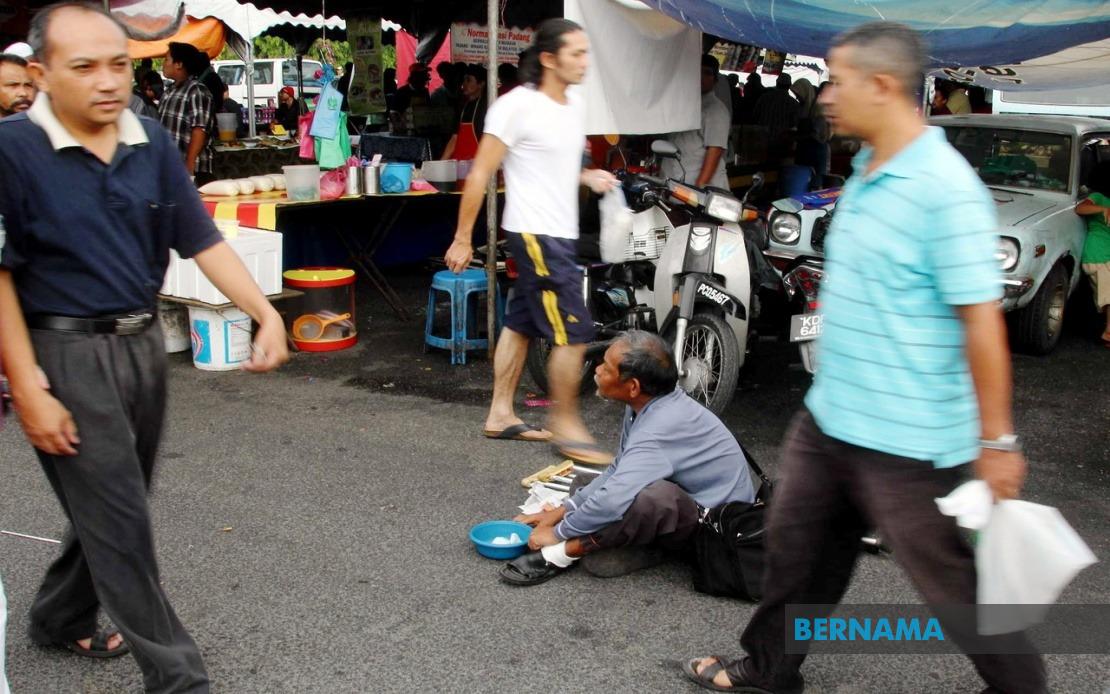
The Ministry of Home Affairs has confirmed that begging activities involving foreign nationals, particularly children, are believed to be orchestrated by organised crime networks rather than occurring independently. This acknowledgment comes as authorities escalate enforcement efforts across Kuala Lumpur and surrounding regions in response to visible street-level begging that has become increasingly prominent in the capital's tourist districts.
Between the start of 2025 and May 31 this year, the Immigration Department conducted 836 separate enforcement operations focused on Kuala Lumpur and its vicinity, examining a total of 10,609 individuals during these sweeps. The scale of these operations underscores the seriousness with which authorities are treating the issue. Among those inspected, 5,411 foreign nationals were apprehended for various immigration-related violations, with 42 of these detainees specifically identified as participants in begging activities.
Parallel to detaining foreign beggars, investigators are pursuing local citizens suspected of playing facilitating roles within these networks. The ministry's statement indicates that authorities are targeting individuals functioning as protectors, organisers, and financial beneficiaries of begging operations. This multi-layered enforcement approach recognises that syndicates require domestic participation to operate effectively, suggesting that foreign beggars are often controlled by Malaysian-based handlers who profit from their activities.
The government has framed its response as a matter of national reputation. Officials emphasise that exploitative practices involving vulnerable populations, particularly children, damage Malaysia's standing internationally and undermine the country's image as a safe, orderly destination. This concern reflects anxiety among policymakers about the economic consequences of negative perceptions among tourists and foreign investors, both critical to Malaysia's economic wellbeing.
Concern about foreign begging is particularly acute in high-traffic commercial and entertainment zones. Parliamentary member Fong Kui Lun, representing the Bukit Bintang constituency, specifically raised the prevalence of begging in Bukit Bintang, Jalan Alor, and Changkat Bukit Bintang—areas that form the beating heart of Kuala Lumpur's retail and nightlife scenes. The concentration of begging in these locations suggests either deliberate syndicate deployment to maximise earnings from high-footfall areas or an attraction effect where multiple networks converge on proven income sources.
The Immigration Department has restructured its enforcement approach to incorporate greater institutional coordination. Enhanced integration between immigration authorities and the Royal Malaysia Police now features prominently, alongside collaboration with Kuala Lumpur City Hall, which holds direct responsibility for managing street-level activities within city limits. This partnership model reflects recognition that immigration violations, criminal activity, and municipal disorder interconnect and require cross-agency visibility and intelligence sharing.
A newly activated entity, the KL Strike Force, brings together immigration officials, police, city authorities, and the Department of Social Welfare in a dedicated task force. Beyond conducting sporadic enforcement operations, this body focuses on systematic identification of begging hotspots, collection and analysis of public complaints, and preventive monitoring to discourage recurrence. The inclusion of the Department of Social Welfare suggests an awareness that effective responses to organised begging require not only enforcement but also social interventions addressing underlying vulnerabilities.
Intelligence gathering has become a central pillar of the renewed strategy. Authorities are investing effort in mapping syndicate networks, understanding their operational methods, and tracking relationships between foreign beggars and local organisers. This analytical approach represents an evolution from reactive street-level enforcement toward more proactive dismantling of supply chains that bring vulnerable foreigners into begging roles.
The revelation of organised begging networks carries implications beyond the immediate security and public order concerns. It suggests that human trafficking and labour exploitation may be occurring alongside more visible street-level activity. Begging syndicates that profit from foreign nationals inherently rely on control mechanisms that may include debt bondage, document confiscation, or threats. For Malaysia, which has faced international scrutiny over trafficking vulnerabilities, the existence of organised begging rings suggests that exploitation networks extend beyond conventional labour trafficking into informal street economies.
Simultaneously, the ministry addressed an unrelated but significant employment matter concerning foreign worker quotas. During a special application window from January 19 through March 31, a total of 1,919 employers submitted requests for foreign worker quotas. Of these, 314 employers received positive recommendations, allowing them to proceed toward formal approval from the Department of Labour Peninsular Malaysia. This special period was created to accommodate employers who missed the original December 31, 2025 deadline, indicating the complexity of Malaysia's foreign labour management systems and the pressure from employers seeking access to overseas workers.
The two sets of ministry announcements—enforcement against begging syndicates and facilitation of employer access to foreign workers—illustrate Malaysia's dual relationship with foreign nationals. While authorities aggressively pursue irregular foreign populations engaged in street begging, the labour system simultaneously works to expand legal channels for employers seeking to import foreign workers. This apparent contradiction reflects policymakers' intent to distinguish between exploitative irregular migration and legitimate labour importation, though critics question whether the distinction is adequately maintained in practice.
The ministry's commitment to an integrated, sustained campaign against begging syndicates signals that this issue will remain a policy priority. Authorities recognise that visible street-level begging creates negative externalities affecting tourism, retail commerce, and public perceptions of safety. More substantially, the acknowledgment of organised involvement indicates awareness that individual foreigners begging are typically victims of larger systems rather than independent economic actors making rational choices. Dismantling these systems requires sustained coordination among multiple agencies and sustained political commitment, both of which the ministry has publicly pledged to maintain.

