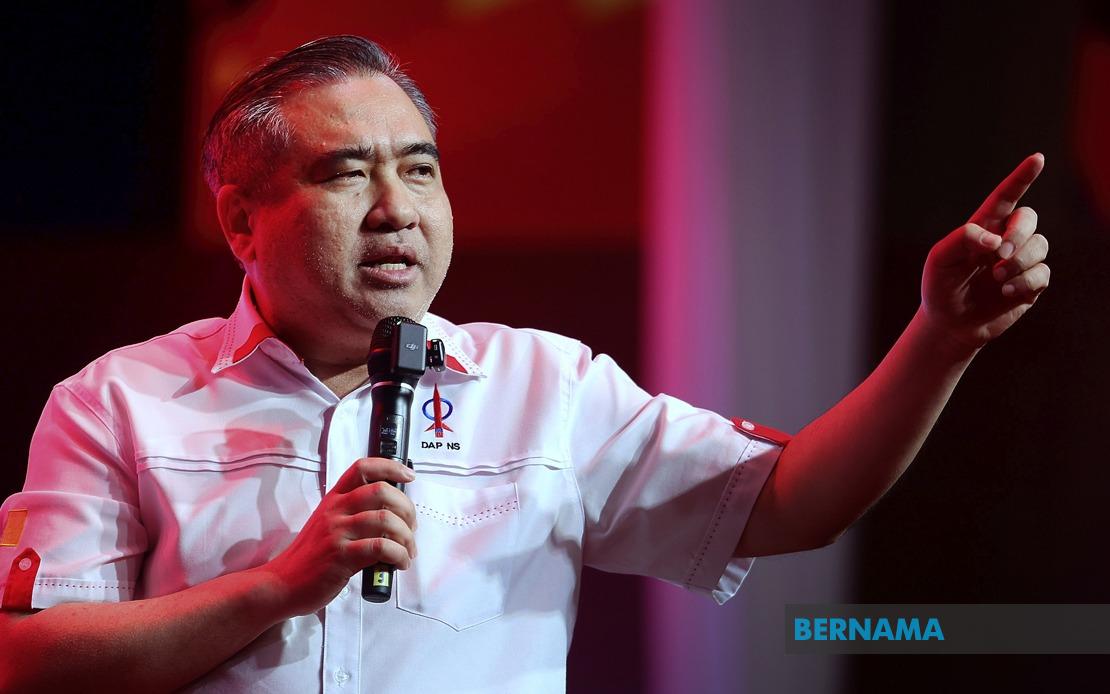
DAP secretary-general Anthony Loke has set a deliberate tone for the Negeri Sembilan state election campaign by rejecting personal attacks and emphasising substantive policy debate instead. Speaking after a Pakatan Harapan dinner in Seremban on July 19, Loke underscored the importance of parties articulating clear policy positions and their intended contributions to constituents rather than engaging in character assassination or ad hominem criticism. This principled stance reflects a broader disciplinary approach within coalition politics at a time when electoral competition could easily descend into acrimony.
The Transport Minister's commitment to eschew personal attacks carries particular significance given his prominent Cabinet position and his standing as one of DAP's most visible national figures. By declining to target fellow ministers, regardless of their party affiliation, Loke is signalling respect for the collective Cabinet responsibility framework. This restraint is not mere political theatre; it reflects the operational reality that government ministers, whatever their party colours, must work together across multiple portfolios and policy domains on a weekly basis to execute the nation's governance mandate.
Loke's position aligns directly with guidance issued by Prime Minister Datuk Seri Anwar Ibrahim, who has advised all members of the government to maintain institutional discipline and refrain from attacking federal initiatives while participating in state-level electoral contests. This hierarchical messaging demonstrates an intentional effort to insulate the federal administration from the rough-and-tumble of state campaigns, a particularly delicate balance in a coalition government where coalition partners represent different electoral constituencies and policy preferences. The risk, left unmanaged, is that state polls become proxy battles that destabilise federal comity.
Notably, Loke has also declined to campaign in the Rantau state constituency contested by Foreign Minister Datuk Seri Mohamad Hasan, a deliberate restraint designed to preserve the Unity Government's internal equilibrium. This withdrawal from a potentially competitive engagement demonstrates how coalition politics sometimes requires members to prioritise broader institutional health over electoral opportunism. By staying away from Rantau, Loke acknowledges that direct campaigns against senior coalition partners in their strongholds can breed resentment and complicate future cooperation. The decision reflects sophisticated coalition management rather than political weakness.
Instead, Loke has concentrated his campaign energies on two fronts: his own Chennah state seat and DAP-held constituencies where the party can make a clear case for supporting its candidates. He is also actively supporting Menteri Besar Datuk Seri Aminuddin Harun's campaign for the Linggi seat, channelling his ministerial profile and experience toward strengthening the coalition's performance in targeted battlegrounds. This focused deployment of his political capital represents a calculated strategy that maximises impact while respecting coalition protocols.
The Transport Minister has pushed back against suggestions that his national Cabinet responsibilities have led to neglect of his Chennah constituency, instead framing his ministerial position as an asset that allows him to deliver tangible benefits to residents. Loke cited his ability to channel Kampung MADANI project allocations to Chennah as concrete evidence that his dual role enhances rather than diminishes his effectiveness as a representative. This argument carries weight in Malaysian political discourse, where constituents frequently evaluate their representatives' ability to secure federal resources and programmes for local development.
Beyond resource allocation, Loke highlighted the establishment of a full-time constituency team dedicated to servicing resident concerns and providing localised assistance. This infrastructure allows him to maintain constituent engagement despite his demanding federal portfolio, addressing a persistent challenge for ministers who represent state seats. The distinction Loke draws between personal presence and institutional responsiveness reflects an evolving understanding of political representation in contemporary Malaysia, where effective advocacy increasingly depends on organisational capacity rather than simple physical availability.
The Negeri Sembilan state election represents a significant test for the Unity Government's ability to maintain electoral credibility while managing internal coalition dynamics. With early voting scheduled for July 28 and polling day on August 1, the campaign window is relatively compressed, placing emphasis on efficiency and message clarity. The election will determine whether the Anwar Ibrahim administration can sustain voter confidence at state level following its assumption of federal power, a question with implications for subsequent elections and the coalition's long-term viability.
Loke's emphasis on policy-driven campaigning also reflects broader concerns within Malaysian electoral politics about campaign tone and democratic health. Elections in Southeast Asia have increasingly witnessed the intrusion of personal invective and character attacks, phenomena that can polarise voters and corrode institutional trust. By consciously opting for substantive debate, Loke is implicitly advocating for a higher standard of political discourse and demonstrating that electoral competition need not become a vehicle for personal vendettas. Whether other campaign participants reciprocate this restraint will significantly shape the overall character of the Negeri Sembilan contest.
For Malaysian voters, particularly those in urban and semi-urban constituencies like Chennah, Loke's framing prioritises the practical question of what government can deliver over the often-theatrical dimensions of personality-driven politics. This approach aligns with survey data suggesting that Malaysian voters increasingly prioritise economic management, infrastructure development, and service delivery over other campaign dimensions. By keeping his campaign focused on such substantive matters, Loke is attempting to elevate the election discussion to terrain where the coalition's federal track record and ministerial competence provide strategic advantage.

