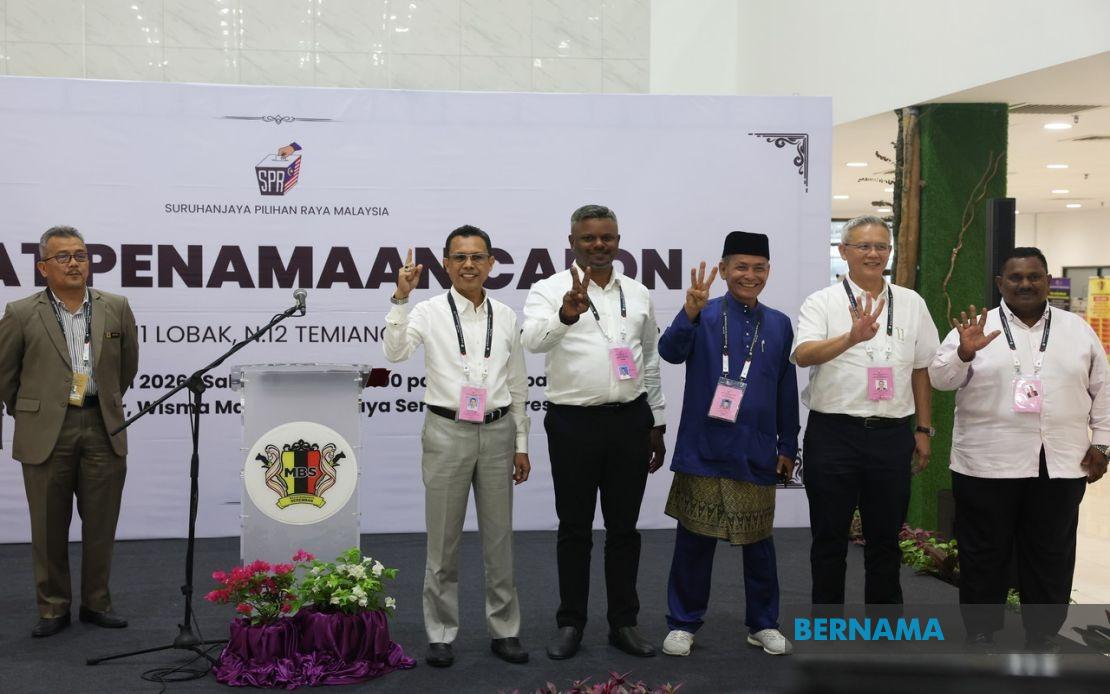
The Nilai state seat has emerged as one of the most contentious battlegrounds in the forthcoming 16th Negeri Sembilan state election, with incumbent assemblyman and DAP National vice chairman J. Arul Kumar facing an unexpectedly fragmented field of five rival candidates vying for voter support. The nomination centre in Wisma Bandaraya Seremban witnessed the formal registration of all contenders on July 18, with returning officer Datuk Masri Baharuddin confirming the completion of candidate nominations shortly after the 10 am deadline.
Arul Kumar, representing the Pakatan Harapan coalition, must now defend his seat against a diverse array of challengers that spans the political spectrum. Zamani Ibrahim carries the colours of Berjasa, while Datuk Lai Chien Kong stands as the Barisan Nasional standard-bearer in a direct contest against the incumbent. The Bersatu faction has fielded Datuk V. Saravana Kumar as its candidate, and Omar Mohd Isa is running as an independent, potentially fragmenting anti-incumbent votes across multiple alternatives. This configuration presents particular challenges for Arul Kumar, as the multiplication of opposition voices could dilute his electoral advantage even if his core support base remains largely intact.
The fragmentation in Nilai reflects broader dynamics unfolding across the Negeri Sembilan assembly, where the 36-seat chamber has been dissolved and put to the electorate following the June 5 dissolution announced by the state government. The complexity of the Nilai contest stands in sharp contrast to several neighbouring seats, where clearer two or three-way contests have materialised. The availability of multiple alternative candidates may energise certain voter segments seeking to register dissatisfaction with incumbent administration, though it simultaneously raises questions about the viability of each challenger's campaign machinery and financial resources.
Elsewhere in Negeri Sembilan, other constituencies are shaping up with notably less congestion on nomination papers. The Sikamat seat will see Nor Azman Mohamad, who serves as political secretary to the Menteri Besar, contest on behalf of Pakatan Harapan in a three-way fight. He faces Datuk Razali Abu Samah representing Perikatan Nasional and Datuk Tun Faisal Ismail Aziz from Bersatu. Notably, an initial independent candidate, Bujang Abu, withdrew from the Sikamat race at the final moment, suggesting some consolidation of candidacies despite the overall crowded nature of the state election.
The Lenggeng seat presents a three-cornered contest with Pakatan Harapan's Zarinna Abu Zarin challenging the incumbent Datuk Mohd Asna Amin from Barisan Nasional, alongside Bersatu's Zool Amali Hussin. By contrast, the Lobak seat has crystallised into a direct bilateral showdown between sitting assemblyman Chew Seh Yong of Pakatan Harapan and Perikatan Nasional's Dr P. Kumar, offering voters a clearer choice in what may prove a closely contested constituency.
The Temiang seat is expected to attract considerable attention, as it will feature political secretary to the Transport Minister Ho Weng Wah battling on behalf of Pakatan Harapan, against Barisan Nasional's Datuk Leaw Kok Chan and Bersatu's Fazly Hamid in a three-way tussle. This configuration underscores the challenge facing opposition coalitions in dividing their political ground against multiple rival factions each claiming legitimacy across different voter communities. The Ampangan seat similarly features a three-cornered contest, with Yayasan Negeri Sembilan director Muhammad Nazri Kassim representing Pakatan Harapan competing against Perikatan Nasional's Datuk Dr Mohamad Rafie Malek and Bersatu's Noor'azah Harun.
The multiplication of candidates across numerous constituencies reflects the persistent fractionalisation of Malaysian politics, particularly the sustained tension between the Barisan Nasional, Pakatan Harapan, Perikatan Nasional, and Bersatu formations. Bersatu's participation across multiple seats indicates the party's continued assertion of independence from larger coalitions, whilst the presence of independent candidates in several constituencies suggests ongoing disaffection with established party structures among certain segments of the electorate. For Pakatan Harapan, the challenge extends beyond defeating Barisan Nasional opponents; the coalition must navigate contests where opposition votes are distributed across multiple non-aligned candidates, potentially complicating the pathway to victory even in stronghold constituencies.
The Election Commission has scheduled early voting for July 28, with polling day set for August 1, providing a compressed timeframe for candidates to mobilise their respective organisations and reach voters. The tightly condensed campaign period may advantage candidates with existing organisational infrastructure and established voter databases, potentially disadvantaging independents and candidates from smaller parties without extensive ground machinery. For Arul Kumar and other incumbent assemblymen standing for re-election, the compressed timeline requires rapid mobilisation of existing networks and swift articulation of developmental achievements during their tenure.
The outcome of the Nilai seat contest will carry significance beyond the immediate redistributions of assembly seats, as it will signal the electoral trajectory of the DAP in Negeri Sembilan and the relative strength of Pakatan Harapan's coalition appeal. Arul Kumar's performance, set against a crowded field that includes both established party opponents and independent challengers, will provide insights into the sustainability of incumbent advantages and the appeal of opposition alternatives among Nilai voters. The broader Negeri Sembilan election results will ultimately determine the balance of power in the state assembly and the composition of the state government, with implications for regional political dynamics throughout the peninsula.

