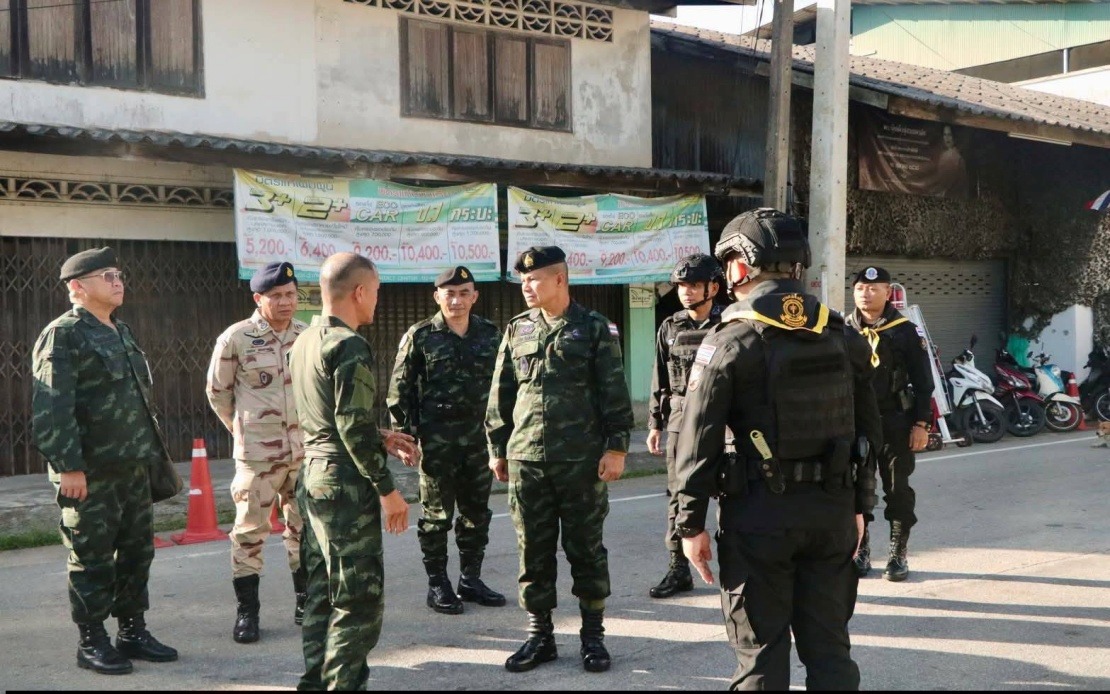
A coordinated assault on a Thai military checkpoint in the southern province of Narathiwat has left five rangers dead and six civilians wounded, marking an escalation in violence that has prompted authorities to strengthen security across the border region with Malaysia. The attack, which unfolded on Wednesday evening at approximately 6.45 pm local time, targeted the 4509 Ranger Company checkpoint situated on Sami Hill in Rangae District, an area known for periodic unrest linked to long-standing separatist tensions in Thailand's predominantly Muslim south.
According to Lieutenant General Norathip Phoyanok, commander of the Fourth Army Region and director of the Internal Security Operations Command Region 4, more than six assailants dressed in dark clothing and wearing masks launched the assault using a combination of gunfire and improvised explosive devices. The attackers hurled pipe bombs at the security position while maintaining suppressive fire, a tactic suggesting a level of coordination and planning characteristic of organised militant operations in the region rather than opportunistic violence. The scale and nature of the attack underscore the continuing capacity of armed groups operating in Thailand's southernmost provinces to mount sustained threats against state security infrastructure.
The civilian toll from the incident reflects a persistent pattern in southern Thailand whereby security operations and militant activities place non-combatants at severe risk. Among those injured were a three-year-old girl and an elderly person, casualties that highlight how families and communities find themselves caught in the crossfire of an intractable conflict. The presence of civilian casualties near a military checkpoint raises questions about the density of civilian settlement in proximity to security installations and the inevitable collateral impact of maintaining security infrastructure in populated areas.
Following their assault, the suspected gunmen fled the scene in a black four-wheel-drive vehicle, evading immediate apprehension. The use of motorised transport for rapid escape suggests the attackers had prepared exit routes and possessed logistical support—elements that distinguish organised militant cells from loosely affiliated groups. Security forces have initiated investigations to establish the identities of the assailants and determine who authorised and orchestrated the operation, work that typically involves cross-referencing intelligence with known militant networks operating across the Malaysia-Thailand border region.
Narathiwat Governor Boonchuai Hormyamyen responded to the incident by issuing comprehensive security directives aimed at fortifying Thailand's border defences and internal checkpoints. His orders encompass coordinated efforts across the police, military, and civilian administrative apparatus to intensify surveillance and control measures spanning twelve districts throughout Narathiwat province. This multi-agency approach reflects recognition that addressing security threats in the region demands integrated responses rather than isolated military operations, particularly given the porous nature of the Malaysia-Thailand border and the movement of weapons, personnel, and resources across provincial lines.
The heightened security posture along the Malaysia-Thailand frontier carries direct implications for cross-border trade, civilian movement, and routine administration in areas proximate to the boundary. Enhanced checkpoints and tighter controls, while necessary from a security perspective, inevitably create friction in communities that have long relied on informal cross-border economic activity and familial connections spanning both nations. Malaysia, which shares a 640-kilometre border with Thailand's southern provinces, has long maintained liaison arrangements with Thai security forces to monitor and prevent the transit of arms and militant operatives across the boundary.
This latest incident continues a troubling trajectory of violence in southern Thailand's Pattani, Yala, and Narathiwat provinces, where an insurgency rooted in historical grievances, ethno-religious identity, and governance disputes has persisted for nearly two decades. The conflict has claimed thousands of lives and displaced numerous communities, creating a security environment where civilian populations endure chronic instability. International observers have periodically called for inclusive political dialogue and decentralisation measures that might address underlying grievances, yet concrete progress toward such solutions remains limited.
For Malaysian policymakers and security agencies, the Narathiwat attack reinforces the necessity of maintaining robust bilateral coordination with Thailand regarding border security and intelligence sharing. Malaysian authorities monitor developments in southern Thailand closely, given the potential for militant activity in Thailand to create spillover effects or inspire copycat operations on the Malaysian side of the frontier. The movement of weapons and trained personnel across the porous border remains a persistent concern for both governments.
Forensic investigators have cordoned off the checkpoint site to gather evidence and examine the crime scene for tactical intelligence about the attackers' capabilities and methods. Such analysis contributes to broader understanding of evolving militant tactics in the region and informs future defensive measures. The investigation into identifying those who planned and authorised the operation represents a critical dimension of the response, as does the imperative to prevent retaliation cycles that have historically complicated security situations in southern Thailand.
The attack underscores the complex security landscape characterising Thailand's deep south, where routine administrative functions, commerce, and civilian life remain constrained by the persistent threat of violence. While Thai security forces maintain overall territorial control and state capacity in the region, the continued ability of militant organisations to orchestrate coordinated attacks against military installations demonstrates that the underlying drivers of conflict remain unresolved. Any sustainable improvement in security conditions will likely require attention to both the immediate tactical challenges of disrupting militant networks and the deeper political and social dimensions of the conflict.

