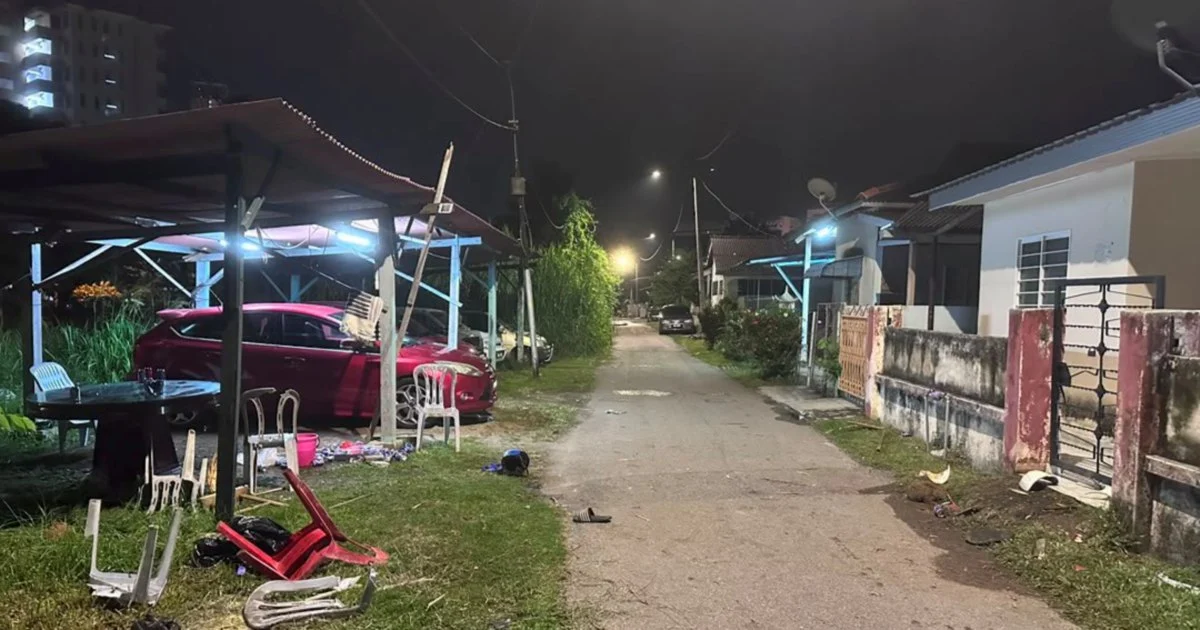
A brazen daylight attack in Melaka has resulted in serious injuries to two men and the arrest of five suspects, marking another troubling incident of mob violence in the state. The assault took place near a temple compound on Jalan Pengkalan in Kampung Pengkalan Rama Pantai, where the victims were attempting to retrieve a motorcycle during the early morning hours. The injuries sustained, particularly a fractured skull suffered by one of the men, have left him hospitalised in critical condition, raising fresh concerns about personal safety in the locality and broader questions about escalating violence in residential areas.
The circumstances leading to the confrontation remain under investigation, though authorities have confirmed that the two men were specifically retrieving a motorcycle when they were set upon by the group. According to police statements, the attack was unprovoked and executed with considerable violence. The fact that the incident occurred near a place of worship, during hours when the area would ordinarily be quiet, suggests a brazen disregard for community norms and public order. Such temple neighbourhoods are typically considered safe spaces, making this violation particularly unsettling for residents in Kampung Pengkalan Rama Pantai.
The severity of injuries inflicted during the assault underscores the level of force employed by the attackers. One victim's fractured skull indicates blunt-force trauma consistent with multiple assailants using weapons or their fists with considerable strength. The second victim's injuries, whilst less severe than his companion's, nonetheless required medical attention, suggesting both men faced genuine threats to their physical safety. Medical personnel transported the more seriously injured man to hospital, where he was admitted to intensive care following assessment of his neurological condition.
Police mobilisation following the incident appears to have been swift and effective. The arrest of five individuals within hours of the attack demonstrates coordinated detective work and possible eyewitness cooperation from residents in the area. Authorities have not yet disclosed whether all five arrested individuals actively participated in the physical assault, or whether some face charges related to conspiracy or abetting. The investigation phase will determine the precise role each suspect played in the violent episode.
This incident reflects a troubling pattern of mob-based violence that has periodically surfaced across Malaysian communities, particularly in Melaka where territorial disputes and interpersonal grievances sometimes escalate into group confrontations. Such incidents carry broader implications for community cohesion and law enforcement's capacity to deter organised violence. When multiple individuals coordinate to inflict harm, the crime transcends impulsive personal dispute and enters the realm of organised aggression, often linked to gang affiliations or factional tensions.
For residents of Kampung Pengkalan Rama Pantai and surrounding neighbourhoods, the attack represents an immediate security concern. Temple compounds and their vicinities have traditionally served as gathering points for the community, particularly in the mornings when devotees arrive for prayers. An assault in such a location sends a message that even nominally protected or sacred spaces cannot guarantee safety, potentially altering residents' willingness to move freely in their own neighbourhood. Local authorities may need to increase visible police presence in the area to reassure the public.
The motorcycle retrieval that prompted the victims' presence at the scene raises secondary questions about the circumstances that had placed a vehicle near the temple in the first place. Whether the motorcycle had been reported stolen, abandoned, or simply left there pending retrieval could provide context for why the victims were present at that hour. Investigators will need to establish the timeline of events and any prior relationship between the attackers and victims, as random violence involving strangers often indicates territorial gang activity or cases of mistaken identity.
State and federal authorities have increasingly prioritised tackling group violence following public outcry over similar incidents elsewhere in the country. Melaka in particular has seen periodic flare-ups of mob-related crimes, necessitating community policing initiatives and inter-agency coordination. The arrest of five suspects in quick succession suggests that intelligence networks and community tip-offs are functioning reasonably well, though preventing such incidents from occurring in the first place remains the ultimate challenge.
As the case proceeds through police investigation and later the courts, attention will focus on whether prosecutors can establish that all five arrested individuals participated in the assault, or whether evidence will distinguish between primary perpetrators and secondary actors. Forensic evidence from the scene, medical documentation of injuries, and witness testimony will likely form the evidentiary foundation. The severity of charges will depend partly on whether weapons were used and whether the violence was premeditated or spontaneous.
The victim recovering in critical condition represents the human cost of such violence—a person whose life trajectory may be permanently altered by traumatic brain injury. Fractured skulls carry risks of long-term neurological complications, chronic pain, cognitive impairment, and psychological trauma. Families affected by such incidents face not only immediate emotional distress but potentially years of medical care and rehabilitation. These personal consequences often go unremarked in crime reporting yet constitute the true measure of violence's impact on Malaysian society.

