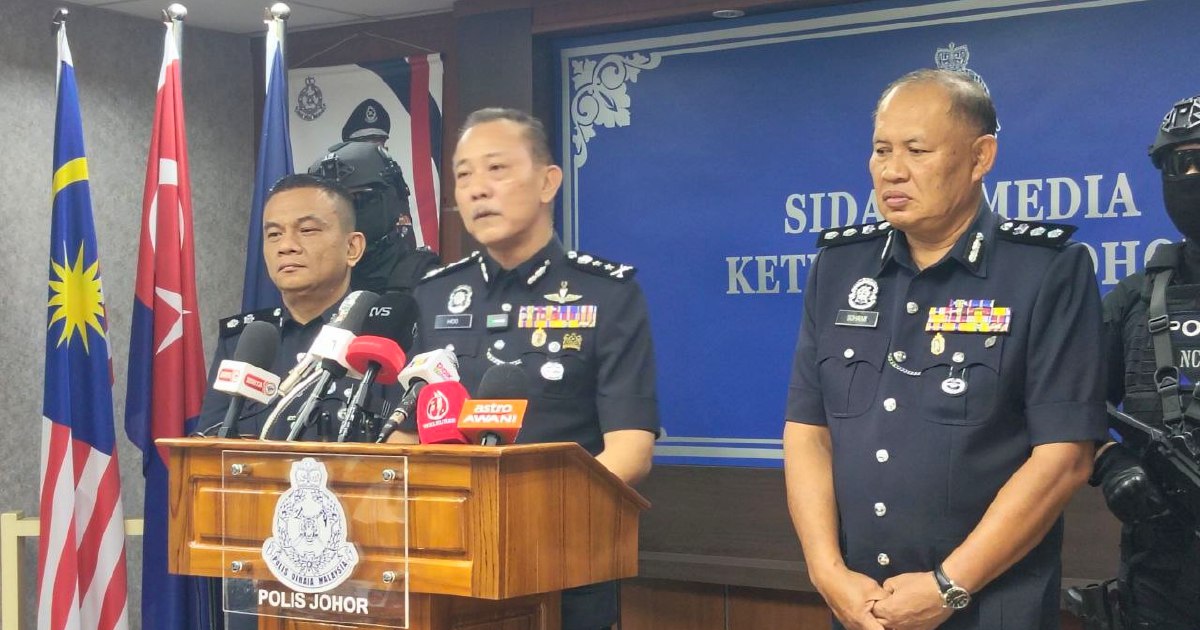
Police in Johor have taken five people into custody following investigations into multiple incidents where both the Jalur Gemilang and the Johor state flag were deliberately displayed upside down across different areas of the state. The cases mark a concerning series of flag-related incidents that have prompted swift law enforcement action and underscore the sensitivity surrounding national symbols in Malaysia.
The three separate cases under investigation involve locations distributed throughout Johor, suggesting the incidents were not isolated occurrences but part of a broader pattern that caught the attention of authorities. Flag mishandling cases in Malaysia typically attract serious attention due to the cultural and constitutional significance these symbols hold for citizens and the nation's identity as a whole.
The Jalur Gemilang holds profound meaning for Malaysians as the national emblem representing sovereignty, unity, and patriotic values. Displaying the flag upside down or in an inverted position is widely regarded as a grave form of disrespect and can be considered an affront to national dignity. Similarly, the Johor state flag carries deep significance for residents of Johor, reflecting the state's heritage and pride in its governance and cultural identity within the federation.
In Malaysia's legal framework, flag-related offences are treated with considerable gravity. Various statutes and regulations address improper handling, display, or desecration of national and state symbols, with penalties designed to protect these emblems from deliberate disrespect. The swift police response to these incidents demonstrates the authorities' commitment to maintaining respect for national institutions and symbols that form the bedrock of Malaysian national consciousness.
The decision to conduct separate investigations into what authorities perceive as three distinct cases suggests that each incident may have occurred under different circumstances or at different times and locations. This approach allows investigators to establish the specific facts surrounding each case while examining whether there might be any underlying connection or coordination between the incidents that would indicate a more organised or deliberate campaign.
The detention of five individuals indicates that police have identified and apprehended suspects they believe possess relevant information or bear direct responsibility for the flag desecrations. The number of detainees relative to the number of cases suggests that some cases may involve multiple participants or that certain individuals are implicated in more than one incident, requiring multi-directional investigation.
For Johor residents and Malaysians more broadly, such incidents raise questions about respect for national symbols in an increasingly polarised social environment. Flag desecration cases, whether committed out of political protest, carelessness, or deliberate provocation, touch on fundamental aspects of national pride and social cohesion that transcend everyday political discourse. The incidents underscore the importance of civic education regarding the proper treatment and respect due to national emblems.
From a Southeast Asian perspective, Malaysia's response to these flag incidents reflects broader regional norms regarding nationalist sentiment and protection of state symbols. Across the Association of Southeast Asian Nations, countries maintain strict protocols around flag handling and display, viewing such matters as integral to national dignity and institutional respect. The incidents in Johor thus align with regional sensitivities that governments consistently reinforce through law enforcement and public messaging.
The investigation process will likely involve determining not only who was responsible for displaying the flags improperly, but also the motivation behind these actions. Understanding whether the incidents represent deliberate political statements, acts of vandalism, or genuine misunderstandings about proper flag protocol will inform both the legal response and any subsequent public communication from authorities about national symbol respect.
These developments carry implications for community relations and social harmony in Johor, particularly if the incidents fuel tensions around political expression versus national respect. Authorities will need to balance rigorous enforcement of flag-related statutes with thoughtful public engagement that reaffirms shared commitment to national symbols while addressing any underlying grievances that may have motivated the desecrations.
The arrests and ongoing investigations serve as a public reminder of Malaysia's expectations regarding patriotic comportment and respect for national and state institutions. Whether through police enforcement or public awareness campaigns, authorities in Johor and throughout Malaysia continue emphasising that national symbols demand the deference and proper treatment befitting their constitutional and cultural significance.

