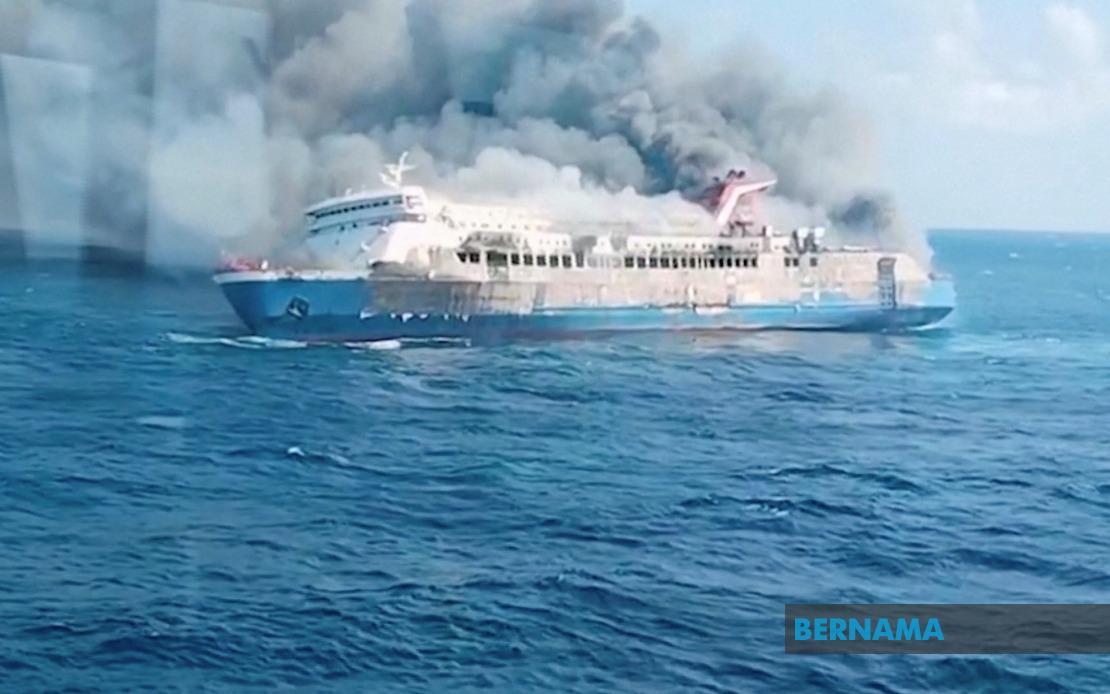
A major maritime disaster has unfolded in Indonesian waters off the northern coast of Sumenep, Madura, after the passenger ferry KMP Mutiara Santosa 2 became engulfed in flames during its voyage from Surabaya to Makassar. The incident has claimed at least five lives, while 41 passengers and crew remain missing, according to officials overseeing rescue operations in the region. The tragedy underscores ongoing concerns about maritime safety across Southeast Asia's busy shipping corridors, where vessels frequently operate between the region's major ports and island communities.
The KMP Mutiara Santosa 2 was transporting 232 passengers and 39 crew members when the fire broke out this morning. The Surabaya Search and Rescue Office received word of the emergency at 8.24 am local time and immediately mobilised personnel and equipment to address the unfolding crisis. By 4 pm, authorities had successfully rescued 225 people from the stricken vessel, though the majority of the ship's structure sustained severe damage from the intense flames. The rapid evacuation effort, coordinated by Surabaya Search and Rescue Office Chief Nanang Sigit, prevented what could have been a far more catastrophic loss of life.
Witnesses described harrowing scenes as passengers crowded onto the bridge and forward sections of the ferry while awaiting rescue assistance. The fire's ferocity left limited safe areas aboard the vessel, forcing many occupants to congregate in these restricted spaces as they waited for help to arrive. Some passengers, faced with the escalating danger, made the desperate decision to jump overboard into the surrounding waters. These individuals were subsequently picked up by commercial fishing boats and other vessels operating nearby, demonstrating how neighbouring maritime traffic sometimes provides critical assistance during disasters at sea.
The rescue operation has evolved into a major coordinated effort involving multiple Indonesian agencies and various assets. Search and rescue teams, employing boats, helicopters, and other specialised equipment, have fanned across the affected area in a systematic attempt to locate the 41 missing persons. The operation represents a significant deployment of resources across Indonesia's eastern waters, where challenging conditions and vast search areas frequently complicate rescue missions. Authorities have indicated that the operation will continue at full intensity until all missing individuals are accounted for.
For Malaysia and other Southeast Asian nations that depend heavily on maritime trade and passenger transport, the incident carries sobering implications. The Strait of Makassar and surrounding waters serve as crucial shipping lanes for regional commerce, with thousands of vessels transiting these routes annually. Ferry services connecting Indonesia's numerous islands represent vital infrastructure for millions of residents who depend on sea transport for livelihood and mobility. This disaster raises questions about vessel maintenance standards, fire safety protocols, and emergency preparedness aboard vessels operating throughout the region's crowded maritime environment.
Investigators have not yet determined the cause of the KMP Mutiara Santosa 2's fire, and authorities have confirmed that the inquiry into how the blaze originated remains ongoing. Initial considerations typically include mechanical failures, electrical malfunctions, cargo-related incidents, or human error. The specific cause will prove crucial for Indonesian maritime authorities in developing recommendations to prevent similar incidents and for operators reviewing their own safety procedures. Regional maritime bodies, including those coordinating shipping standards across Southeast Asia, often study such disasters to identify systemic vulnerabilities that could affect vessels across multiple nations.
The tragedy reflects broader patterns of maritime accidents in Indonesia's waters. The archipelago's geography—comprising thousands of islands connected primarily by sea routes—means that ferry services handle enormous passenger volumes daily. While many operators maintain modern safety standards, variations in maintenance levels, crew training, and emergency equipment across the industry have historically contributed to periodic disasters. Indonesian and regional authorities have repeatedly pledged to strengthen oversight, yet implementation challenges persist across many domestic shipping operators.
Survivors rescued from the KMP Mutiara Santosa 2 now face the trauma of their experience and, for some, the anguish of uncertain outcomes for missing family members and companions. Indonesian authorities are typically managing casualty identification, counselling services, and compensation processes, though such efforts are often strained by the scale of maritime disasters. Regional solidarity networks and humanitarian organisations frequently mobilise to support survivors and assist affected communities during the immediate aftermath of such incidents.
The broader implications extend to how Southeast Asian governments coordinate maritime safety standards and disaster response. While ASEAN nations operate under various bilateral and regional maritime agreements, inconsistencies in implementation and enforcement persist. This incident may prompt fresh discussions about harmonising safety regulations, improving communication systems among vessels at sea, and enhancing cross-border rescue coordination. Malaysia, with its own significant maritime interests and search-and-rescue capabilities, may find common cause with Indonesian counterparts in advocating for stronger regional maritime governance.
As rescue operations continue, the focus remains on locating the 41 missing persons. The search area presents considerable challenges, with currents, weather conditions, and the vastness of Indonesian waters complicating efforts. Authorities are working against time, as survival prospects typically diminish significantly after extended periods in open water. The coming days will prove critical in determining the final outcome of this maritime tragedy and whether additional victims are recovered.

