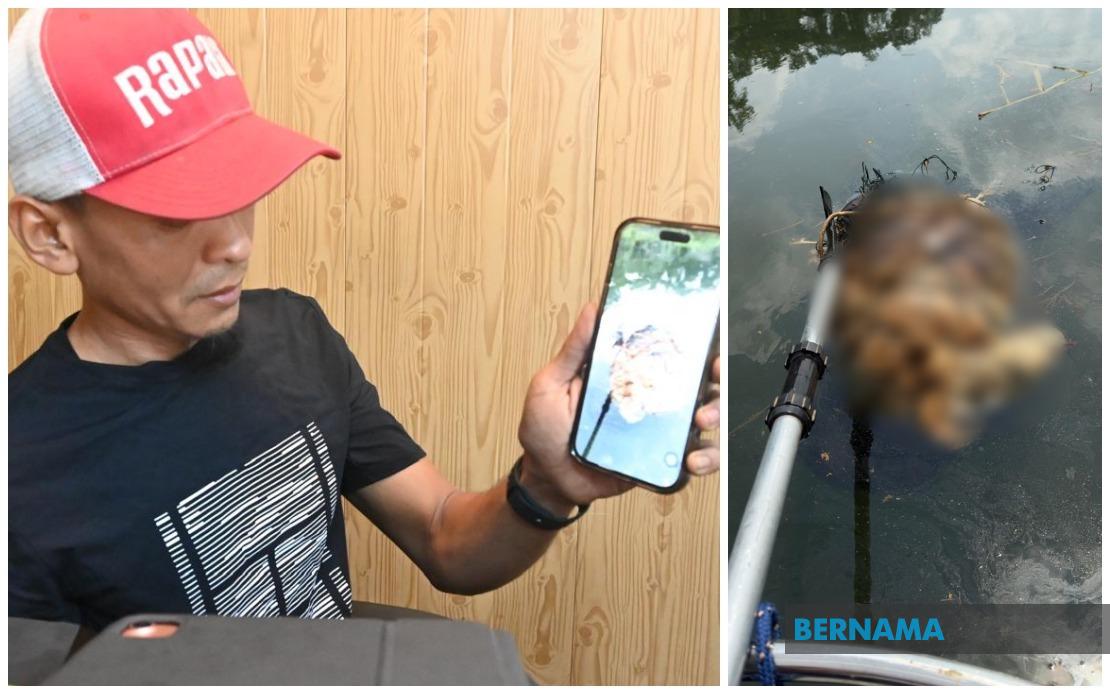
A macabre discovery in a Johor waterway has drawn fresh attention to the persistence of crime in Malaysia's southern state. On August 3, a fisherman identified as Muhamad Zul Fikri Borhanodin, 33, stumbled upon a human corpse while pursuing his hobby at Sungai Tanjung Sembrong in Parit Raja, Batu Pahat. What began as an ordinary attempt to capture content for social media platforms transformed into an unexpected criminal investigation that would ultimately result in three arrests within hours.
Muhamad Zul Fikri recounted that the discovery occurred around 11 am when he spotted what initially appeared to be refuse or animal remains floating in the river—a sight not uncommon in the waterway. The object's peculiar wrapping, combined with an unmistakable putrid odour emanating from the package, prompted him to investigate further rather than dismiss it as typical debris. Upon observing clothing consistent with human attire, specifically a pair of jeans, his suspicions crystallised into certainty. He immediately sought assistance from a nearby acquaintance who was operating another vessel in the vicinity, setting in motion a chain of events that would ultimately expose a serious criminal matter.
The veteran angler's lengthy familiarity with the river—more than twenty years of regular fishing excursions—lent credibility to his instincts. Notably, this represented his second encounter with a cadaver at the same location, the previous incident occurring years earlier when someone had tragically drowned. Such grim recurrences underscore the challenges facing law enforcement in monitoring and securing Malaysia's numerous inland waterways, which remain vulnerable to criminal activity and disposal of evidence.
Police response was swift. Johor's deputy police chief, DCP Hoo Chuan Huat, confirmed that authorities received notification of the discovery at approximately 12:30 pm on August 3. Within the same day, three male suspects aged between 26 and 40 were apprehended in the Batu Pahat vicinity to facilitate investigative procedures. The rapid escalation from accidental discovery to coordinated arrests suggests that law enforcement possessed prior intelligence or readily identified persons of interest connected to the case.
The investigation quickly illuminated a connection between the body and an existing missing person report. The victim's wife had filed a formal notification with police on July 29, alerting them to her husband's disappearance from Mutiara Rini, a residential area within Iskandar Puteri. This four-day interval between the reported missing person and the actual body discovery raises concerning questions about the effectiveness of missing person investigations during their critical early phases, though such timelines are not uncommon in cases where bodies require recovery from water.
Mutiara Rini, situated in the Iskandar Puteri conurbation south of Kuala Lumpur, represents one of Johor's more developed residential zones. The geographic spread between where the individual disappeared and where his remains were located—requiring disposal in a river some distance away—suggests premeditation in attempting to conceal evidence. This pattern frequently indicates organised activity rather than spontaneous violence, a distinction that carries significant investigative implications.
The involvement of three separate individuals in custody raises questions about whether this constitutes a coordinated criminal enterprise or a situation where multiple persons bore varying degrees of culpability. The age range spanning from 26 to 40 years suggests a mature criminal operation rather than impulsive youth-related violence. Such considerations typically occupy substantial portions of police investigations, as prosecutorial strategy and charging decisions hinge upon establishing individual roles and mental states during the alleged offence.
From a broader perspective, this incident exemplifies how modern recreational activities intersect with crime investigation. The proliferation of social media documentation means that fishing and boating enthusiasts frequently traverse areas that might otherwise escape scrutiny, effectively creating an informal surveillance network across Malaysia's waterways. While Muhamad Zul Fikri's hobby-related presence led to a positive outcome in terms of locating remains, it also highlights the vulnerabilities of Malaysia's water infrastructure as a repository for criminal evidence.
The case underscores ongoing concerns within Southeast Asia regarding organised violence and the disposal of remains in inland waters. Similar incidents across the region have prompted calls for enhanced monitoring of major rivers, implementation of checkpoint systems on commercial waterways, and improved inter-agency coordination between maritime authorities and police investigations units. Yet resource constraints, particularly in states with extensive river networks, continue to hamper preventative efforts.
Law enforcement officials will likely direct significant investigative resources toward establishing the sequence of events between the July 29 disappearance and August 3 discovery. Forensic analysis of the body, examination of the netting used for restraint and concealment, and reconstruction of movements by the three detained individuals will form the investigative foundation. The wrapping and binding of the remains suggests a deliberate attempt at concealment rather than a disposal of a body to obscure identifying features alone, potentially indicating awareness of criminal liability among those involved.
As the investigation progresses, questions will inevitably emerge regarding whether this represents an isolated incident or part of a broader pattern involving the three arrested individuals. Preliminary inquiries by police typically focus on establishing whether similar cases might be attributable to the same suspects, particularly when organised elements appear evident. The coming weeks will determine whether charges proceed and what degree of culpability investigators ultimately attribute to each of the three men in custody.

