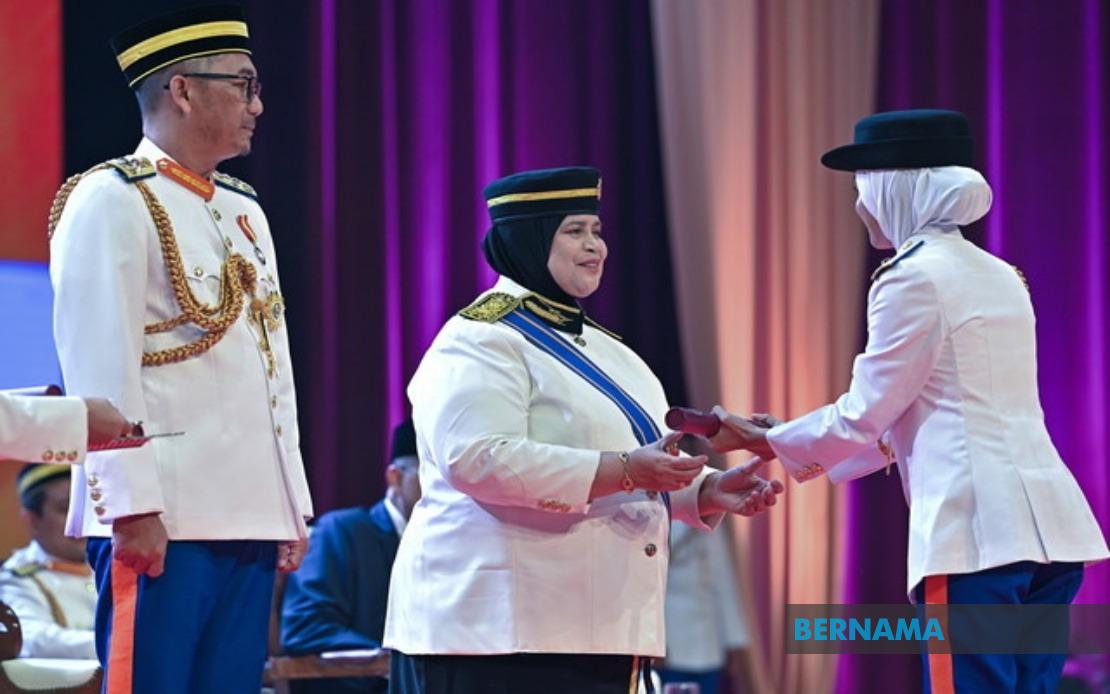
Malaysia has rolled out a new financial support scheme for student members of the Civil Defence Student Corps (Kor SISPA), with the inaugural payment cycle beginning this month for approximately 1,107 cadets distributed across 36 higher learning institutions nationwide. The decision marks a significant milestone in recognising the contributions of university-based civil defence volunteers, translating long-standing welfare discussions into concrete policy implementation. Deputy Minister of Rural and Regional Development Datuk Rubiah Wang announced the initiative while representing Deputy Prime Minister Datuk Seri Dr Ahmad Zahid Hamidi at the 17th National Kor SISPA Commissioning Ceremony held at Universiti Pendidikan Sultan Idris in Tanjong Malim today, underscoring the government's commitment to supporting youth participation in public safety efforts.
The allowance structure has been carefully calibrated to recognise educational attainment and service contributions. Students holding bachelor's degrees will receive RM9.80 per hour, whilst diploma holders will earn RM8 per hour, with calculations based on actual hours of duty performed. This tiered approach incentivises participation whilst ensuring fair compensation across different qualification levels. The first phase of implementation carries an estimated financial outlay of RM500,000, representing the government's initial investment in what officials describe as a phased expansion strategy.
Datuk Rubiah emphasised that the allowance initiative represents more than symbolic recognition of Kor SISPA contributions. She noted that civil defence operations extend far beyond emergency response, with student cadets providing year-round support for university events, campus activities, and community engagements beyond institutional boundaries. This broader conceptualisation of civil defence work justifies sustained investment in volunteer welfare and retention, particularly among university-age participants who might otherwise lack financial incentive to commit significant volunteer hours.
The government has signalled its intention to explore additional fiscal mechanisms to progressively expand the allowance scheme. Officials have committed to investigating optimal budgetary allocations that would eventually encompass a larger proportion of the Kor SISPA membership, suggesting this inaugural phase represents a foundation rather than a ceiling for future programme expansion. This incremental approach acknowledges fiscal constraints whilst maintaining policy momentum on youth welfare improvements.
Kor SISPA itself represents a substantial investment in civil defence capacity building among Malaysia's university population. Established in 2010, the programme has operated across universities, polytechnics, and teacher training colleges for over a decade, successfully producing 11,802 graduates to date. This alumni base demonstrates the scheme's longevity and the scale of institutional commitment required to maintain such programmes, making financial support mechanisms increasingly essential for recruitment and retention.
The allowance initiative addresses a fundamental challenge facing volunteer-dependent organisations: sustaining participation among student populations facing competing financial pressures and alternative employment opportunities. Malaysian university students increasingly juggle academic responsibilities with part-time work and other commitments, making unpaid voluntary service increasingly difficult to justify. By introducing modest compensation tied to service hours, the government removes a significant barrier to participation whilst maintaining the fundamentally voluntary character of the programme.
For Malaysian higher learning institutions, the allowance scheme offers tangible benefits beyond individual cadet welfare. Universities invested in civil defence and disaster preparedness capacity gain a financial incentive structure that encourages student recruitment and active participation. Enhanced emergency response capabilities strengthen institutional resilience, benefiting the broader campus community during crises whilst generating reputational returns for institutions demonstrating comprehensive safety protocols.
The phased implementation strategy reflects careful administrative planning cognisant of budgetary realities. By rolling out payments progressively rather than attempting universal coverage immediately, the government preserves fiscal flexibility whilst gathering implementation data and feedback. This methodical approach allows administrators to refine payment mechanisms, identify unforeseen administrative challenges, and calibrate expansion timelines based on demonstrated feasibility.
Regional implications merit consideration as well. Southeast Asian nations increasingly recognise civil defence and disaster management as critical national security components, particularly given climate-related hazards and regional disaster patterns. Malaysia's investment in student-based civil defence infrastructure, supported by financial incentives, positions the nation advantageously within regional emergency management frameworks. Enhanced disaster response capacity strengthens resilience across multiple sectors and jurisdictions.
The next milestone in the Kor SISPA commissioning cycle will occur at Universiti Sultan Zainal Abidin (UniSZA) next year, suggesting sustained government commitment to programme expansion and formalisation. Sequential commissioning ceremonies across different institutions indicate a deliberate strategy to embed civil defence training deeply within Malaysia's higher education ecosystem, building institutional identity around public safety contributions.
For cadets receiving the allowance, the financial recognition carries symbolic significance beyond monetary value. Acknowledgment through compensation validates service contributions whilst signalling government prioritisation of volunteer welfare. This psychological dimension often proves as valuable as direct financial benefit in sustaining long-term volunteer engagement and programme loyalty. As Malaysia continues developing national disaster management capabilities, such investments in motivation and retention mechanisms will prove increasingly essential.

