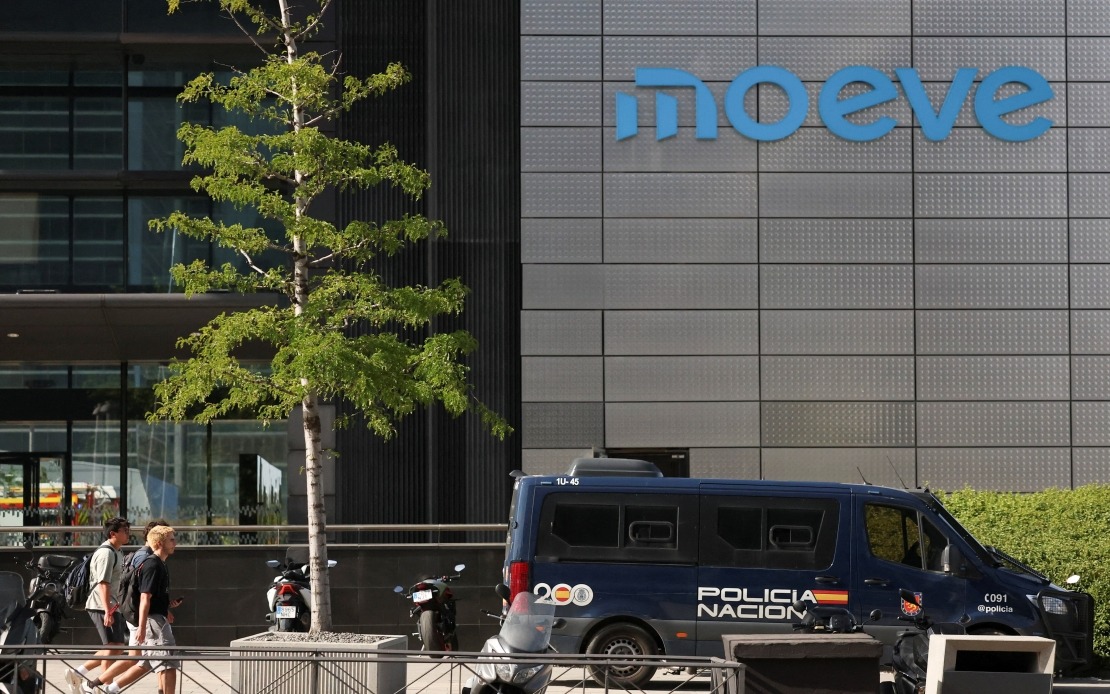
Madrid's iconic Torre Moeve, Spain's second-tallest skyscraper, was gripped by fire on Tuesday afternoon following an interior explosion that sent thick plumes of smoke cascading across the city skyline. The incident, which unfolded around 5.00 pm local time, prompted immediate evacuation protocols and sparked significant emergency response from the Spanish capital's firefighting and police services. The visible smoke rising from the tower's upper reaches was witnessed across much of central Madrid, drawing attention from residents and media outlets to the developing crisis.
Building authorities immediately initiated evacuation procedures as a protective measure, though initial assessments indicated the situation remained controlled. The National Police, through official channels, confirmed that the incident began with an explosion before transitioning into the full fire that affected the structure. This sequence of events—explosion followed by fire—suggested the possibility of an energy-related incident or electrical malfunction, though formal investigations would later determine the precise cause and circumstances surrounding the emergency.
According to the Spanish government delegation overseeing Madrid affairs, the blaze originated on the 25th floor, an area designated for technical infrastructure and mechanical systems rather than occupied workspaces. This location proved significant, as technical floors typically contain electrical equipment, HVAC systems, and other installations that could be vulnerable to electrical faults or system failures. The concentration of such equipment in a confined space may have contributed to the rapid development of the fire once the initial explosion occurred.
Firefighting teams deployed by the Madrid City Council responded swiftly to the emergency, establishing control over the flames and ultimately declaring the fire extinguished within a reasonable timeframe. Following the suppression of the visible blaze, emergency personnel conducted thorough interior inspections to ensure no remaining hotspots threatened to reignite and to assess structural integrity. Their rapid containment prevented the situation from escalating into a more severe catastrophe that could have endangered the many workers and visitors typically present in such a large commercial structure.
The human toll from the incident proved remarkably limited given the scale and visibility of the emergency. Medical personnel documented three individuals requiring treatment: two workers who inhaled smoke during the evacuation and a passerby who experienced an anxiety attack triggered by witnessing the dramatic scene. All three received on-site medical attention and were discharged without requiring hospitalization, reflecting both the relatively brief exposure to smoke and the effectiveness of evacuation procedures. The absence of fatalities or serious injuries underscored the importance of swift response protocols and building safety systems.
Torre Moeve, as Spain's second-highest building, represents a significant architectural landmark in Madrid's skyline and a major commercial hub housing numerous businesses and professional services. The tower's prominence in the city's economic landscape meant that the incident had potential ramifications beyond immediate safety concerns, potentially affecting operations of tenants and business continuity for numerous organizations based within the structure. The incident highlighted the critical importance of maintaining robust fire safety standards and emergency procedures in high-rise commercial buildings across Europe.
For regional observers in Southeast Asia, this incident serves as a reminder of the universal challenges posed by maintaining safety standards in tall buildings, particularly regarding technical floor infrastructure and electrical systems. Malaysia, with its own array of modern skyscrapers including the iconic Petronas Twin Towers and other major commercial developments, maintains similarly rigorous fire safety codes. However, incidents such as Madrid's Torre Moeve fire underscore the ongoing need for vigilance regarding maintenance protocols, regular safety inspections, and up-to-date emergency response procedures in high-rise facilities throughout the region.
The incident also reflects broader European standards for emergency response and building safety management, which operate under stringent EU directives and national regulations. Spanish authorities' swift action in evacuating the building and containing the fire demonstrates the effectiveness of well-established protocols and trained emergency personnel. Such coordinated responses have become standard practice across developed economies, where investment in firefighting infrastructure and personnel training creates resilient systems capable of managing building emergencies effectively.
Investigations into the precise cause of the initial explosion and subsequent fire would likely focus on electrical systems, maintenance records, and any recent modifications to technical infrastructure on the affected floor. Spanish regulatory authorities typically conduct thorough inquiries into such incidents to identify any systemic failures or maintenance lapses that may have contributed to the emergency. These findings would then inform recommendations for enhanced safety measures across similar high-rise structures, contributing to the continuous evolution of building safety practices.
The Torre Moeve incident, while dramatic in its visual manifestation across Madrid's skyline, ultimately demonstrated the effectiveness of modern emergency response systems and building evacuation procedures. The lack of fatalities or serious injuries, combined with the rapid suppression of the fire, reflected decades of accumulated experience in managing high-rise emergencies across developed nations. For building managers and safety professionals throughout Southeast Asia and beyond, such incidents provide valuable case studies in emergency preparedness and the critical importance of maintaining rigorous maintenance schedules for technical infrastructure in tall buildings.

