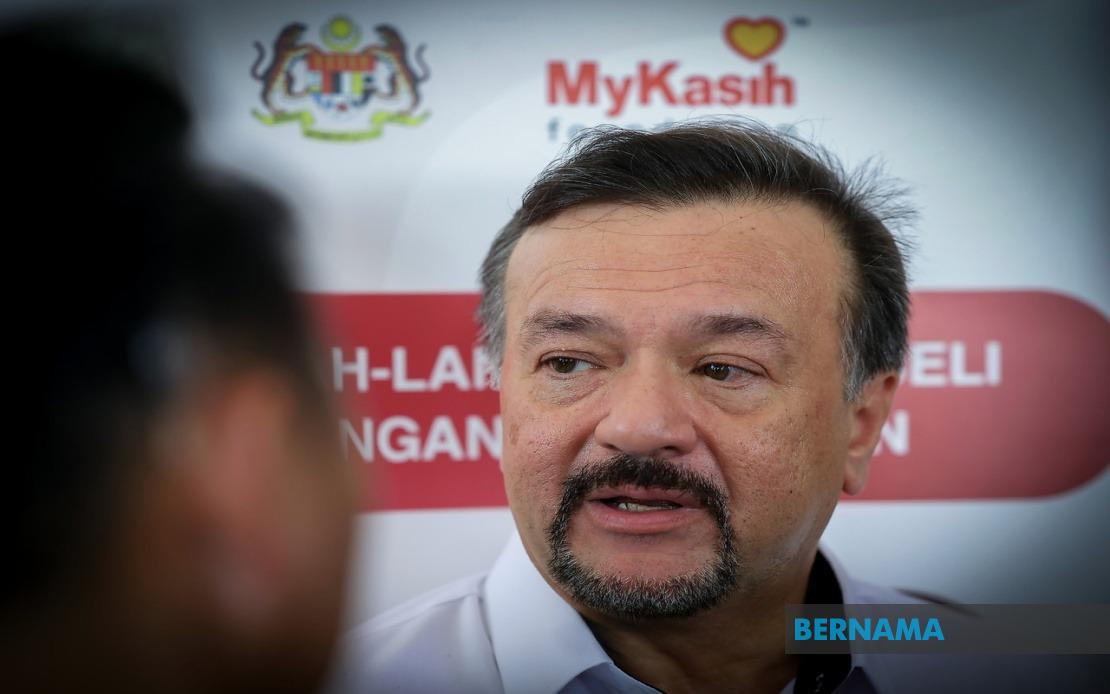
The Malaysian government has signalled flexibility in managing the BUDI MADANI Diesel subsidy scheme, with the Ministry of Finance adopting a pragmatic stance towards refinements that could enhance the programme's effectiveness. Finance Minister II Datuk Seri Amir Hamzah Azizan indicated during a media conference in Kuching that policymakers remain receptive to proposals aimed at optimising the subsidy mechanism, though any modifications will be grounded in empirical consumption evidence rather than speculative projections.
The minister's remarks reflect a methodical approach to subsidy administration that prioritises data-driven decision-making over reactive policy shifts. Rather than expanding quotas in response to anecdotal complaints about insufficient fuel allowances, the government intends to accumulate several months of operational data before determining whether structural adjustments are warranted. This measured strategy contrasts with earlier targeted subsidy implementations that faced criticism for initial quota constraints.
Amir Hamzah pointed to preliminary usage statistics from the first five months of the RON95 petrol subsidy programme to illustrate the government's analytical framework. Between January and May 2024, merely 0.76 per cent of programme beneficiaries exceeded the 200-litre monthly threshold, suggesting that existing quota allocations adequately served the vast majority of eligible participants. This data point challenges presumptions that the subsidy framework is inherently restrictive and undercuts pressure for immediate expansion.
The finance minister's reference to the e-hailing sector's subsidy experience offers instructive precedent for how the BUDI Diesel programme might evolve. When fuel quotas for ride-sharing drivers initially appeared insufficient based on industry feedback, authorities scrutinised consumption patterns recorded by e-hailing companies themselves. Rather than imposing blanket quota increases, the government implemented a tiered system acknowledging differential fuel demands across the driver population. The resulting two-level structure—offering either 600 litres or 800 litres monthly—demonstrates how targeted subsidies can accommodate heterogeneous usage profiles without universal upward revision.
This comparative framework proves particularly relevant for Malaysian policymakers and Southeast Asian observers monitoring subsidy reform trajectories. The region has witnessed recurrent tensions between fiscal sustainability and political pressure to expand welfare provisions, especially during commodity price volatility. Malaysia's experience with subsidy targeting, refined through iterative adjustments to the e-hailing programme, provides a credible model for balancing budgetary constraints against genuine beneficiary needs without premature programme restructuring.
The BUDI Diesel initiative represents a continuation of Malaysia's gradual transition from blanket fuel subsidies toward means-tested or usage-based mechanisms. Unlike the previous universal diesel price controls that generated substantial fiscal leakage and distorted market signals, the targeted approach aims to concentrate support where consumption genuinely reflects occupational necessity rather than speculative hoarding or inefficient usage patterns. The government's insistence on observing actual behaviour before policy adjustment aligns with this philosophical shift toward evidence-informed subsidy design.
Works Minister Datuk Seri Alexander Nanta Linggi's participation in the announcement underscored the cross-departmental coordination required for effective subsidy administration. Infrastructure and transportation sectors constitute major diesel consumers, necessitating input from multiple portfolio holders to assess programme functionality comprehensively. This collaborative posture signals that the finance ministry does not operate in isolation when evaluating subsidy mechanisms affecting diverse economic activities.
The stated willingness to revisit programme parameters creates important signalling effects for both programme participants and wider business constituencies. Transporters, commercial operators, and other industries reliant on diesel fuel require policy predictability, yet the finance ministry's acknowledgement of flexibility prevents stakeholders from perceiving the current quota framework as immutable and potentially exploitative. This balance between stability and adaptability can facilitate smoother programme implementation and reduce stakeholder resistance.
Future programme adjustments will likely depend on several evolving metrics beyond simple exceeding of quota thresholds. The government may examine whether genuine occupational users experience genuine hardship despite complying with nominal quota limits, whether widespread circumvention or black-market activity emerges suggesting quotas are too restrictive, or whether fiscal costs stabilise within acceptable parameters. The ministry's data-centric approach implies that several additional quarters of implementation data will accumulate before major policy decisions crystallise.
For Malaysian consumers and businesses dependent on diesel-powered transport, the finance ministry's pragmatic stance offers qualified reassurance that pathological programme design flaws will eventually receive correction. However, the emphasis on evidence-gathering rather than reactive expansion also signals that quota increases will not materialise simply through political pressure or lobbying intensity. Stakeholders must marshal concrete usage documentation demonstrating genuine shortfalls rather than theoretical inconvenience to persuade policymakers of necessary revisions.
The BUDI Diesel programme's trajectory will constitute a significant indicator of Malaysia's broader approach to subsidy reform and fiscal governance. Whether the government successfully implements a flexible yet disciplined framework for fuel support, adjusting parameters only when empirical evidence unambiguously demonstrates necessity, will influence confidence in other targeted welfare initiatives and inform regional perspectives on subsidy management best practice.