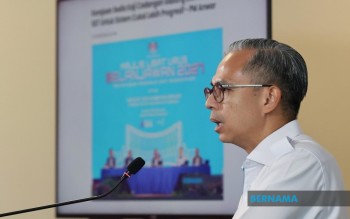
The Malaysian government is taking a measured approach to exploring a potential overhaul of the national taxation system, with Finance Minister II Datuk Seri Amir Hamzah Azizan granted flexibility to conduct a thorough examination of how the Goods and Services Tax (GST) and Sales and Services Tax (SST) could be integrated. Communications Minister and MADANI Government spokesperson Datuk Seri Fahmi Fadzil made the announcement during a post-Cabinet media briefing in Putrajaya, signalling that any decision on the hybrid taxation model would follow careful deliberation rather than rushed implementation.
The initiative stems from Prime Minister Datuk Seri Anwar Ibrahim's directive to the Ministry of Finance to investigate how elements of the GST—a broad-based consumption tax that was previously scrapped—could be incorporated into Malaysia's current SST framework to create a more progressive national taxation architecture. This approach reflects a pragmatic middle ground that acknowledges the strengths of each system while attempting to address longstanding weaknesses in the existing tax regime. Rather than reverting to GST outright or maintaining the status quo, the government is exploring whether a hybrid model could better serve economic goals while maintaining fairness across income groups.
Fahmi underscored that the Ministry of Finance would not be constrained by artificial deadlines, emphasising that taxation policy of this magnitude demands comprehensive analysis. He noted that the deliberate pace reflects the complexity inherent in redesigning a major revenue system, particularly given Malaysia's experience with GST implementation and the documented challenges that have emerged under the current SST arrangement. The absence of a specified completion timeline suggests the government recognises that rushing such a study could result in poorly conceived recommendations that might either replicate past mistakes or create new economic distortions.
The proposed examination will draw heavily on lessons from Malaysia's GST experience, which ran from April 2015 until its repeal in June 2018. That period yielded valuable data on implementation mechanics, compliance issues, and broader economic impacts—insights that would inform whether certain GST features could be selectively incorporated into a modified taxation system. Simultaneously, the study will analyse persistent problems under the current SST regime, which took effect in 2018 as a replacement. By examining both systems' performance, policymakers aim to identify which characteristics of each could be combined to produce superior revenue collection and economic outcomes.
The government's cautious exploration of this taxation hybrid reflects broader regional economic considerations. Neighbouring countries have implemented various consumption tax models with differing outcomes, providing comparative data for Malaysian policymakers. Singapore, for instance, operates a GST system, while other Southeast Asian nations employ value-added tax (VAT) or sales tax mechanisms. Understanding how these models function across diverse economic contexts strengthens Malaysia's ability to calibrate any new system to local conditions and development priorities.
Prime Minister Anwar's commitment to a progressive taxation system addresses a long-standing concern among economists and civil society that Malaysia's tax structure has not kept pace with the nation's middle-income status and growing inequality. A more progressive framework would theoretically distribute tax burdens more equitably, ensuring that consumption tax impacts vary appropriately across income levels. This contrasts with criticism that the existing SST lacks built-in mechanisms to differentiate tax treatment based on whether goods or services are considered necessities or luxuries, potentially creating regressive outcomes that disproportionately burden lower-income households.
Fahmi clarified that no specific announcement regarding the taxation proposal would feature in the upcoming budget presentation, as the Cabinet had not established a concrete deadline during today's meeting. This transparency about timing prevents market participants and the public from misinterpreting budget-season announcements or preparing contingency plans based on assumptions about implementation dates. The measured communication approach also allows the Ministry of Finance to complete its study without political pressure or speculative disruption to business planning and consumer behaviour.
The decision to grant Finance Minister II latitude in completing this examination demonstrates institutional confidence in the ministry's capacity to undertake rigorous fiscal policy analysis. Amir Hamzah and his team will need to engage multiple stakeholders—including businesses affected by taxation changes, consumer groups, state governments whose revenues depend on tax allocations, and international economic observers monitoring Malaysia's policy stability. Such consultations are time-consuming but essential for building consensus around any eventual recommendation.
From a Malaysian business perspective, this exploratory phase creates both opportunity and uncertainty. Companies cannot yet adjust planning assumptions, yet they benefit from the signal that taxation policy is receiving serious, high-level attention aimed at improving fairness and efficiency. Export-oriented manufacturers and service providers may particularly welcome a study that considers how consumption taxes interact with trade competitiveness and cross-border economic activity. The insurance and financial services sectors, heavily impacted by taxation changes, would likely participate in consultations as the Ministry of Finance develops its recommendations.
The Cabinet's decision to authorise this comprehensive study without predetermined outcomes suggests intellectual flexibility within government circles. Rather than political ideology driving the taxation agenda, the approach prioritises evidence and practical economic consequences. This contrasts with the 2015 GST implementation, which was politically contentious from its introduction and never gained public acceptance despite technical competence in its administration. A more consultative, evidence-based process for developing the hybrid model could build greater stakeholder buy-in, potentially smoothing any eventual implementation.
International investors monitoring Malaysia's policy environment will likely view this deliberate approach positively, as it signals that major fiscal reforms receive thorough analysis before adoption. Tax certainty and predictability rank among critical factors in foreign direct investment decisions; a government that studies tax changes thoroughly before implementation projects greater reliability than one that makes sudden shifts. Malaysia's efforts to retain foreign investment amid regional competition make this signal valuable to multinational enterprises considering the country as an investment destination.
The timeline for the Ministry of Finance's examination remains uncertain, with Fahmi's comments suggesting the work could extend across multiple quarters. Cabinet reviews will presumably occur once Finance Minister II presents preliminary findings, potentially triggering additional rounds of deliberation before any policy decision crystallises. For Malaysian workers, businesses, and consumers, the hybrid taxation model under study could reshape how they encounter government revenue collection—making the quality of analysis conducted over these coming months potentially significant for economic activity across the nation.

