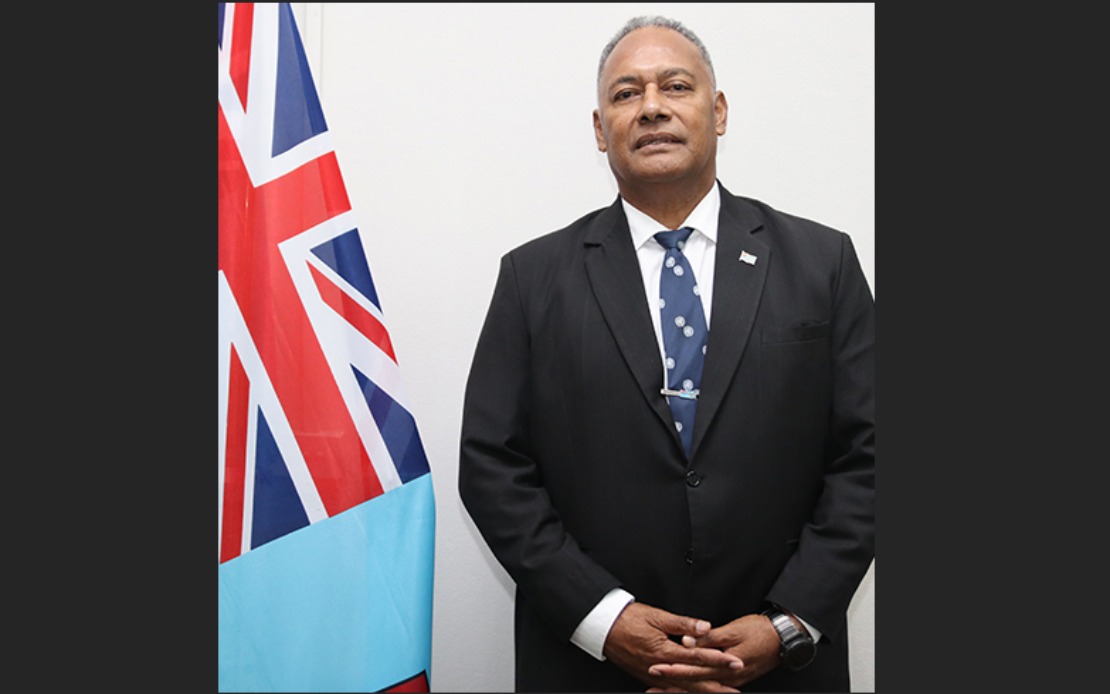
Fiji's Foreign and External Trade Minister Sakiasi Raisevu Ditoka will undertake a working visit to Malaysia beginning Sunday, with the mission aimed at deepening cooperation between the two nations across multiple sectors. The four-day engagement represents a significant diplomatic initiative to reinvigorate partnerships that span economic collaboration, infrastructure development, and regional dialogue in the Indo-Pacific space.
During his stay through Wednesday, Ditoka will hold discussions with Malaysia's Foreign Minister Datuk Seri Mohamad Hasan, marking a high-level engagement that underscores both countries' commitment to advancing shared interests. These conversations will focus on tangible avenues for expansion, particularly in the domains of trade and investment, which remain central to Malaysia's broader engagement strategy with Pacific nations.
The bilateral agenda extends considerably beyond conventional trade mechanics. Both ministers intend to explore collaborative opportunities in capacity building initiatives, forestry management, and the renewable energy sector—domains where Malaysia possesses technical expertise and infrastructure that could benefit Fiji's development objectives. Additionally, cultural exchanges feature prominently, reflecting recognition that people-to-people connections form the foundation of enduring diplomatic relationships.
The visit also provides a platform for broader geopolitical dialogue. Malaysia and Fiji will exchange perspectives on regional and international developments, while specifically examining possibilities for enhanced cooperation with other Pacific Island nations. This dimension carries particular significance for Malaysia, as it seeks to maintain relevance and influence within the Pacific community while supporting developing island economies navigating challenges from climate change and global economic volatility.
Beyond foreign ministry discussions, Ditoka will engage with Datuk Seri Johari Abdul Ghani, Malaysia's Investment, Trade, and Industry Minister, to identify fresh economic partnership possibilities. These conversations are expected to unlock new investment channels and business collaborations that serve the mutual interests of both nations, potentially attracting Malaysian capital toward Fijian development projects while creating market opportunities for Malaysian enterprises in the South Pacific.
A particularly symbolic element of the visit involves the formal reopening of the High Commission of the Republic of Fiji in Kuala Lumpur. This reinstatement of a permanent diplomatic mission signals revitalized commitment from both sides to bilateral engagement and provides institutional infrastructure for sustained diplomatic dialogue. The reopening comes alongside the establishment of the Malaysia-Fiji Business Council, a mechanism explicitly designed to facilitate private sector interactions and identify commercial synergies between businesses in both nations.
The numerical dimensions of the bilateral relationship reveal an economy where Malaysia maintains substantial trading advantage. In 2025, total bilateral trade reached RM880.01 million, equivalent to approximately US$206.2 million. Malaysia's export portfolio dominates this equation, with outbound shipments valued at RM867.92 million (US$203.41 million), while imports from Fiji comprised merely RM12.09 million (US$2.80 million). This pronounced asymmetry reflects Malaysia's position as an industrial and services-oriented economy exporting manufactured goods and technology-intensive products to Fiji, while Fijian exports—concentrated in primary commodities and agricultural products—constitute a minimal portion of bilateral flows.
The trade imbalance presents both opportunities and challenges for deepening relations. While the figures demonstrate Malaysia's export competitiveness, they also highlight potential areas where Fiji could diversify its export base and capture greater value from the relationship. Investment-focused discussions may deliberately target mechanisms to rebalance trade flows, potentially through Fijian participation in regional supply chains or development of processing industries that add local value to primary products before export.
Malaysia's engagement with Pacific Island nations reflects strategic positioning within the broader Indo-Pacific architecture. As a Southeast Asian economic leader with established diplomatic networks, Malaysia can serve as a bridge between ASEAN and Pacific communities, facilitating knowledge transfer and investment flows. Fiji, as a significant Pacific player with leadership in regional forums, provides Malaysia access to broader island nation networks and perspectives on emerging global issues from the Pacific viewpoint.
The renewable energy emphasis within bilateral discussions carries heightened relevance given global climate imperatives and Fiji's vulnerability to environmental degradation. Malaysia's expertise in solar and biomass energy development could support Fiji's transition toward cleaner electricity generation, reducing dependency on fossil fuel imports while building technical capacity within Fijian institutions. Such cooperation aligns with international climate commitments and positions both nations as progressive stakeholders in sustainability transitions.
Capacity building initiatives referenced in the ministerial agenda likely encompass civil service training, governance frameworks, and institutional strengthening programs where Malaysia's administrative experience could inform Fijian development efforts. Forestry cooperation similarly reflects mutual interest in sustainable resource management, with potential for knowledge exchange regarding conservation practices, certification schemes, and sustainable timber harvesting methodologies that benefit environmental outcomes while supporting economic objectives.
The visit's timing and comprehensive scope suggest Malaysia views Pacific engagement as increasingly important to its diplomatic portfolio. As regional powers compete for influence in the Indo-Pacific, Malaysia's proactive diplomacy toward island nations positions it as a reliable, non-coercive partner focused on development cooperation and mutually beneficial exchange rather than strategic encroachment. For Fiji, accessing Malaysian expertise and capital provides diversification of international partnerships beyond traditional colonial-era relationships.
Looking forward, the institutional mechanisms being established—particularly the business council—may generate momentum for sustained engagement beyond this visit. Private sector participation typically outlasts ceremonial diplomatic occasions, and business-driven relationships often prove more resilient than government-focused partnerships. The combined emphasis on trade expansion, investment attraction, and sectoral cooperation suggests both nations are positioning the relationship for long-term growth rather than pursuing isolated diplomatic gestures.

